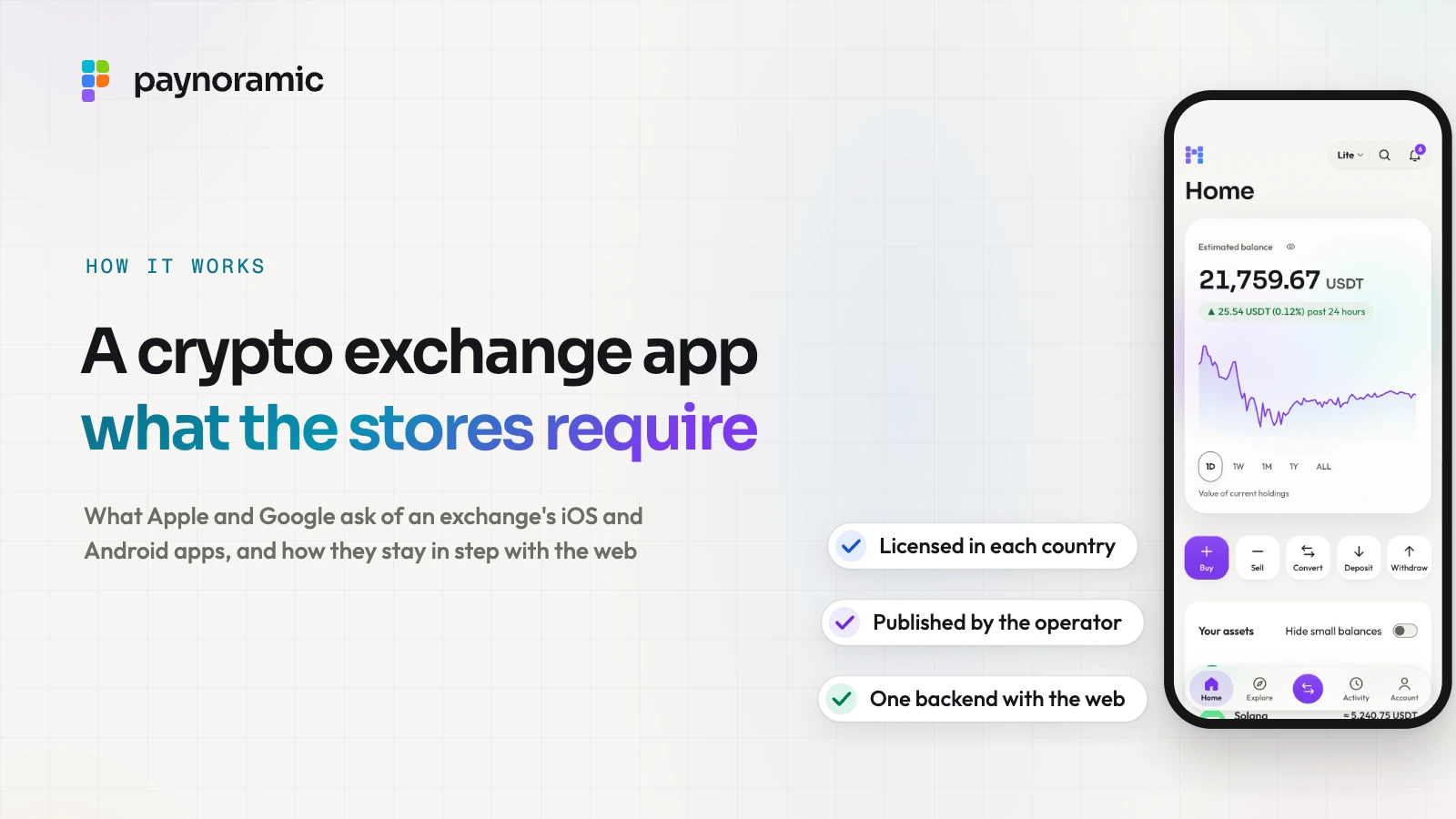
USDT and e-money tokens under MiCA: what an exchange's software has to do after ESMA's opinion
ESMA's opinion of 8 October 2026 says authorised CASPs should not serve non-MiCA-compliant stablecoins. The software needs a register of allowed, exit-only and blocked tokens, enforced on each order.
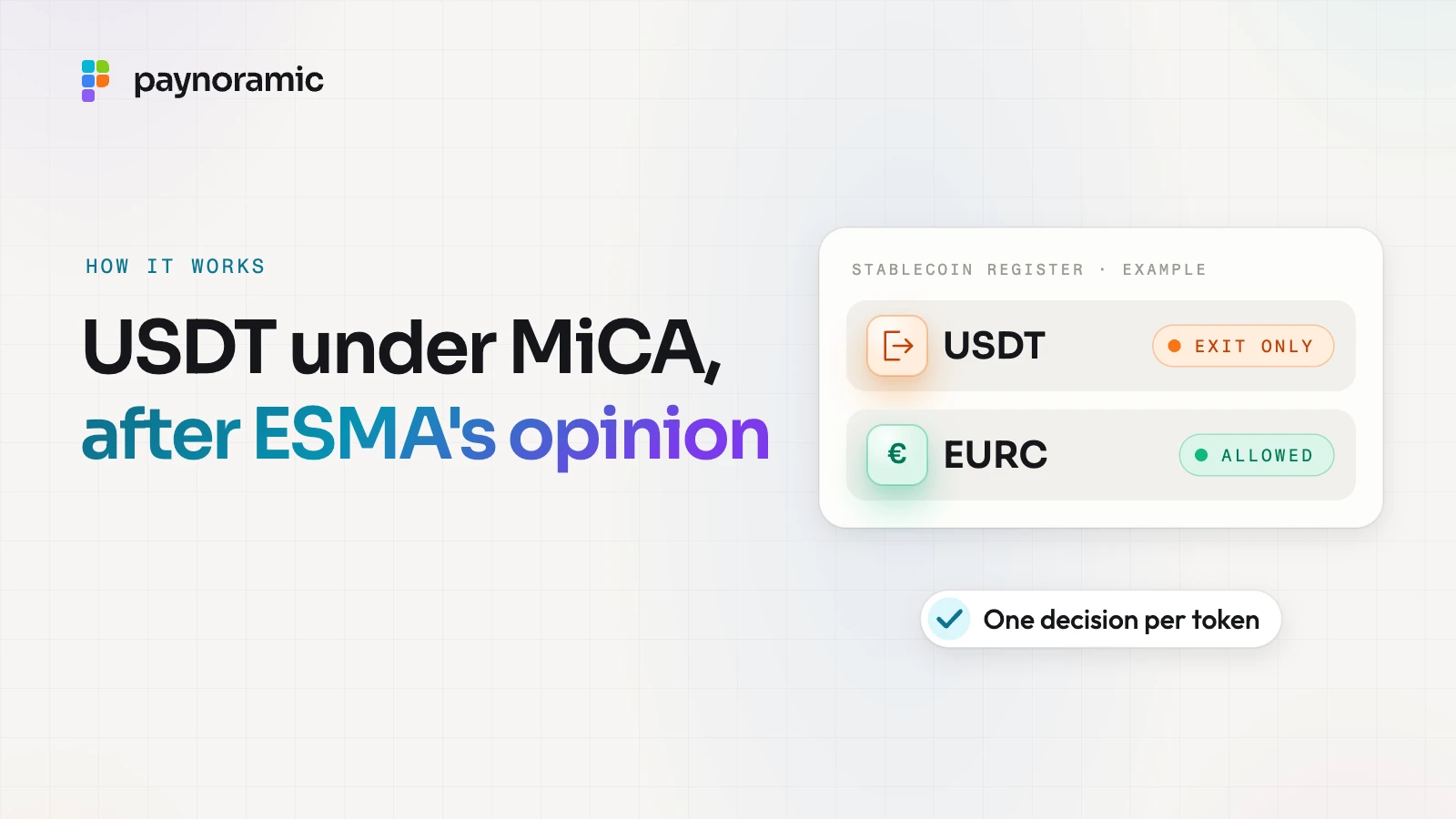
Under MiCA, an e-money token or an asset-referenced token may be offered to the public or admitted to trading in the EU only by its authorised issuer, or by others with the issuer's written consent. ESMA's opinion of 8 October 2026 adds that authorised crypto-asset service providers should not provide any service at all in relation to a stablecoin that fails those conditions, and that remaining positions should be wound down within three months, keeping only selling, conversion, transfer and withdrawal. For an exchange's software, that means one decision per token (allowed, exit only or blocked), enforced on every order path, applied to orders already resting, and a euro route for customers to move to.
Two kinds of stablecoin in MiCA
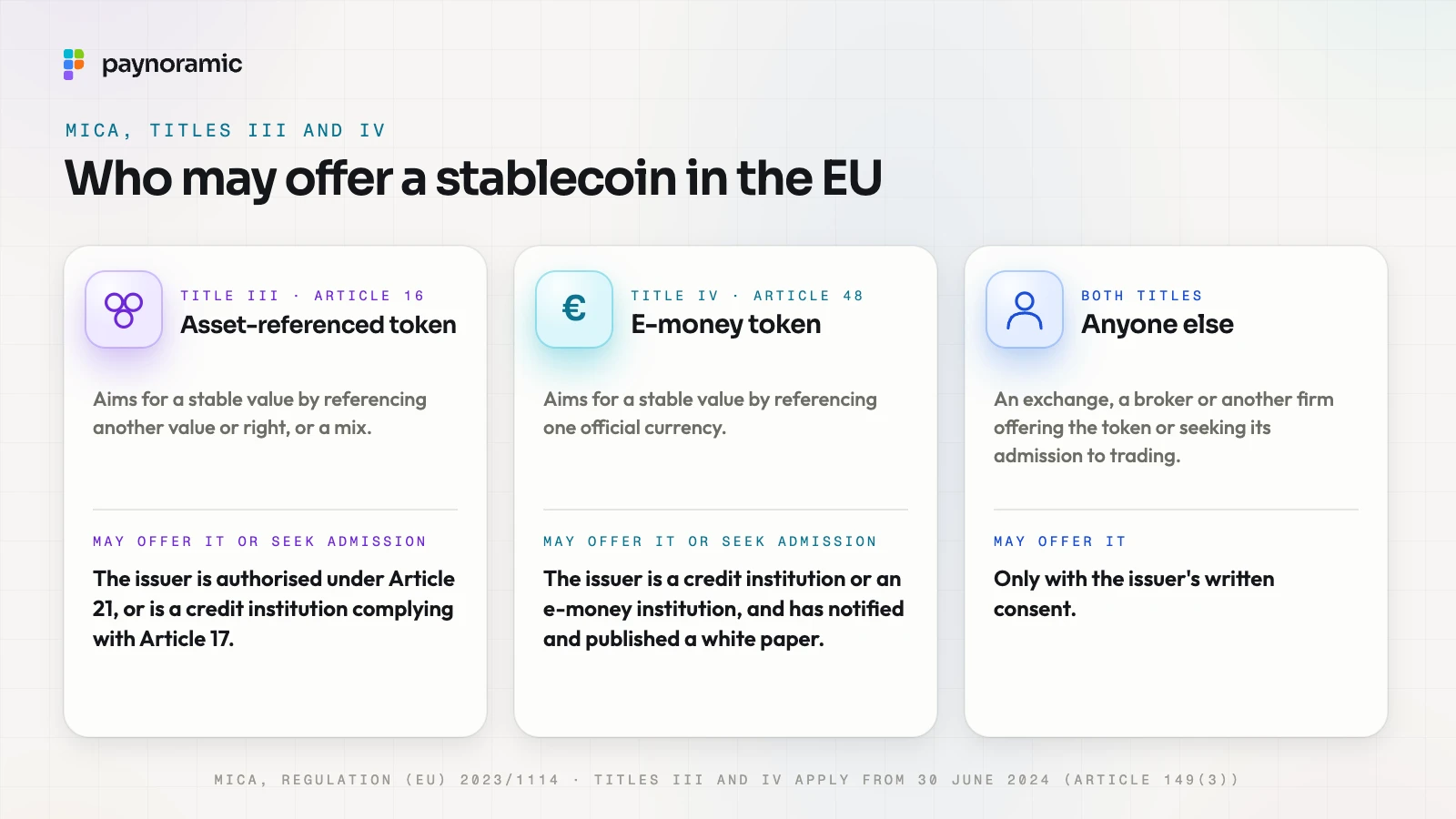
MiCA does not use the word stablecoin as a legal category. It defines two kinds of token that aim to hold a stable value (Article 3(1)):
An e-money token (EMT) purports to maintain a stable value by referencing the value of one official currency, such as the euro or the US dollar.
An asset-referenced token (ART) is any other token that purports to maintain a stable value by referencing another value or right, or a combination of them, including one or more official currencies.
Each has its own Title, and both have applied since 30 June 2024 (Article 149(3)). The rule on who may bring them to market is short:
ARTs, Title III. No person may offer an ART to the public or seek its admission to trading in the EU unless it is the issuer and is either authorised under Article 21 or a credit institution complying with Article 17 (Article 16(1)).
EMTs, Title IV. The issuer has to be authorised as a credit institution or an electronic money institution, and has to have notified and published a crypto-asset white paper (Article 48(1)).
Everyone else. In both Titles, other persons may offer the token or seek its admission to trading only with the issuer's written consent.
Narrow exemptions exist, such as an ART whose average outstanding value stays below EUR 5 million over 12 months, and its issuer still has to notify a white paper (Article 16(2)).
Two more rules reach the exchange directly. An EMT holder can redeem it from the issuer at any time, at par and without a fee (Article 49). And a crypto-asset service provider may not grant interest on EMTs, where any benefit tied to how long a customer holds the token counts as interest (Article 50), so a rewards or earn programme has to leave EMTs out.
From a statement to an opinion
ESMA first addressed non-compliant stablecoins in a public statement of 17 January 2025. Trading platforms were expected to stop making them available, with restrictions done by the end of January 2025 and a "sell only" window until the end of the first quarter. That statement focused on services that amount to an offer to the public, and said mere custody and transfer should remain possible.
The opinion of 8 October 2026 goes further. It is addressed to national competent authorities, to make supervision consistent, and its central sentence is that CASPs "should not provide crypto-asset services" in relation to ARTs or EMTs that are not MiCA-compliant (paragraph 12). The reasoning rests on the duty in Article 66(1) to act honestly, fairly and professionally in the best interests of clients: in ESMA's view, a CASP serving such a token knowingly exposes clients to risks that the missing issuer safeguards were meant to remove.
Statement, January 2025 | Opinion, October 2026 | |
|---|---|---|
Which services | Those amounting to an offer to the public or admission to trading | Every CASP service, whether or not it is an offer to the public |
Custody and transfers | Should remain possible | Covered too; kept only as wind-down services |
Warnings to clients | Communication campaigns expected | Not a substitute for withdrawing the service |
Way out | Sell only until the end of Q1 2025 | Sell only, conversion, transfer or withdrawal, time-limited |
Four points in the opinion shape the software:
Every service counts. Operating a trading platform, exchange, execution, reception and transmission of orders, placing, advice, transfers, custody and portfolio management (paragraph 21).
Warnings are not enough. Disclosures and client acknowledgements do not address the concern (paragraph 19).
Controls are expected. CASPs should have technical, contractual and organisational controls, including controls that prevent EU clients from acquiring or increasing positions (paragraph 22).
A short wind-down. Remaining legacy exposures are to be remediated no later than three months after the opinion's publication, and any continuing service is limited to sell-only, conversion, transfer or withdrawal, time-limited and closely supervised (paragraph 27).
Where USDT stands
The opinion names no token. Its test is in a footnote: a token is non-compliant when the conditions for a lawful offer to the public or admission to trading under Title III or IV, including any exemptions or transitional arrangements, are not met.
The practical check is ESMA's interim MiCA register, whose list of e-money token issuers and their white papers was last updated on 22 October 2026. EURC's white paper is in that list; USDT does not appear in it. ESMA notes that the register is published weekly, so it can lag a national record, and its January 2025 statement asked CASPs in doubt about a token's classification to ask their regulator. The assessment of each token stays with the licensed operator.
What the exchange software has to do
None of this can be handled by hiding a button. A customer reaches a token through the app, the API, a broker's quote, a conversion screen and orders placed weeks ago, and each of those paths has to give the same answer.
1. A register with three statuses
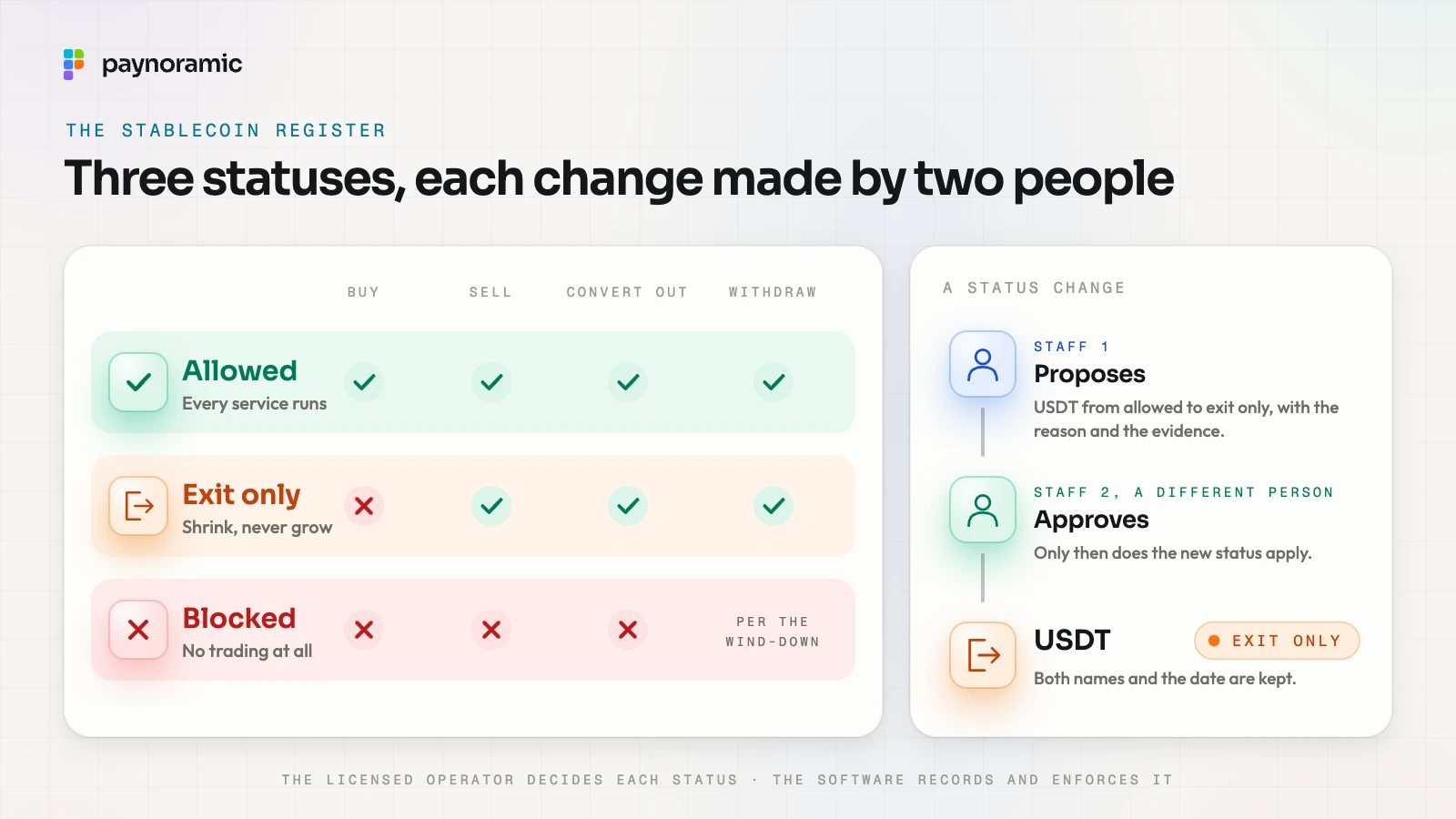
Each stablecoin gets one status, set in the backoffice by the operator's staff:
Allowed. Every service runs as normal.
Exit only. A customer can reduce a position and never grow it: sell, convert out, withdraw.
Blocked. No trading at all; what happens to remaining balances follows the operator's wind-down plan.
Each decision carries its reason and evidence, such as the register entry or the white paper, and its date. Because a status change moves customers' money, it should need two people: one proposes, a second, different person approves, and both are recorded for the regulator.
2. Exit only, enforced by side
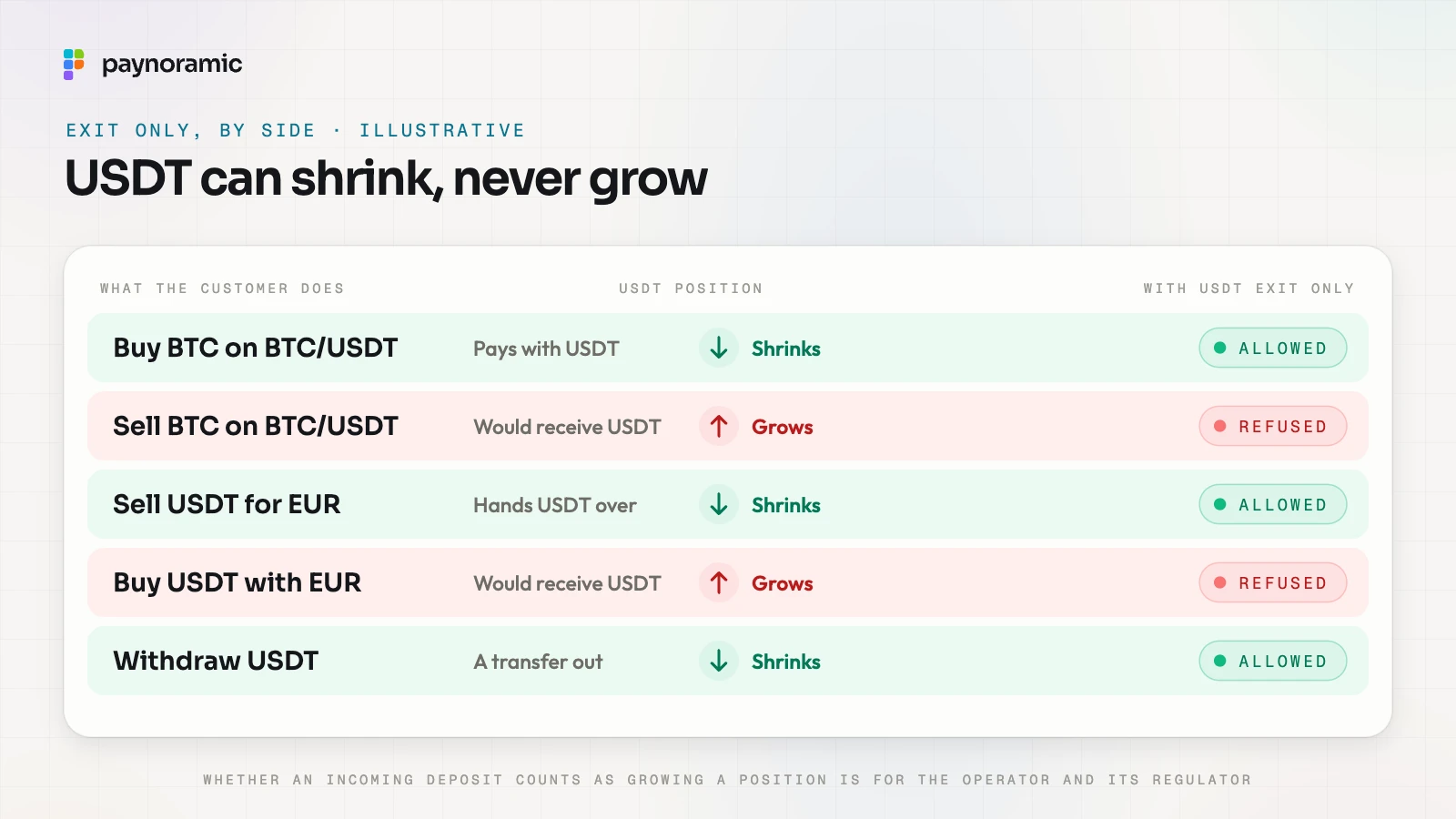
Exit only is a rule about the customer's side of each trade, and the side depends on whether the token is what is bought or what pays. In the example used throughout this guide, with illustrative numbers, USDT is set to exit only:
Buy BTC on BTC/USDT. The customer pays USDT, so the USDT position shrinks: allowed.
Sell BTC on BTC/USDT. The customer would receive USDT: refused.
Sell USDT for euros. The position shrinks: allowed. Buying USDT is refused.
Withdraw USDT. Allowed, as a transfer out.
The check belongs on the server, in the matching engine's order intake and in the broker's quoting, so the web app, the mobile apps, the API and a FIX session all meet the same rule. Whether an incoming deposit of the token counts as increasing a position is a decision for the operator and its regulator, and the software needs a setting for it either way.
3. Applying a decision to open orders
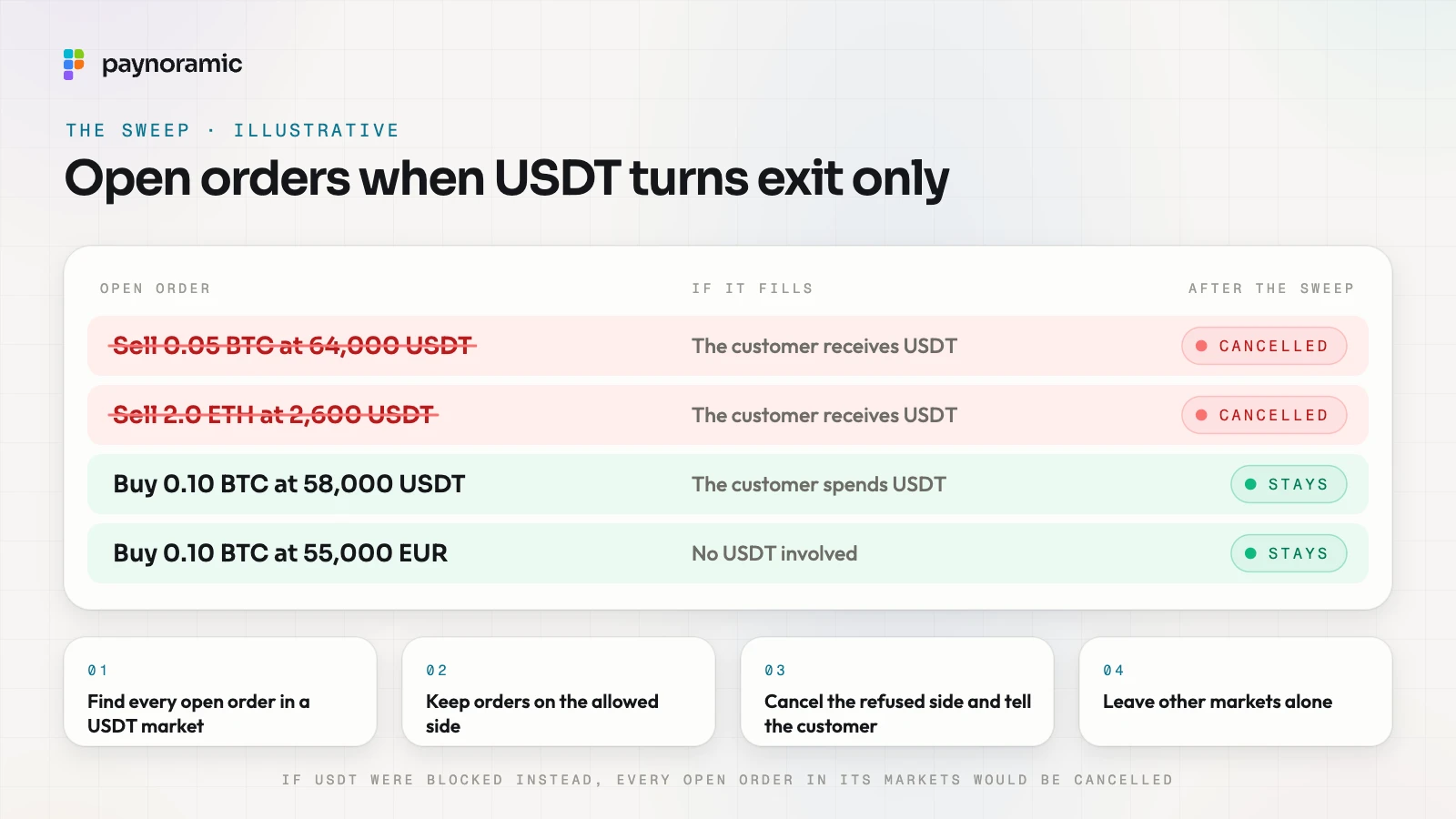
A status change also has to reach orders placed before it. A resting limit order to sell BTC for USDT was legitimate when it was placed, and if it fills tomorrow the customer's USDT position grows. So the change triggers a sweep through the order book:
Find every open order in a market that involves the token.
Keep orders on the allowed side, such as a buy of 0.10 BTC at 58,000 USDT, which spends USDT.
Cancel orders on the refused side, such as a sell of 0.05 BTC at 64,000 USDT or a sell of 2.0 ETH at 2,600 USDT, and tell each customer why.
Leave other markets alone: a buy of 0.10 BTC at 55,000 EUR does not touch USDT.
Stop orders and anything scheduled need the same treatment, since they turn into orders later. When a token is blocked, the sweep cancels every open order in its markets.
You can see this in Marengo, our exchange: each stablecoin has a status in a register (allowed, exit only or blocked), every decision needs two different staff, the restriction is enforced on the customer's side in both trading and the broker, and a sweep applies the decision to open orders.
4. Somewhere for customers to go
Exit only works when there is an exit worth taking. Markets quoted in euros, and in a euro e-money token whose white paper is in ESMA's register, give customers somewhere to move without leaving the platform, and a conversion from the restricted token to one of them is the simplest wind-down service of all.
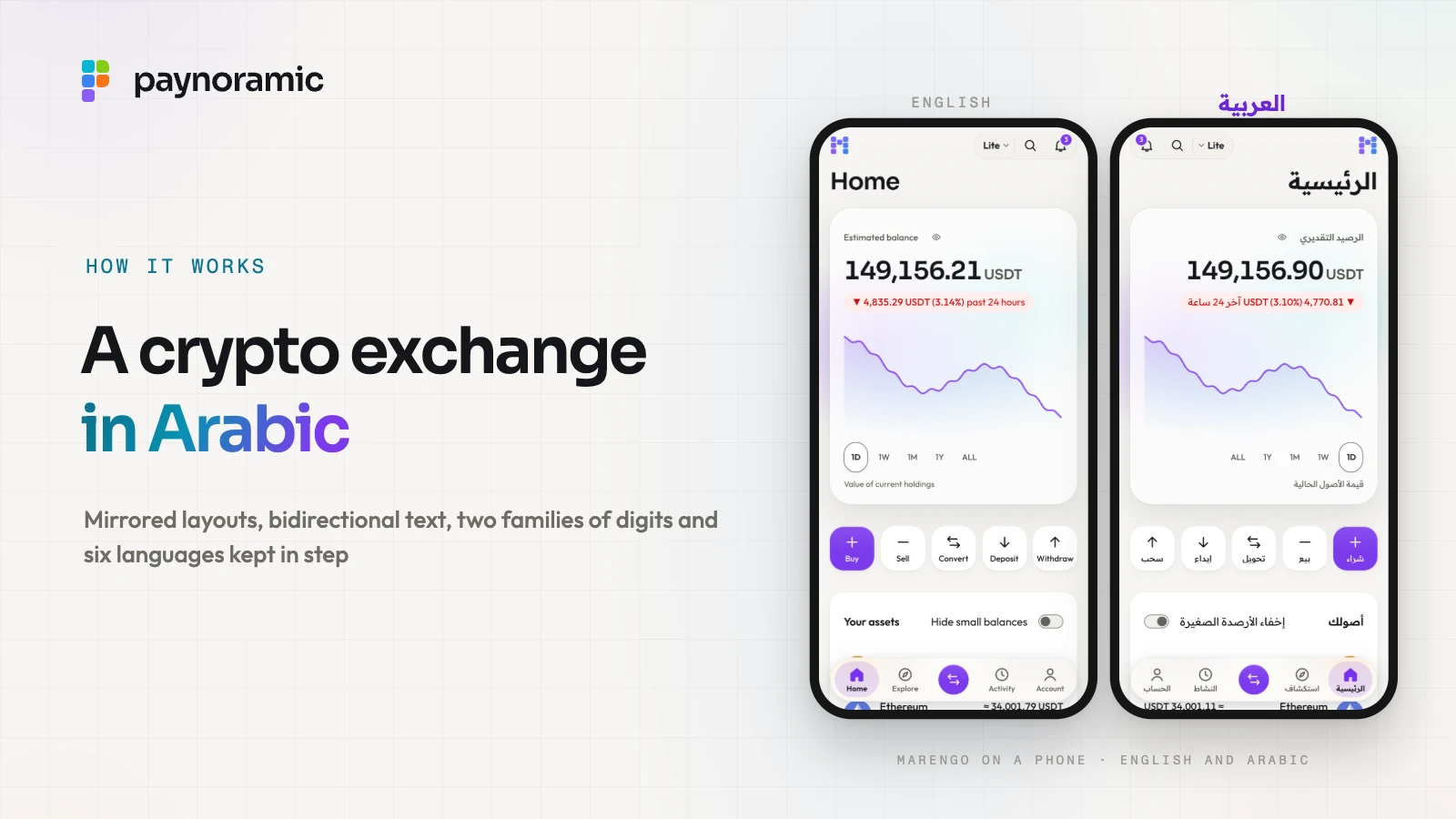
The display currency matters too. If balances, portfolio values and prices are all shown in USDT, a customer's whole view of the account rests on the token being wound down. Marengo has euro-quoted markets, EURC among them, and each customer can pick USDT or EUR as the display currency in Settings.
5. Records and notices
The opinion expects residual services to be clearly communicated, so each customer holding the token needs a notice saying what changed and what is still possible. Behind that, the operator keeps the register's history, the sweep's cancellations and each refused order in its compliance reporting, which is the evidence a supervisor asks for. The wider list of what a CASP owes under MiCA is in the MiCA checklist for a crypto exchange.
Frequently asked questions
Does ESMA's opinion name USDT? No. It names no token and sets a test: whether the conditions of Title III or IV are met. USDT does not appear in the e-money token list of ESMA's interim register as last updated on 22 October 2026.
Can EU customers still hold a non-compliant stablecoin on an exchange? Only during a wind-down. The opinion limits continuing services to sell-only, conversion, transfer or withdrawal, time-limited and closely supervised, with legacy exposures remediated within three months of the opinion's publication.
Is a risk warning before the trade enough? No. The opinion says warnings, disclosures and client acknowledgements would not sufficiently address the concern, which is why the controls sit in the software.
Does the opinion apply to an exchange outside the EU? It concerns services to clients in the EU and is addressed to EU supervisors. An exchange regulated elsewhere follows its own regulator, and one serving both has to decide which clients each status applies to.
See it working
The register, the side rule and the sweep are easiest to follow on a live exchange. Open Marengo at marengo.paynoramic.com, switch the display currency to EUR in Settings and look at the euro markets, or read about our white-label crypto exchange to see what is built and handed over.