White-label crypto exchange Your crypto exchange, live in 30 days.

A complete white-label exchange with spot trading, an order book, custody wallets, KYC and a backoffice, branded as yours and owned 100% by you.

  • ~30 daysto launch
  • 8proven modules
  • 100%yours, source included
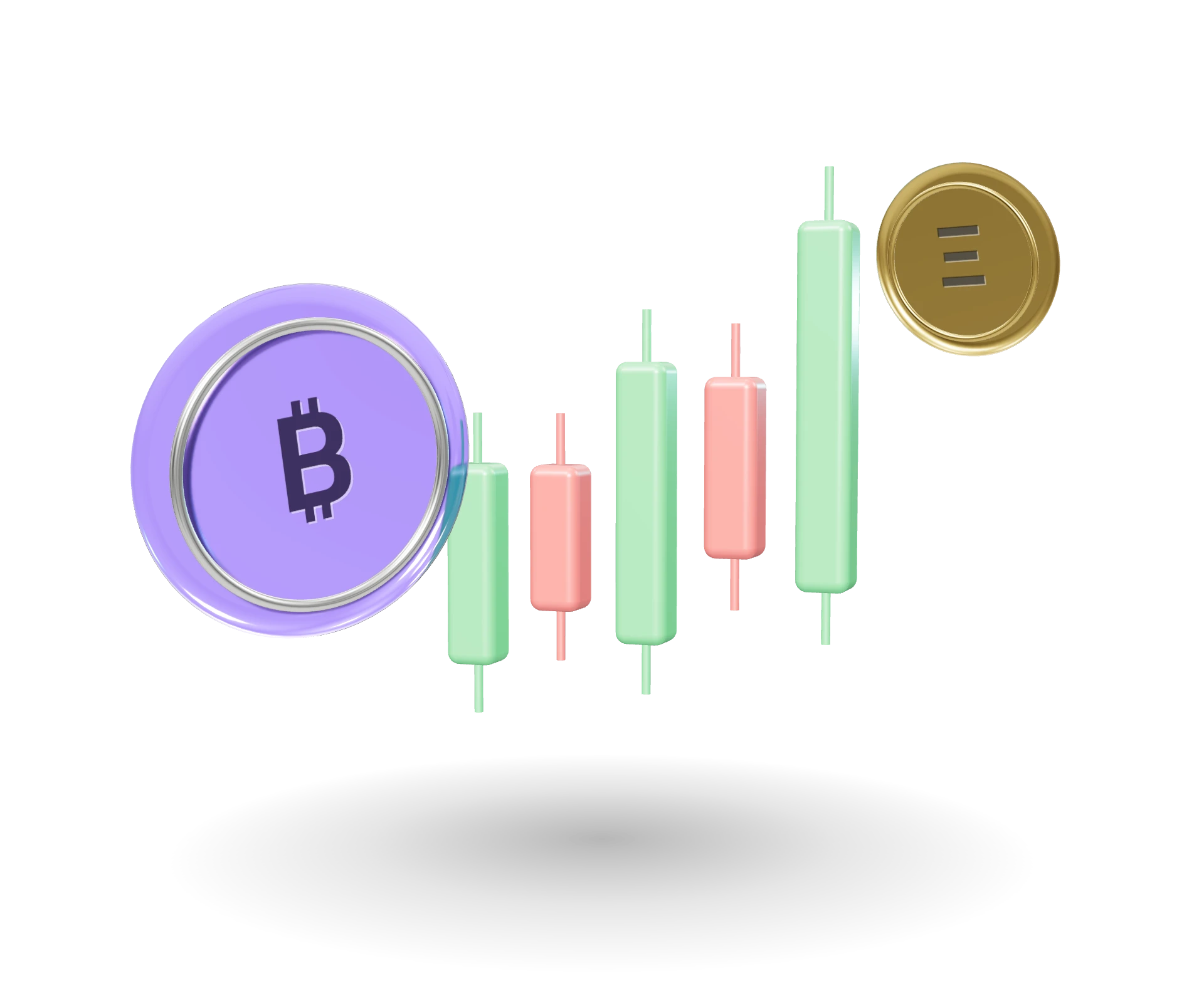
A violet glass bitcoin coin beside rising trading candles and a gold ether coin

The product

An exchange on the web and in the pocket.

The screens your customers use, in the order they meet them, shown with demo data. Your logo, colours and domain go on top.

Web app, plus iOS and Android apps

  1. 01

    Verified before the first trade

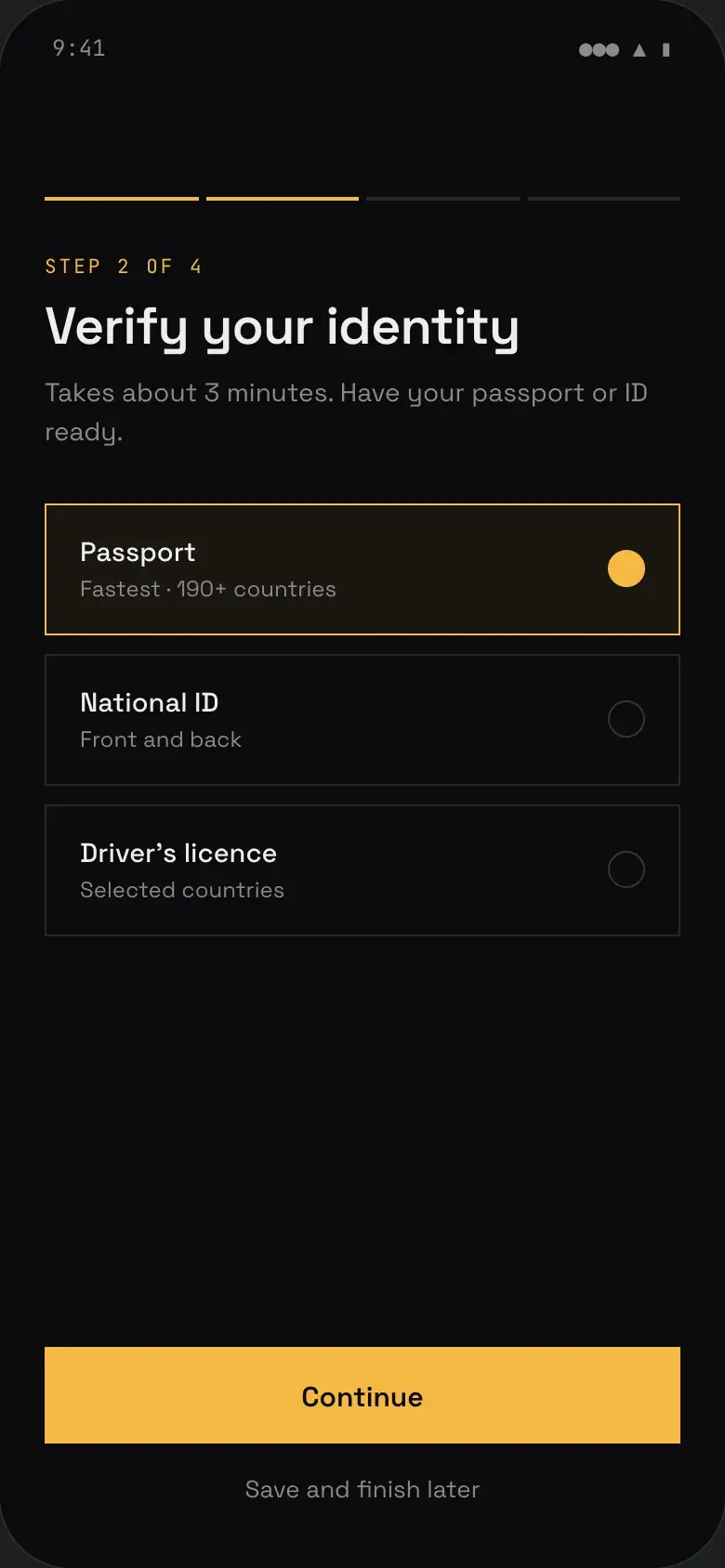
    Users pick a document and verify in about three minutes, in the app or on the web. Deposits and trading open as soon as KYC passes.

    • Passport, national ID or driving licence
    • 190+ countries
    • Limits tiered by verification level
    Crypto exchange onboarding: choosing an identity document to verify
  2. 02

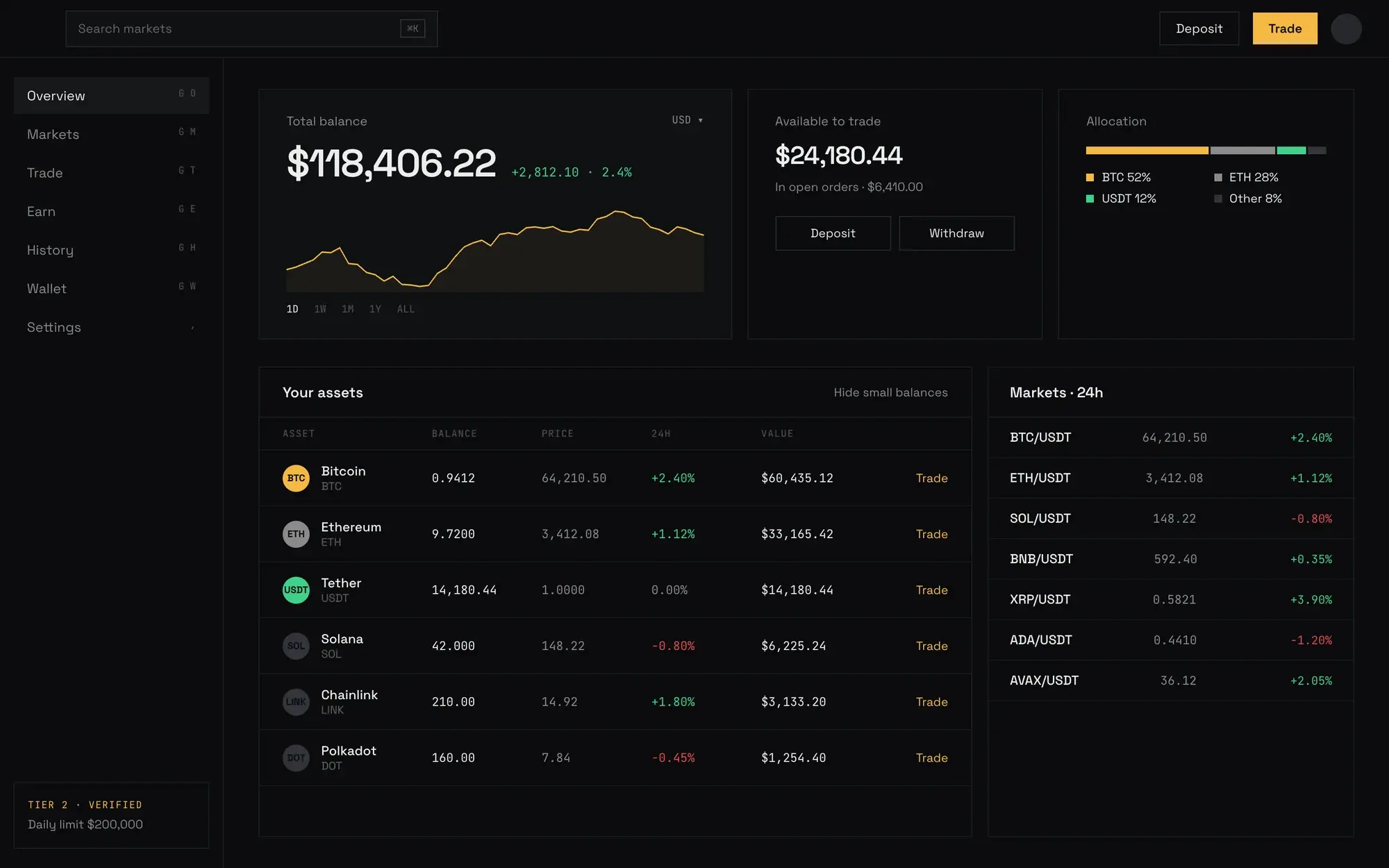
    A dashboard for every portfolio

    The total balance and allocation, and every asset with its price and change, beside the 24-hour markets.

    • Balances across all assets
    • Allocation and performance
    • Deposit and withdraw from the dashboard
    Crypto exchange web dashboard with the total balance chart, allocation, assets and 24-hour markets
  3. 03

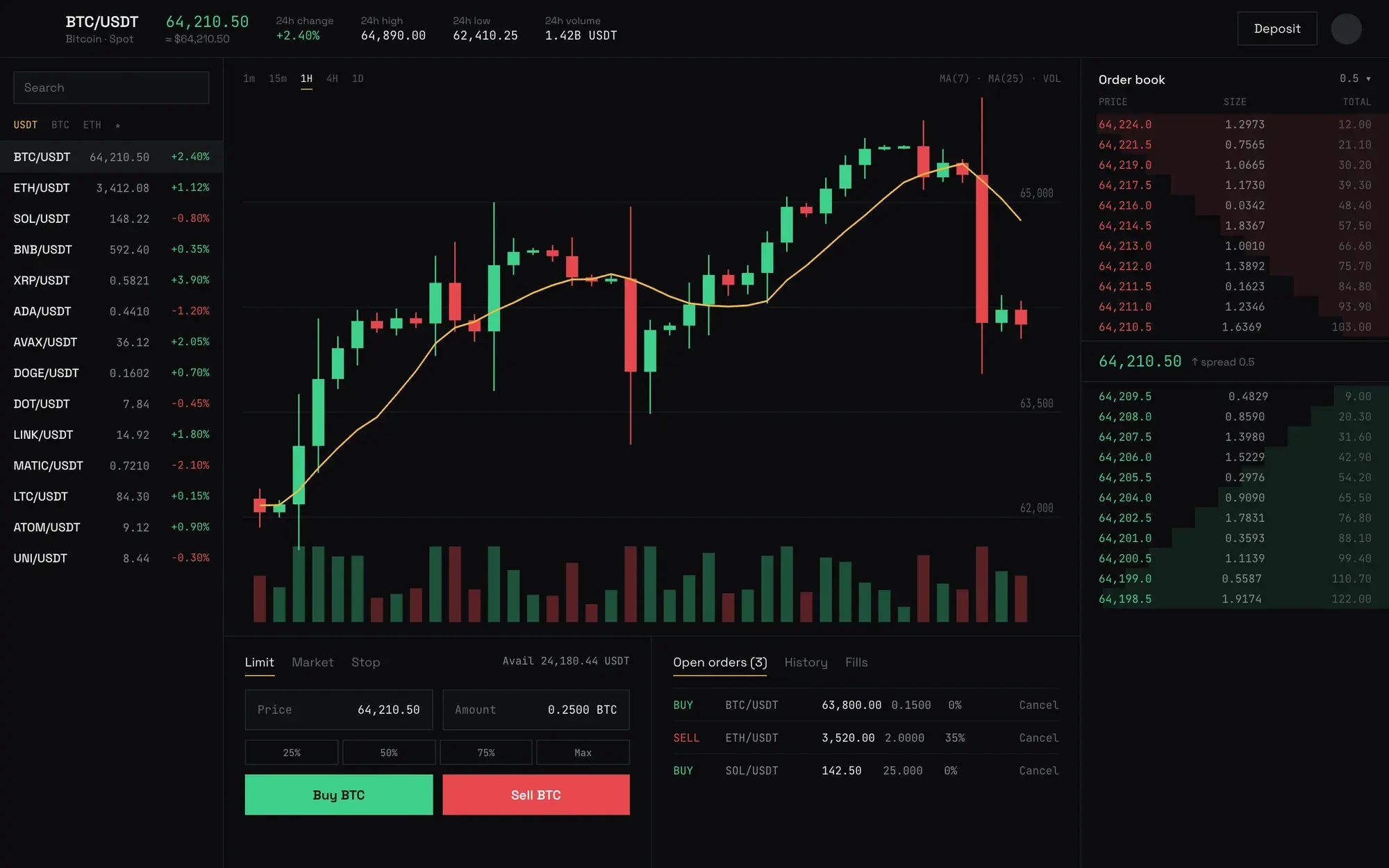
    A trading screen built for pros

    Candlestick charts, the live order book and an order ticket for limit, market and stop orders, on one screen.

    • Order book and recent trades
    • Limit, market and stop orders
    • Every pair you list
    Crypto exchange trading screen with the BTC/USDT chart, order book and order ticket
  4. 04

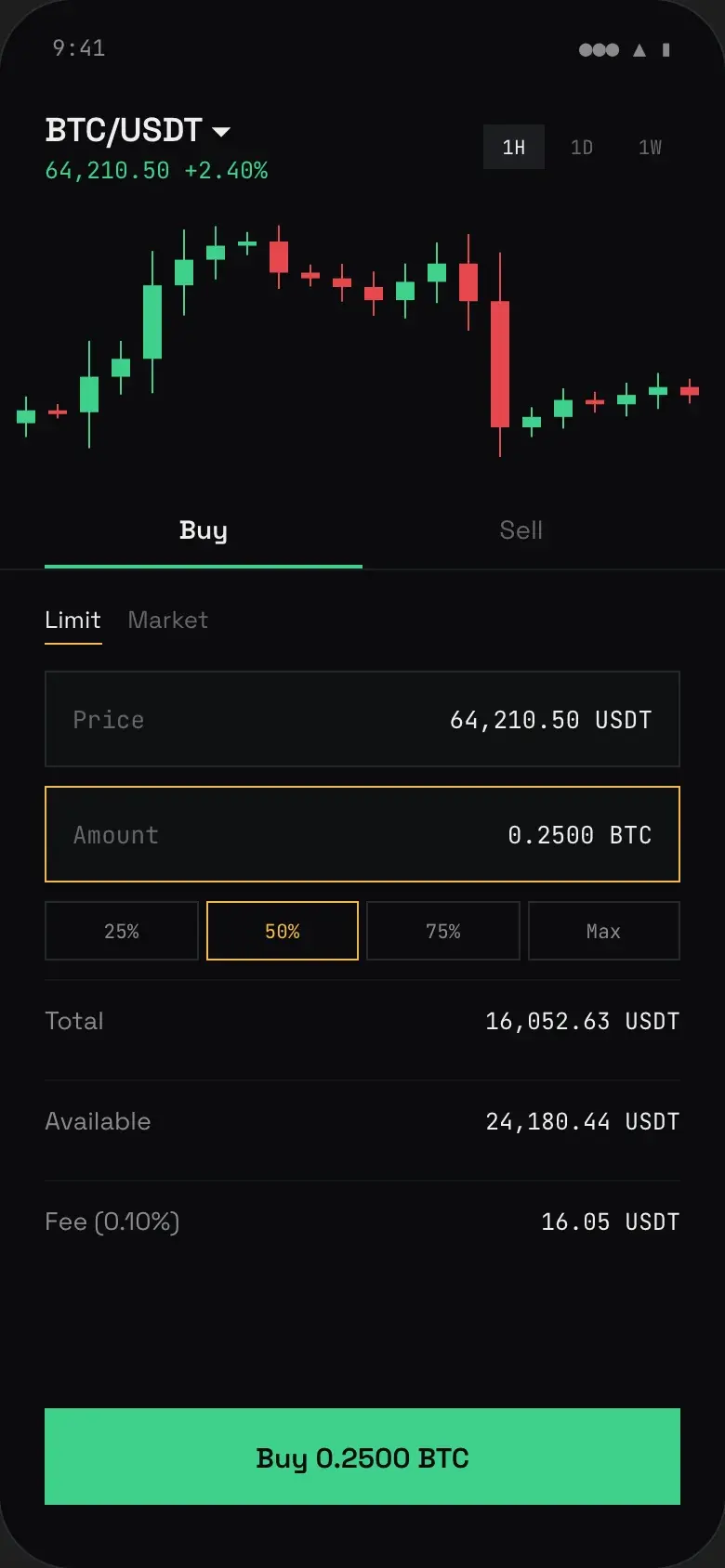
    The same market, on the phone

    The app trades the same order book: chart, buy or sell, limit or market, with the fee shown before the order goes in.

    • One matching engine for web and app
    • Amount presets
    • Fees before confirmation
    Mobile buy order for 0.25 BTC at a limit price, with the total and fee
  5. 05

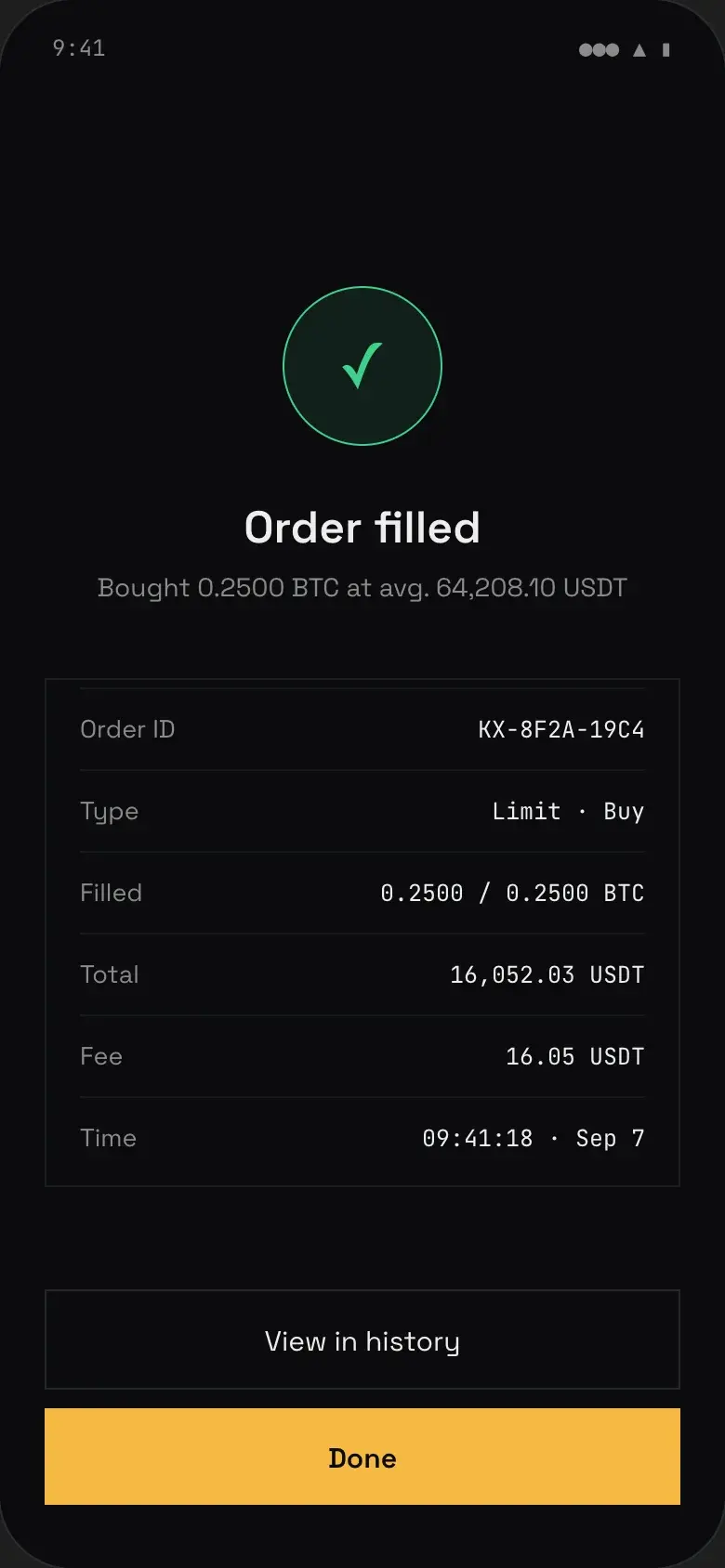
    Filled, recorded, reconciled

    Each fill lands on the ledger with its ID, price, fee and time, ready for the user's history and for your reports.

    • Partial and full fills
    • Order IDs and fees on every trade
    • History export for taxes
    Order filled confirmation for 0.25 BTC with the order ID, fee and time
Crypto exchange onboarding: choosing an identity document to verify
Crypto exchange web dashboard with the total balance chart, allocation, assets and 24-hour markets
Crypto exchange trading screen with the BTC/USDT chart, order book and order ticket
Mobile buy order for 0.25 BTC at a limit price, with the total and fee
Order filled confirmation for 0.25 BTC with the order ID, fee and time

Delivery

Two ways to launch your crypto exchange.

Ready platform

Recommended

~30 days

Time to launch, on a 12-month scale

The exchange exists in production form. We apply your brand, configure markets and pairs, connect liquidity, deploy, and hand over the source code.

  • Your brand, your domain, your infrastructure
  • Full source code handed over at launch
  • No licence fee, no revenue share, no lock-in
Get this platform

Custom build

2–3 months

Time to launch, on a 12-month scale

A unique trading flow, such as derivatives, P2P or a launchpad, built as a custom flow around the same proven core.

  • Assembled from the same proven modules
  • Scoped and priced per module, in writing
  • Same handover, same 100% ownership
Scope a custom build

Licensing

Crypto exchange: licensing in the EU, the UK and the UAE.

Running an exchange means operating a trading platform and holding customers' crypto, and both need a regulator's approval in each of these markets. Which licence you need, and who grants it, depends on where you operate.

European Union

Crypto-asset service provider (CASP) authorisation under MiCA

Your home regulator authorises each service, such as operating a trading platform and custody, and the authorisation is valid across the EU. MiCA asks for a registered office and management in the EU with an EU-resident director, capital of at least its highest minimum or a quarter of fixed overheads, whichever is more, segregated client assets and clear rules for admitting tokens. The transitional period for existing firms ended on 1 July 2026 at the latest; the Travel Rule has covered transfers of any amount since 30 December 2024.

United Kingdom

FCA registration under the MLRs, then FSMA authorisation from 25 October 2027

Today an exchange doing business in the UK must register with the FCA under the Money Laundering Regulations, as a cryptoasset exchange provider and, if it holds customers' crypto, a custodian wallet provider. From 25 October 2027, operating a cryptoasset trading platform and safeguarding cryptoassets need FCA authorisation, with rules on capital, client assets and market abuse. The application window closes on 28 February 2027, registrations do not convert automatically, and the FCA now steers new firms to authorisation.

United Arab Emirates

VARA licence for Exchange Services, or a multilateral trading facility permission

In Dubai outside DIFC, VARA licenses exchanges in two stages: an approval to incorporate, which does not allow trading, then the licence. It asks for paid-up capital, insurance, client reserves held one to one, a compliance officer living in the UAE or holding its passport, and custody in a separately licensed company. The DFSA in DIFC and the FSRA in ADGM authorise exchanges as multilateral trading facilities; elsewhere onshore, the Capital Market Authority (formerly the SCA) issued a new virtual assets framework on 13 April 2026, and stablecoin trading outside the financial free zones also needs a Central Bank (CBUAE) licence or registration.

Before your own licence

Whoever operates the order book needs the licence for it, so your own exchange means your own licence. Custody can sit with a licensed partner: MiCA lets an authorised provider use another authorised custodian, and VARA asks less capital of an exchange using a VARA-licensed one. Some companies first offer buying and selling through a licensed provider serving customers under its own authorisation, then add their own order book once licensed.

What we bring

The exchange ships with the controls regulators look for: KYC and sanctions screening, wallet screening, transaction monitoring with suspicious activity reports, Travel Rule messaging, MiCA, DAC8 and CRS reports, proof of reserves reporting, market surveillance and a full audit trail. We configure it for your licence and help you choose licensed partners. We are not lawyers: your counsel decides which licence you need.

Applying for the licence yourself? Paynoramic Consulting prepares its technical side with you

General information, not legal advice. Checked against the sources above on 6 October 2026.

Launch

What launching your crypto exchange involves.

Handed over at launch

  • Matching engine source code: order book, order types, fee tiers, circuit breakers
  • REST, WebSocket and FIX APIs for market makers and traders
  • Custody and wallets: deposit addresses per chain, hot, warm and cold tiers, withdrawal approvals
  • The ledger, reconciled daily, with every fill, fee and transfer
  • Web trading app and iOS and Android apps, in your brand
  • Backoffice and compliance tools: KYC review, monitoring cases, Travel Rule messaging, audit log
  • Infrastructure configuration and documentation
  • Administrator accounts and production access

Running alongside, with others

Your licence
Your regulator decides. Under MiCA it has 25 working days to confirm your application is complete and 40 to decide on it, plus up to 20 for questions.
Custody, KYC and Travel Rule providers
Each signs a contract with you, which we help you get, and checks your business first; its onboarding sets when that connector goes live.
Liquidity and market makers
Each needs its own agreement, fitted to your licence: MiCA bars a platform operator from trading for its own account on its platform; VARA bars licensed firms from proprietary trading.
A bank for client money
Fiat needs a client account at a bank, opened on the bank's own checks; under MiCA, client money goes there by the end of the next business day.
App store review
Apple lists exchange apps only where they are licensed, and Google Play asks for the MiCA authorisation, FCA registration or VARA, DFSA or FSRA licence first.

The software takes about 30 days on the ready path. The licence and the partners alongside it usually set the date customers can trade, and they often take longer.

Assembled from

Eight modules from the library.

Each one running in production before it reaches your platform. See the whole library

How it works

From brief to handover.

  1. 01

    Brief

    One call. Tell us the product, the market and the launch date. We map it to the modules that already exist.

  2. 02

    Configure

    We pick the modules, apply your brand and set up your infrastructure. Every piece is already proven in production.

  3. 03

    Deploy

    Your platform goes live on your domain, with your data, under your control.

  4. 04

    Handover

    Source code, documentation and the keys. The platform is yours, with no licence and no revenue share.

Questions

What buyers ask about a white-label crypto exchange.

How much does a white-label crypto exchange cost?

A one-off fee, scoped and priced per module, in writing, with no licence fee, no revenue share and no lock-in. Plan separately for your licence and the capital your regulator requires you to hold, hosting, and liquidity for your markets. We help you get the contracts with the custody, KYC and Travel Rule providers you choose. Custom flows such as derivatives are scoped the same way.

Do I need a VARA licence to run an exchange from Dubai?

Yes, if you operate in or from Dubai outside DIFC, wherever your customers are. You apply through Dubai Economy and Tourism or a Dubai free zone: first an approval to incorporate, which does not allow trading, then the Exchange Services licence. Custody needs its own licensed company, and the exchange may not trade for its own account. In DIFC the DFSA licenses instead, in ADGM the FSRA.

Who holds the customers' crypto and money?

You do, as the licensed exchange, or a custodian you appoint; not Paynoramic. Keys are held through Fireblocks, BitGo, Copper, Cobo or Ledger Enterprise, or in your own HSMs or MPC cluster, and withdrawals pass your approvals before signing. MiCA requires client crypto kept apart from yours, on-chain too, and client money at a bank by the end of the next business day; VARA requires one-to-one reserves.

How long until real customers can trade?

The software is ready in about 30 days on the ready path. Real trading starts once you hold your licence and your custodian, bank and liquidity providers have onboarded you, all in parallel. In the EU, MiCA gives regulators fixed deadlines once an application is complete; the FCA's new UK regime starts on 25 October 2027. You can test the exchange meanwhile.

How does the exchange handle the Travel Rule?

Transfers to and from other providers carry sender and recipient data through Notabene, Sygna, 21 Analytics or TRP, and incoming data is checked before funds are credited. Deposits and withdrawals are also screened with Chainalysis, Elliptic or TRM Labs. In the EU the rule has covered transfers of any amount since 30 December 2024, self-hosted wallets included; the UK has had its own since 1 September 2023; VARA reviews yours at licensing.

Which custody, liquidity and compliance providers does it connect to?

Custody runs on Fireblocks, BitGo, Copper, Cobo or Ledger Enterprise, with nodes from Infura, Alchemy or QuickNode. Quieter pairs can mirror liquidity from Binance, Kraken, OKX, Coinbase Prime, B2C2 or Wintermute while market makers connect over FIX and WebSocket. Identity checks run on Sumsub, Onfido, Veriff and others; surveillance on Solidus Labs or Eventus. Your own keys, nodes and providers connect too.

What do I own at handover?

All of it. On launch you receive the full source code of the matching engine, custody and wallets, ledger, web and mobile apps and backoffice, with infrastructure configuration and documentation. It runs on your infrastructure, under your licence. There is no licence fee, no revenue share and no lock-in: the exchange is a deliverable, not a subscription, and your developers can change any part.

Can we list new tokens, chains and products later?

Yes. A new pair is configuration, another EVM chain mostly so; other chains need a new connector. Each token must first pass your listing rules: under MiCA, a suitability assessment and, where required, a white paper; in DIFC, your own assessment since 12 January 2026, except fiat stablecoins; in ADGM, a notice to the FSRA at least five business days before use. Derivatives, P2P or a launchpad come as custom flows, and may need their own approval, as VARA requires for margin trading.
Guides

Before you launch a crypto exchange: our guides.
More platforms

Built from the same library.

Start your project

Tell us the idea. We'll show you the platform.

One call is enough to map your product to the modules that already exist.

  • Response in under one business day
  • NDA on request
  • No obligation
How can we help?
Build it yourself