What does it cost to launch a crypto exchange?
Licensing, capital, technology, liquidity and people: where the money goes when you launch an exchange, and which of those costs depends on how you build.
Paynoramic's Founder5 min read
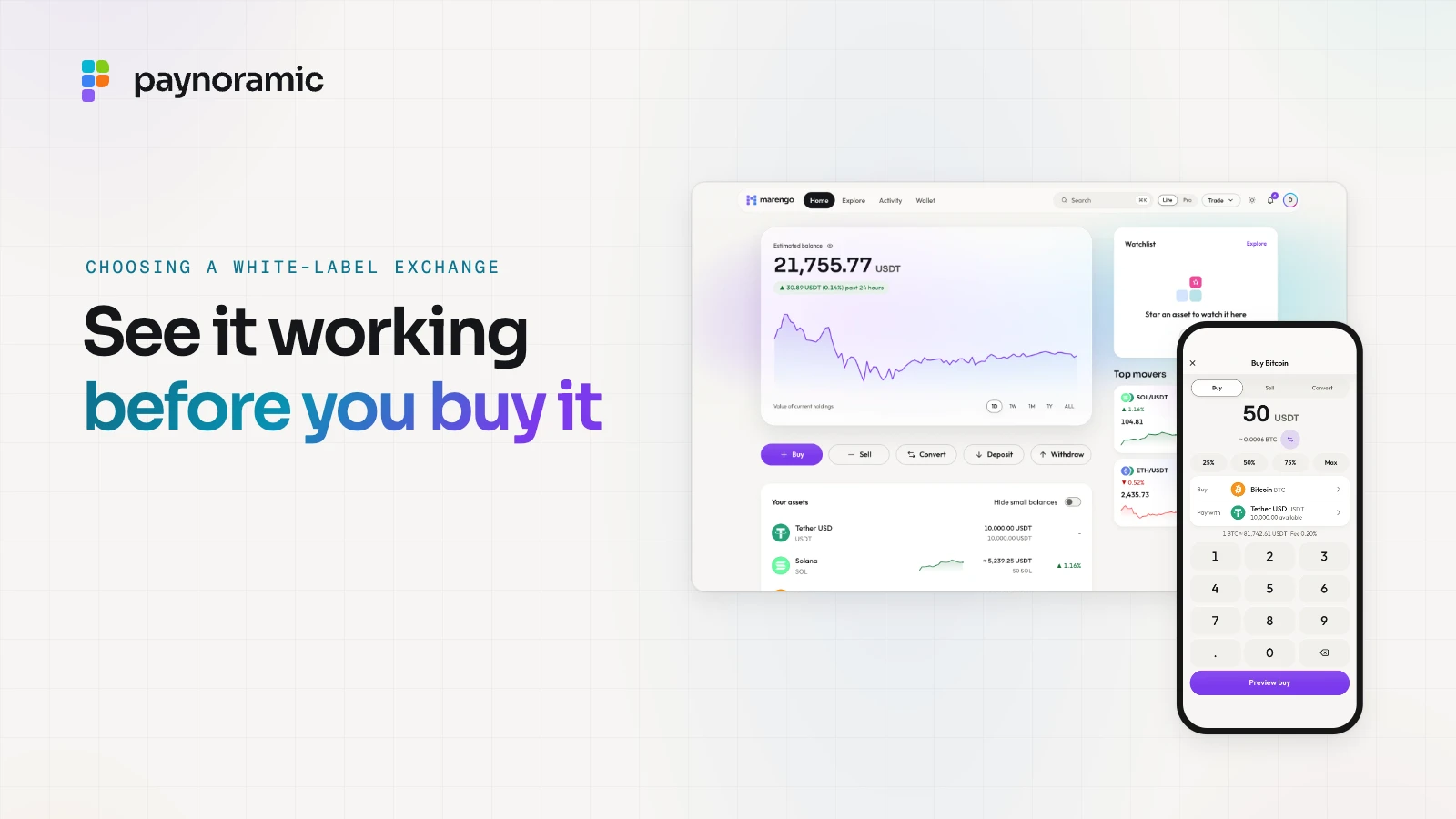
Read the articlePaynoramic launches Marengo, a white-label crypto exchange you can try before you buy.Meet Marengo, our white-label exchange. See the exchange.
Insights
Guides and lessons from the team that builds crypto exchanges, on-ramps and stablecoin payments.

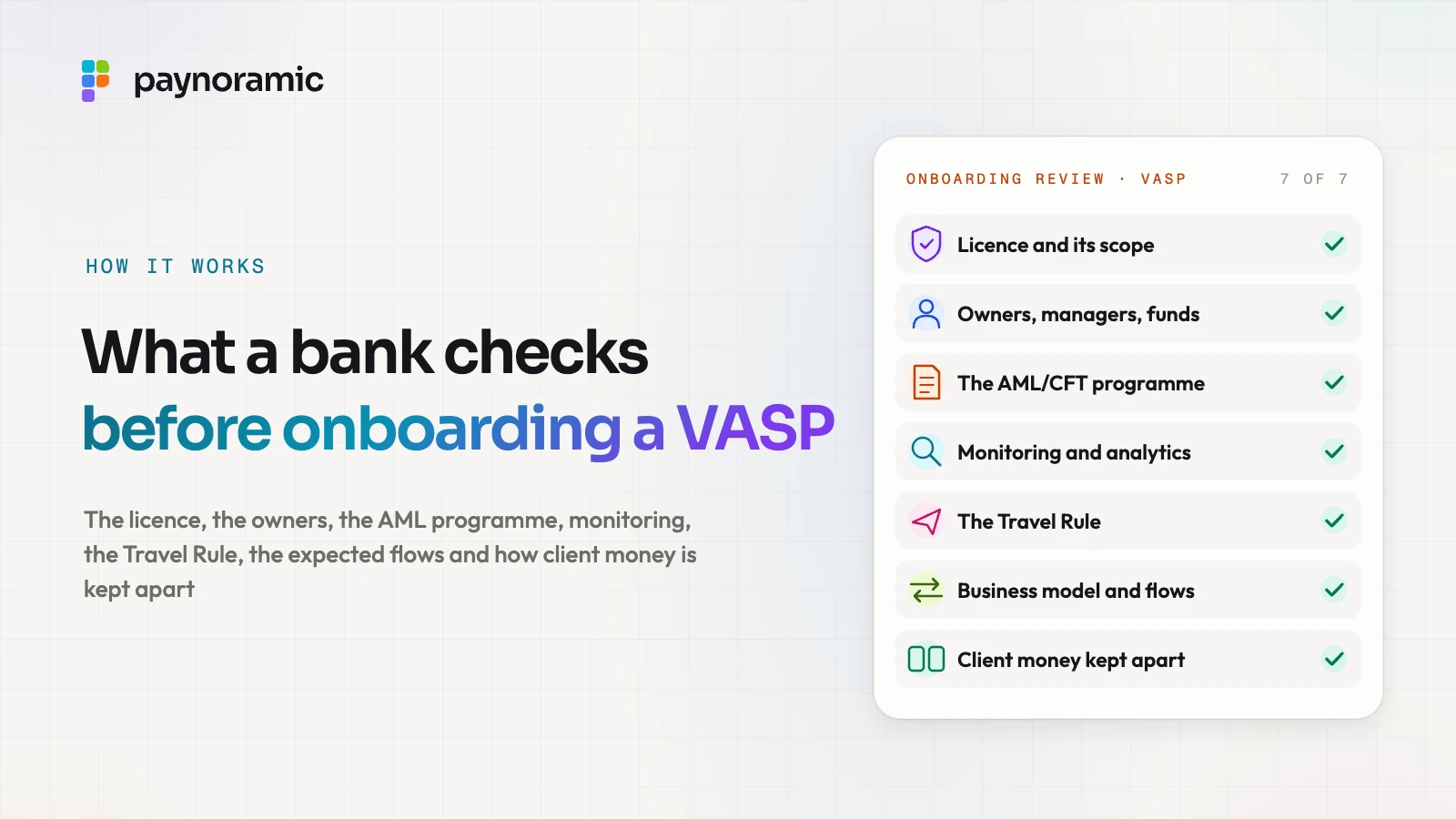
Before a bank opens an account for a VASP, it checks the licence, the owners and managers, the AML programme, monitoring and the Travel Rule, the expected flows and how client money is kept apart.
Paynoramic's Founder8 min read

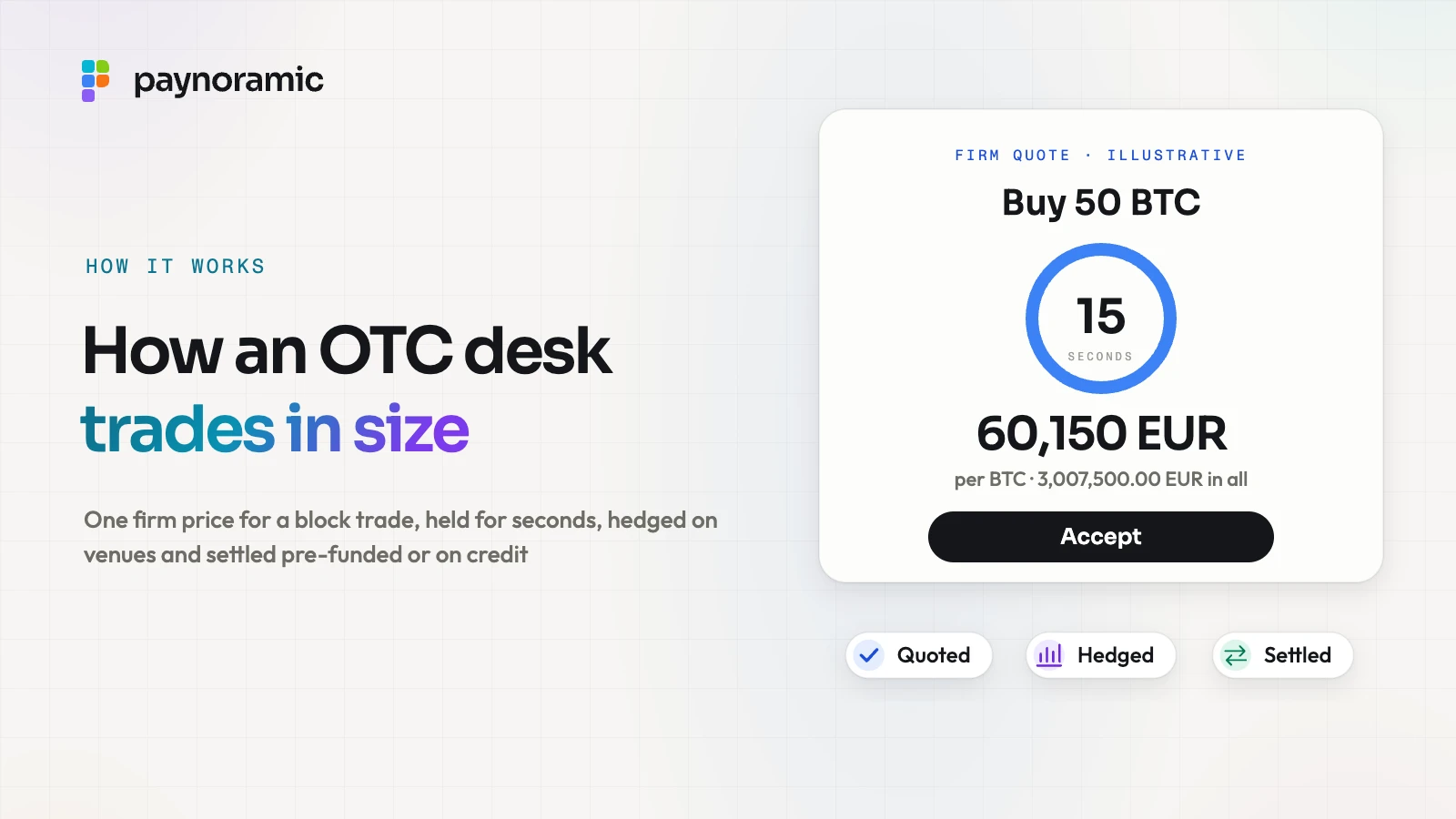
A crypto OTC trading desk quotes one firm price for a block trade, holds it for seconds, books it on acceptance, hedges it on venues and settles pre-funded or net on credit, under a MiCA licence.
Paynoramic's Founder8 min read

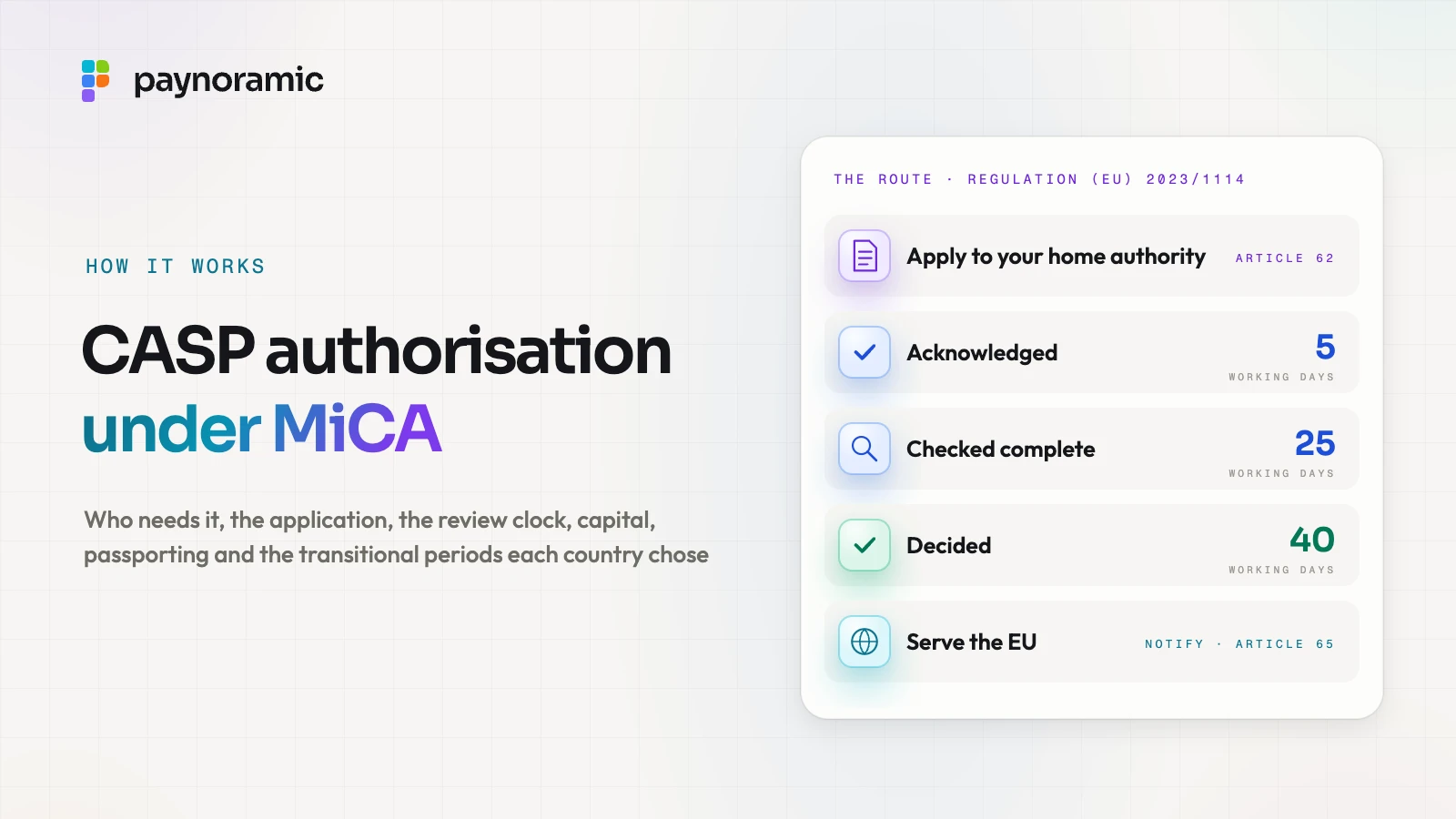
A crypto firm applies for CASP authorisation to its home authority under MiCA, which checks the file in 25 working days and decides within 40 more, then serves the EU by notification.
Paynoramic's Founder8 min read

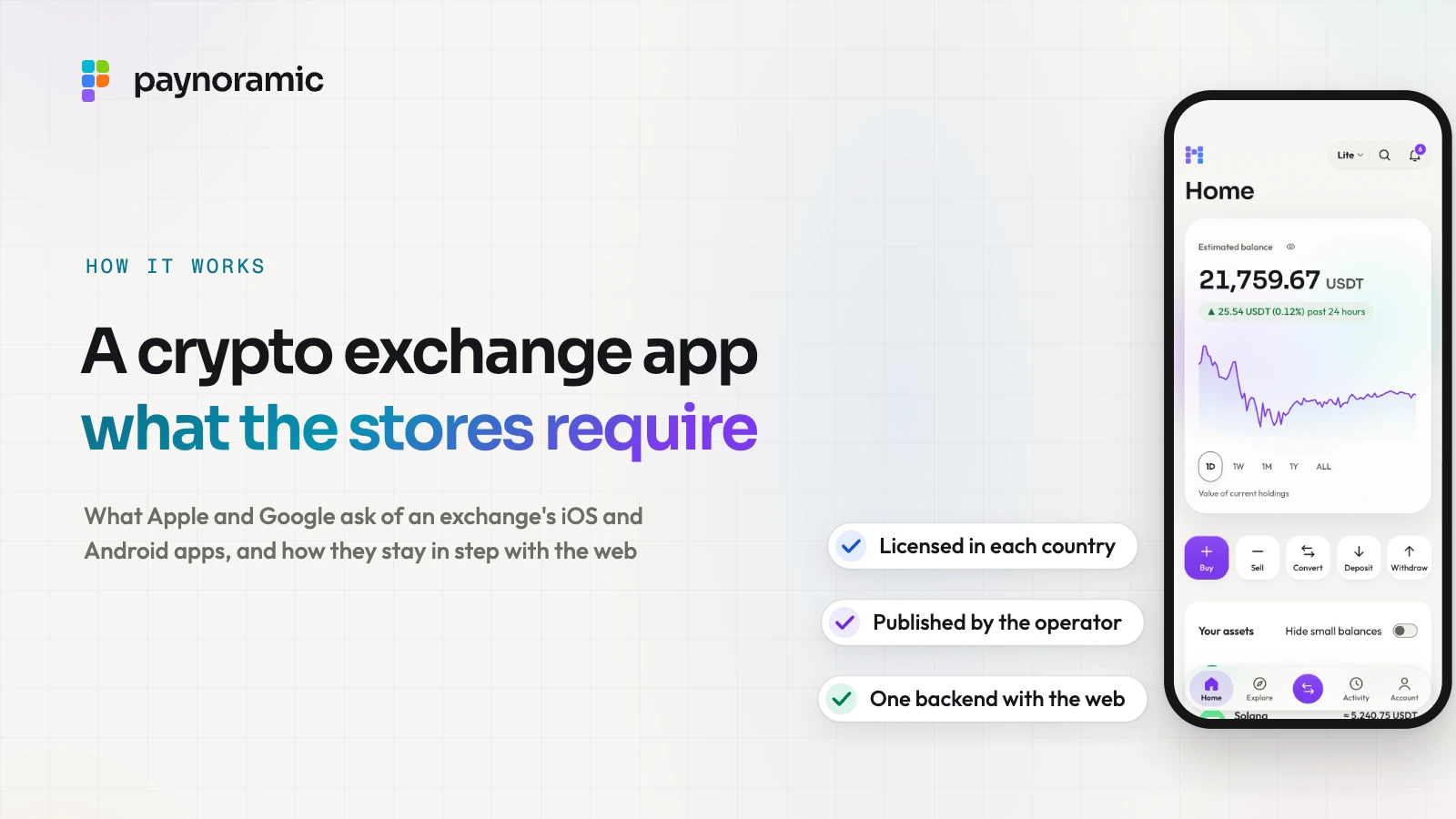
Apple and Google publish a crypto exchange app only where the operator is licensed, and only from the operator's own organisation account. Underneath, the app runs on the same backend as the web.
Paynoramic's Founder8 min read

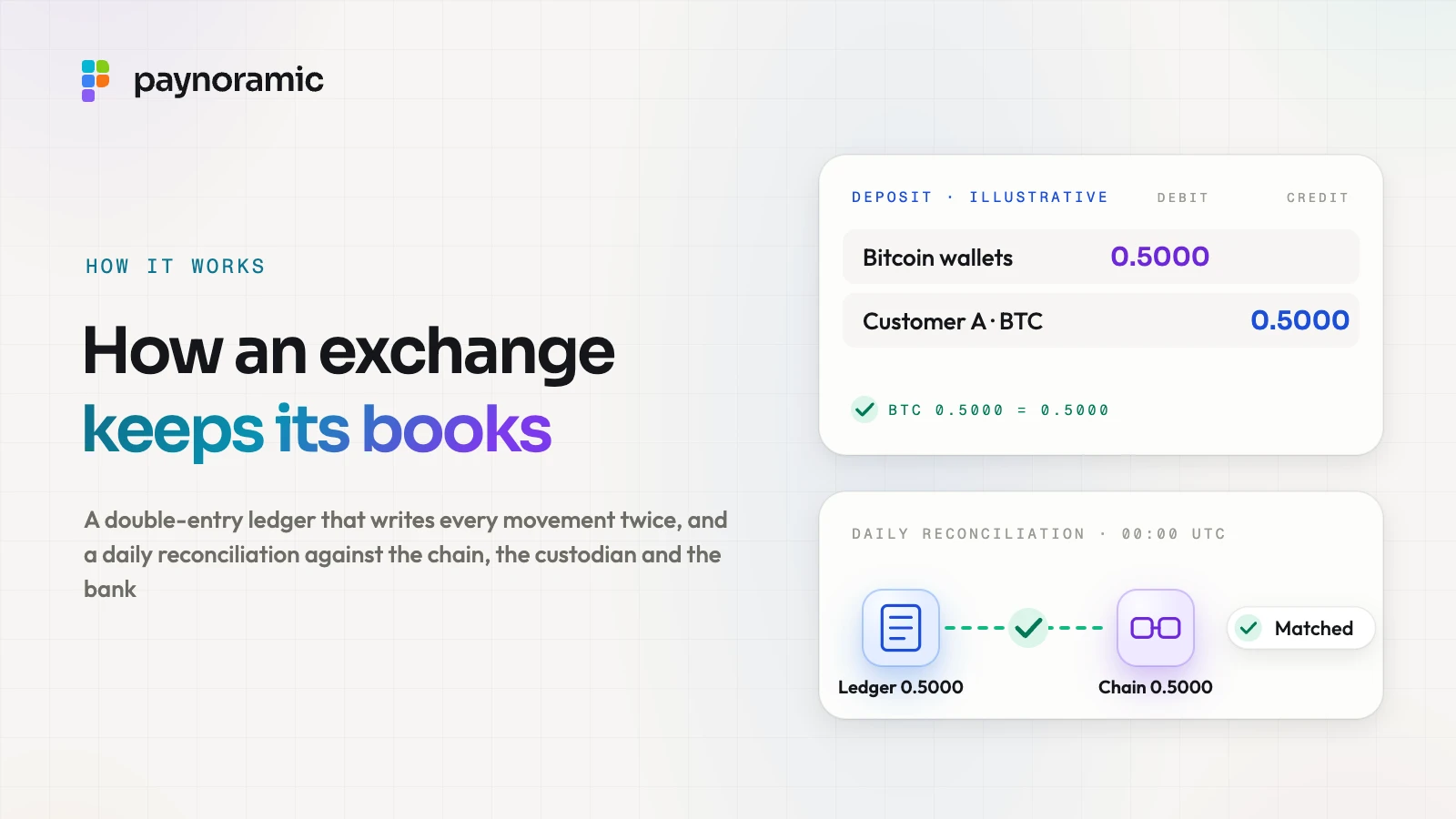
A crypto exchange records every deposit, trade, fee and withdrawal twice in a double-entry ledger, then checks the ledger every day against its wallets and bank accounts and investigates each break.
Paynoramic's Founder8 min read

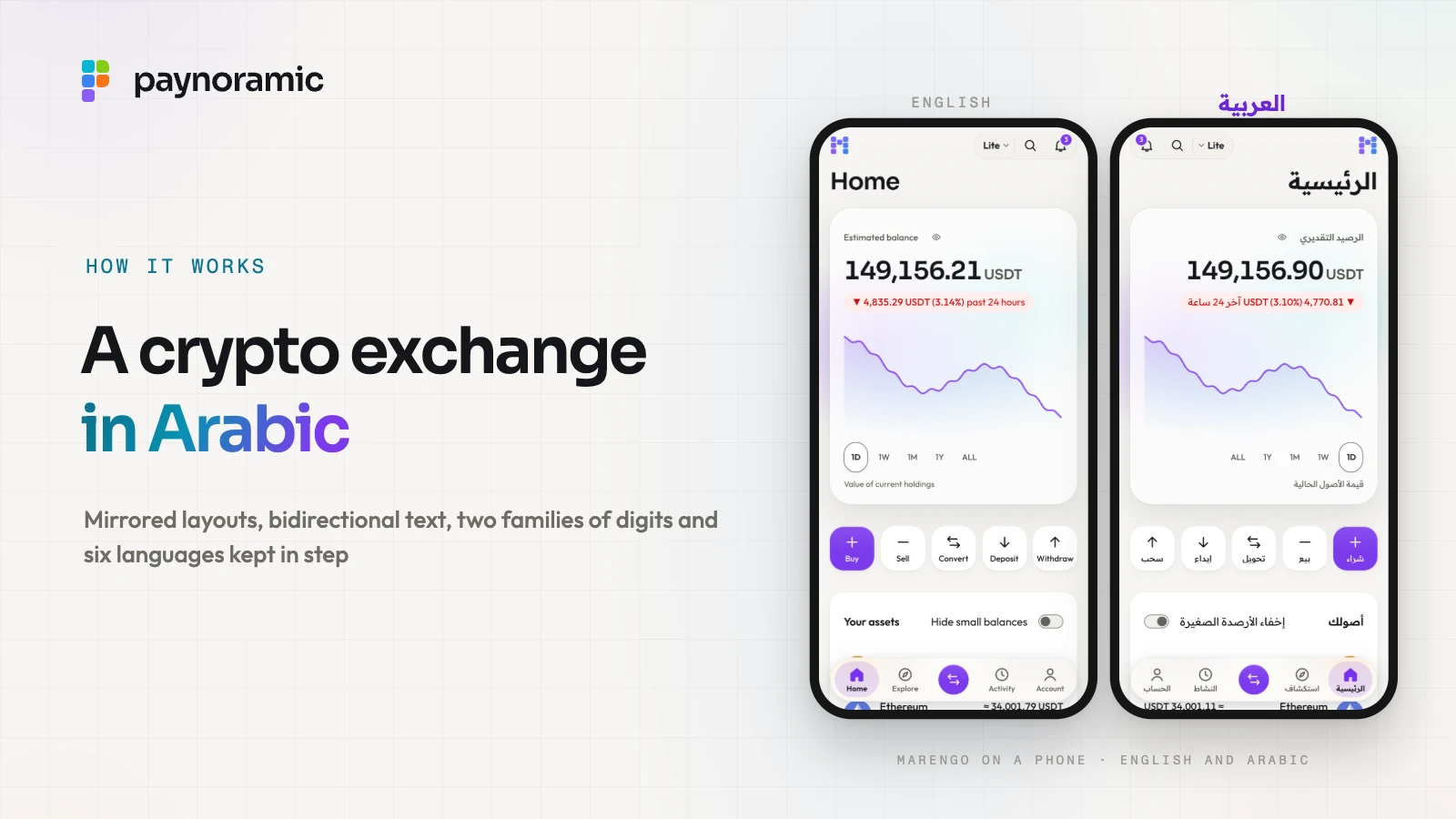
An Arabic crypto exchange runs its pages right to left, so the layout mirrors, while charts, order books, figures and addresses stay left to right. Digits, translation and six languages need rules.
Paynoramic's Founder8 min read

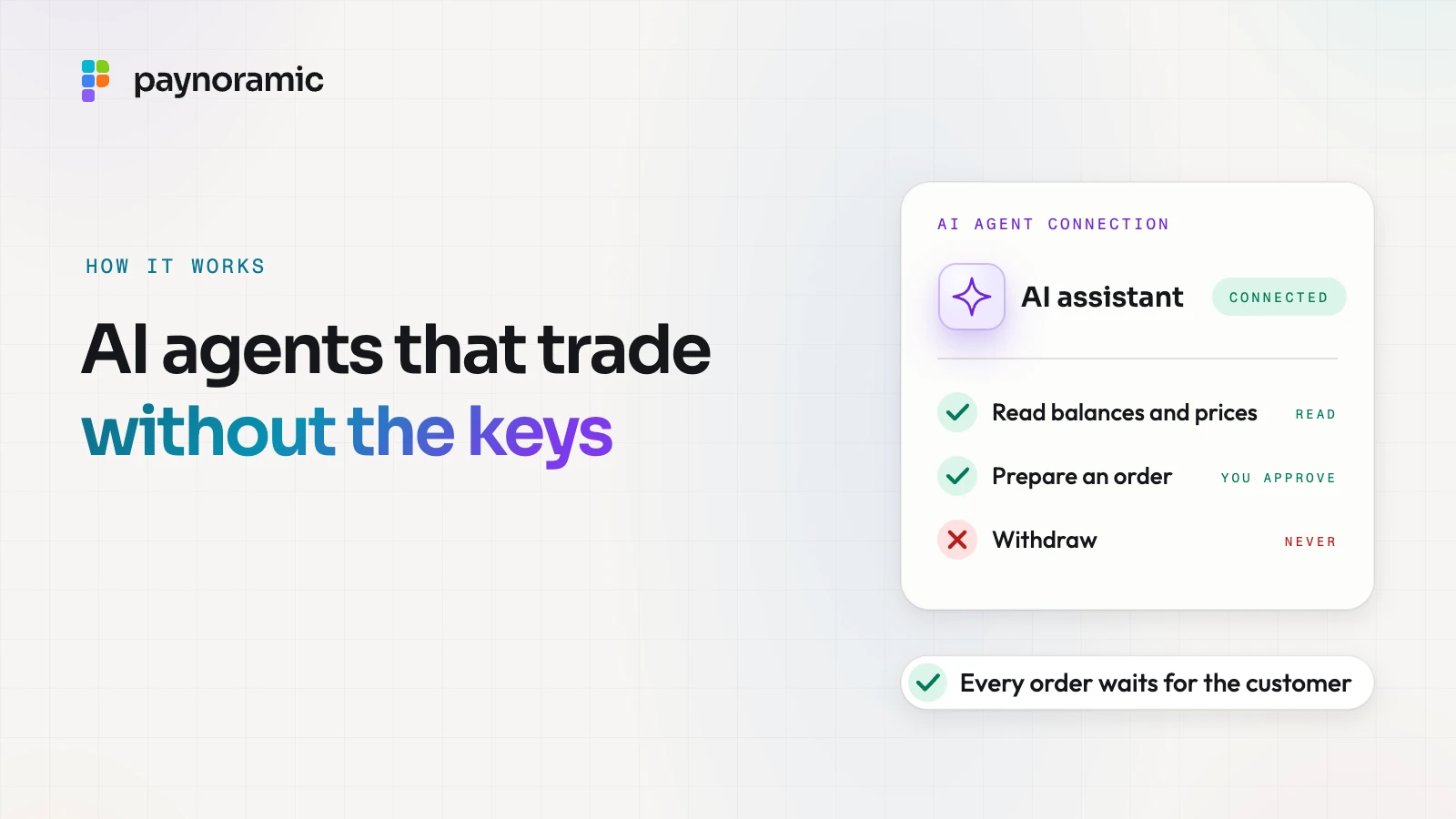
An exchange can let an AI assistant read an account and prepare orders through an MCP server, read-only by default, with every order waiting for the customer's approval in the app.
Paynoramic's Founder7 min read

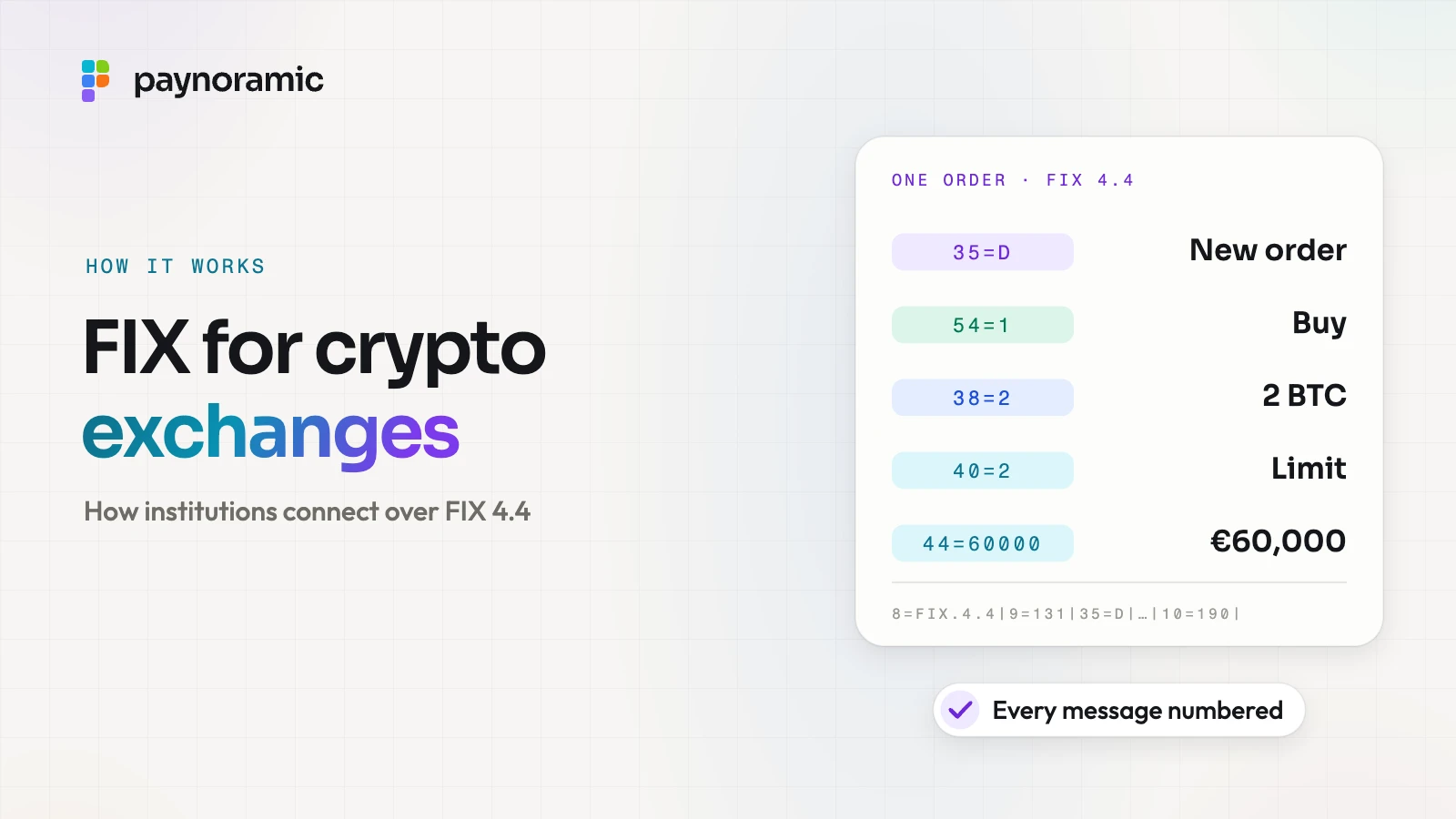
Institutions trade over FIX. On a crypto exchange with FIX 4.4 they hold a numbered session over TCP, send each order as a NewOrderSingle and get every fill and cancel back as an ExecutionReport.
Paynoramic's Founder8 min read

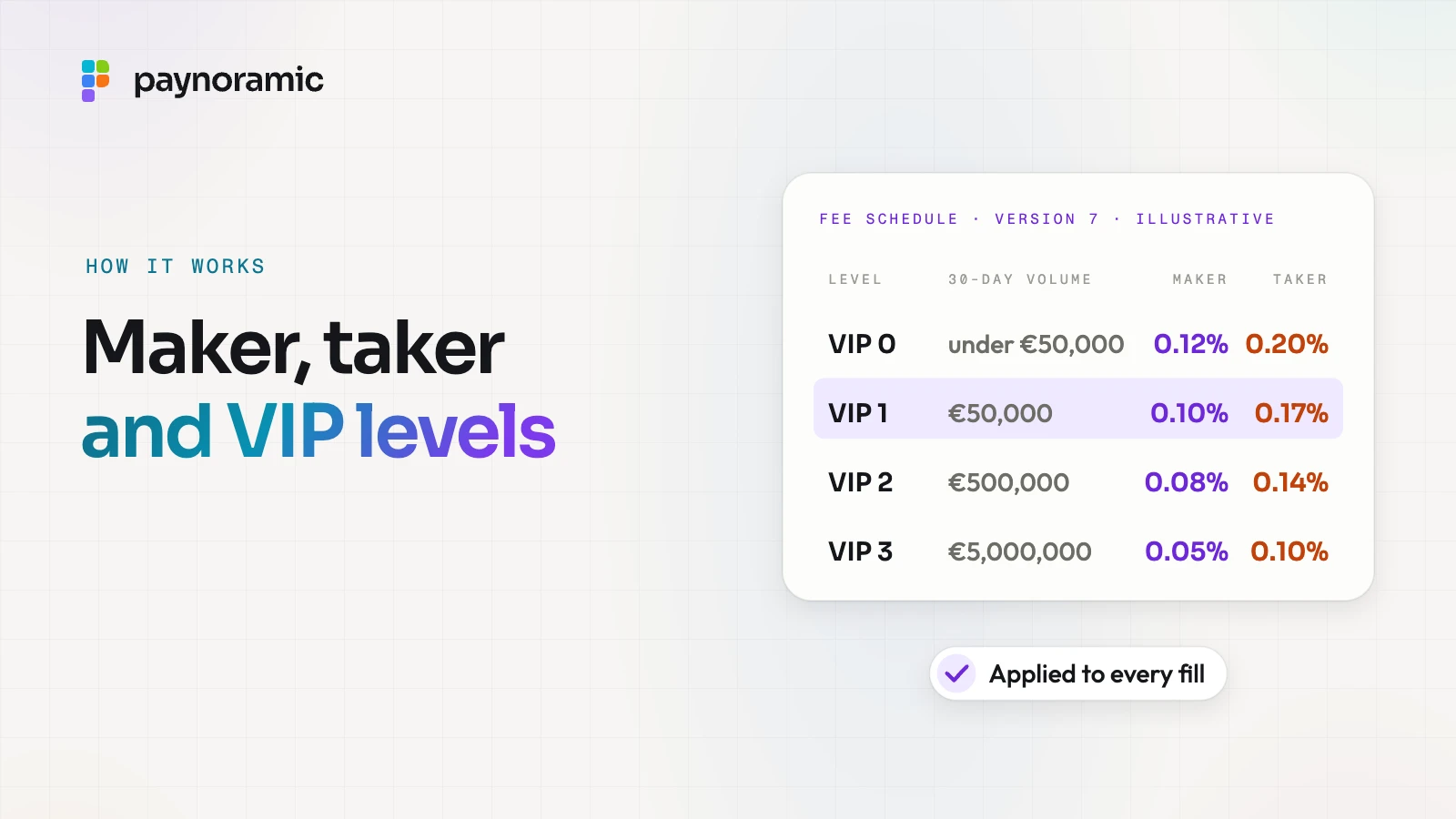
A fee schedule sets a maker and a taker rate for each VIP level, chosen by 30-day rolling volume. It is versioned, approved by two people, published, and applied to every fill automatically.
Paynoramic's Founder8 min read

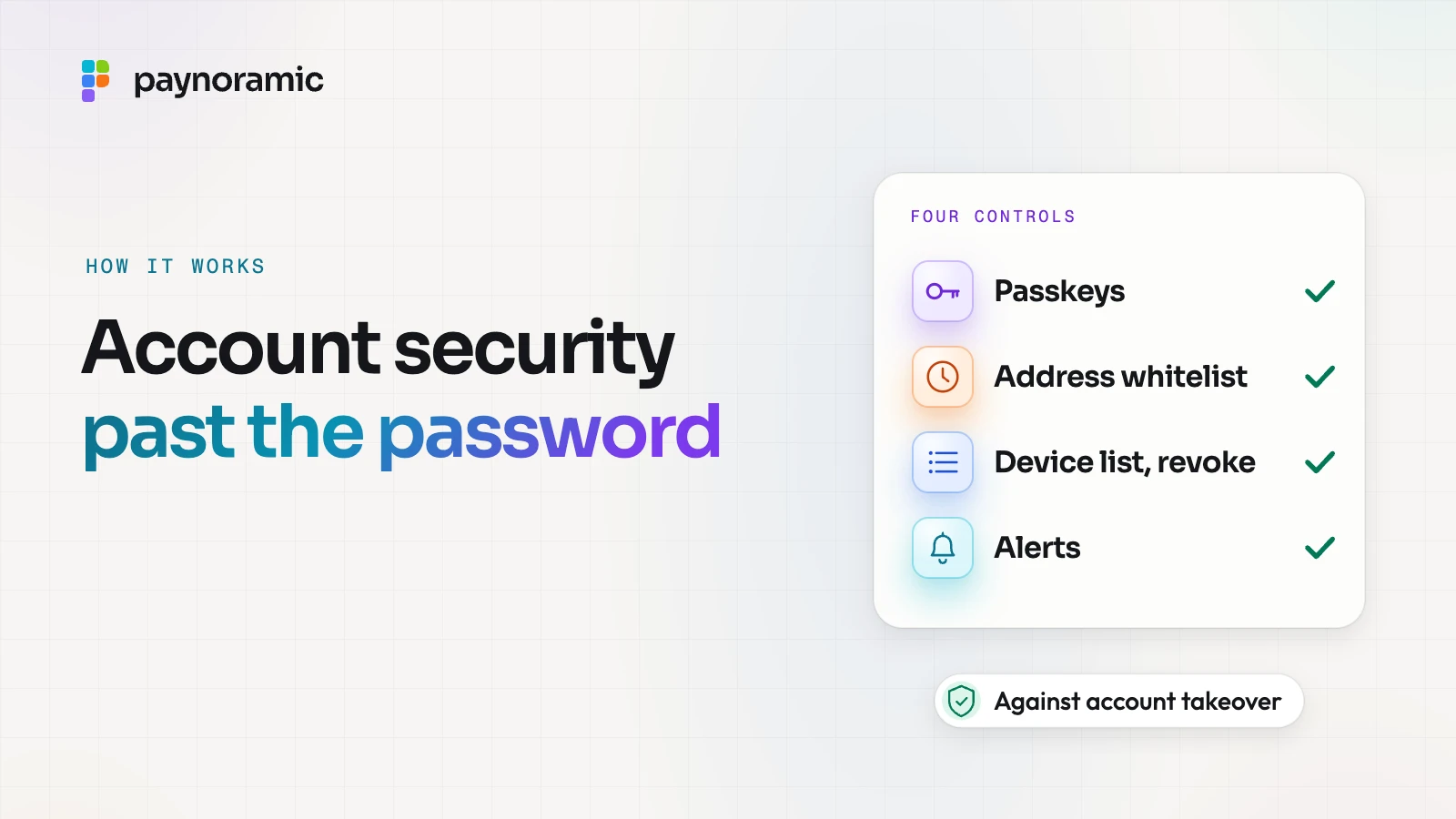
A password and an SMS code can be phished or redirected. Passkeys resist phishing, a whitelist makes new withdrawal addresses wait, and a device list and alerts let the owner act first.
Paynoramic's Founder8 min read

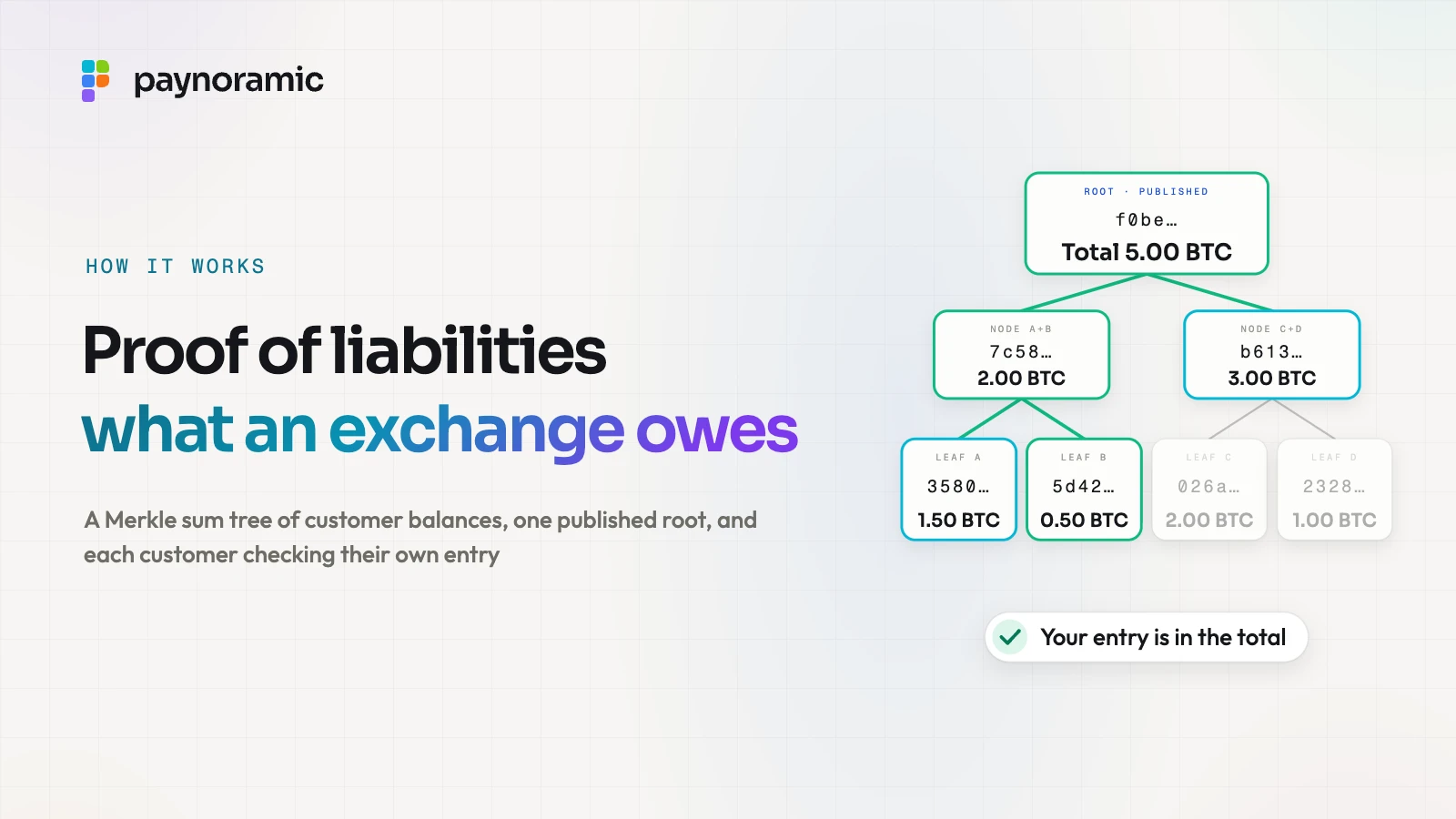
Proof of liabilities puts every customer balance in a Merkle sum tree with one published root and total; proof of reserves shows the assets held against it. Each half proves less than it seems.
Paynoramic's Founder7 min read

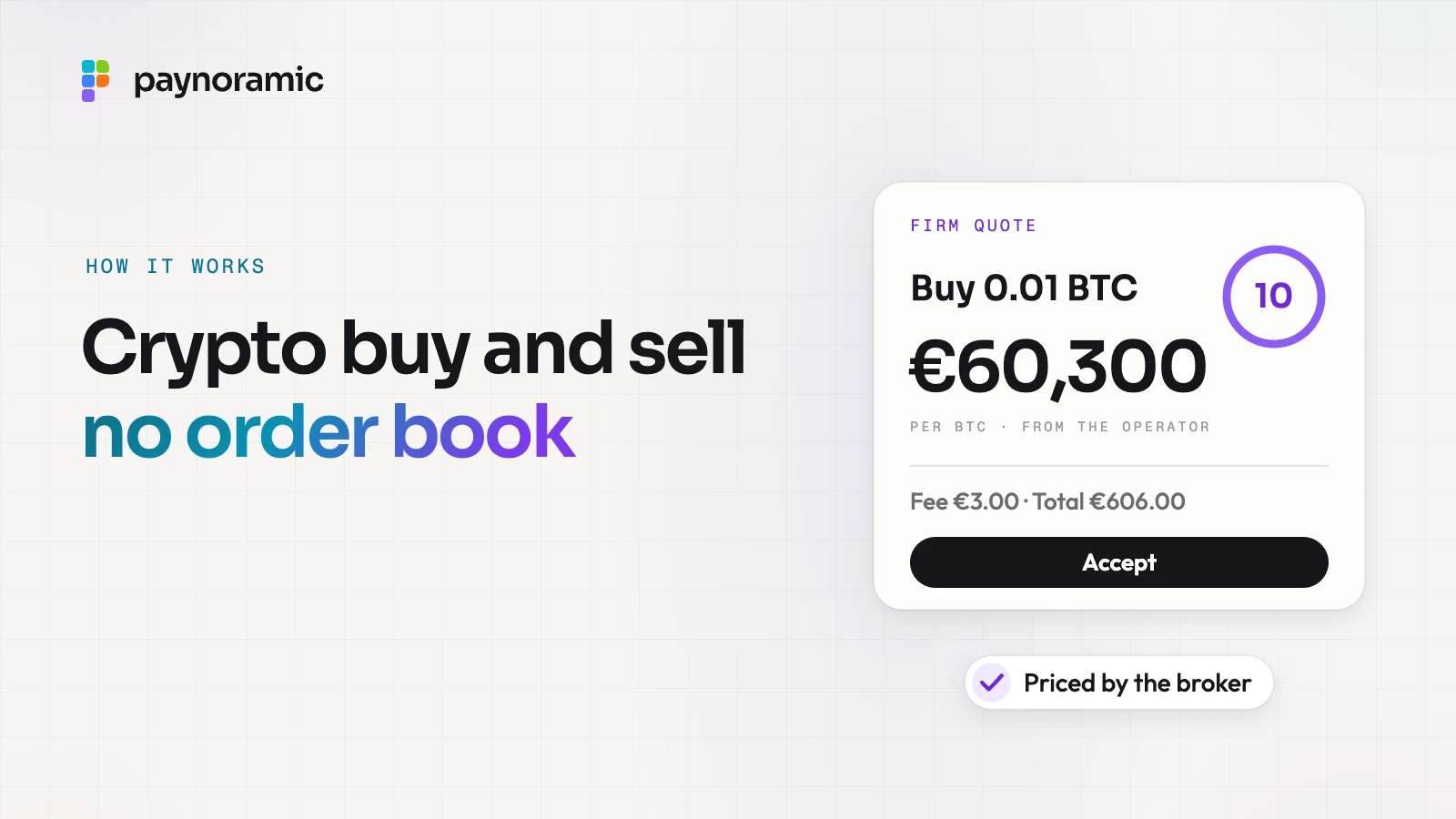
In broker mode the operator sells crypto from its own inventory at a firm quote, shows the price and fee before Accept, books the trade on a ledger and hedges the position at a liquidity venue.
Paynoramic's Founder8 min read

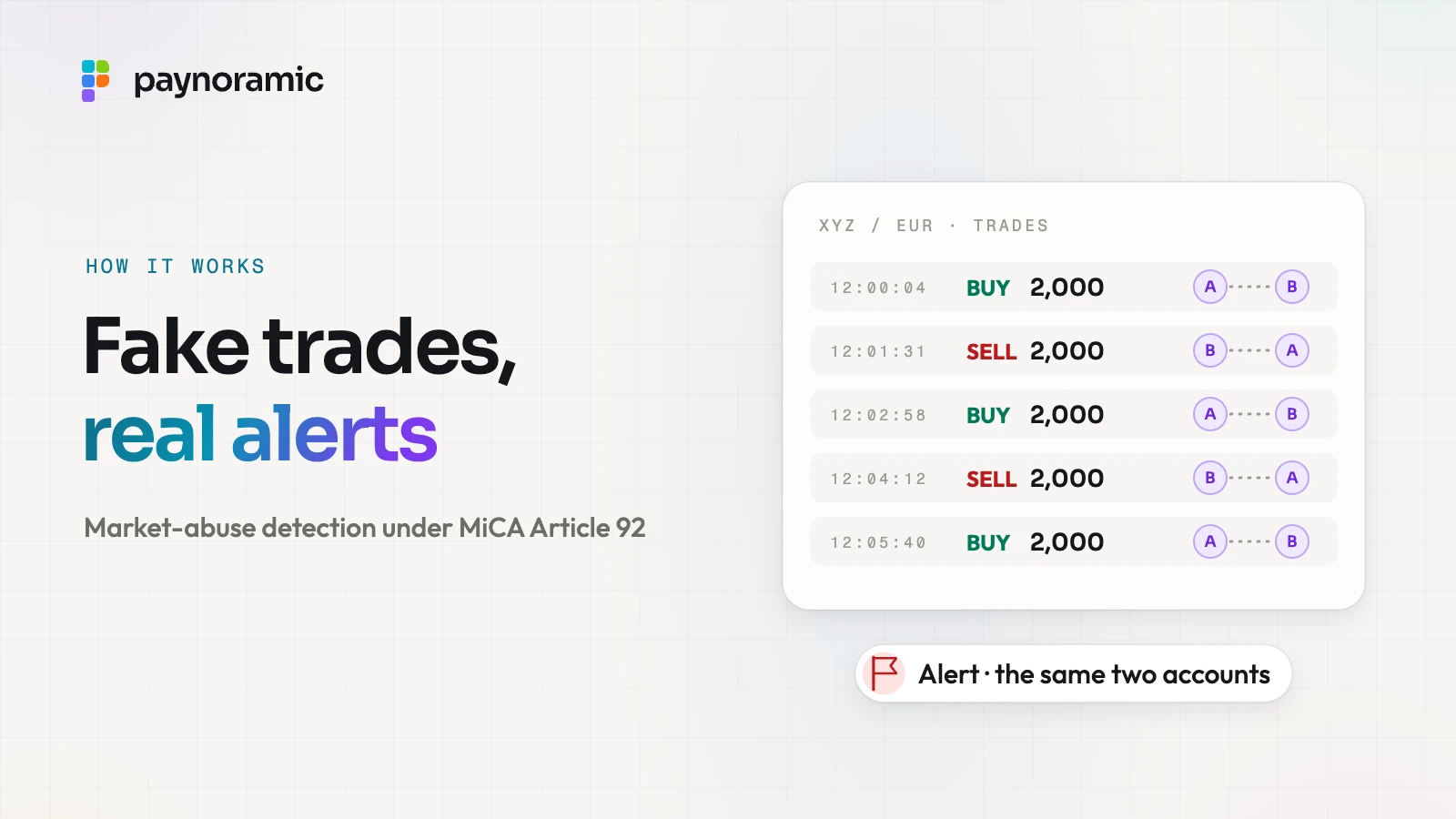
MiCA Article 92 makes anyone arranging or executing crypto trades watch orders and trades for abuse. How wash trading, spoofing, ramping and pump and dump show up, and how an alert becomes a STOR.
Paynoramic's Founder8 min read

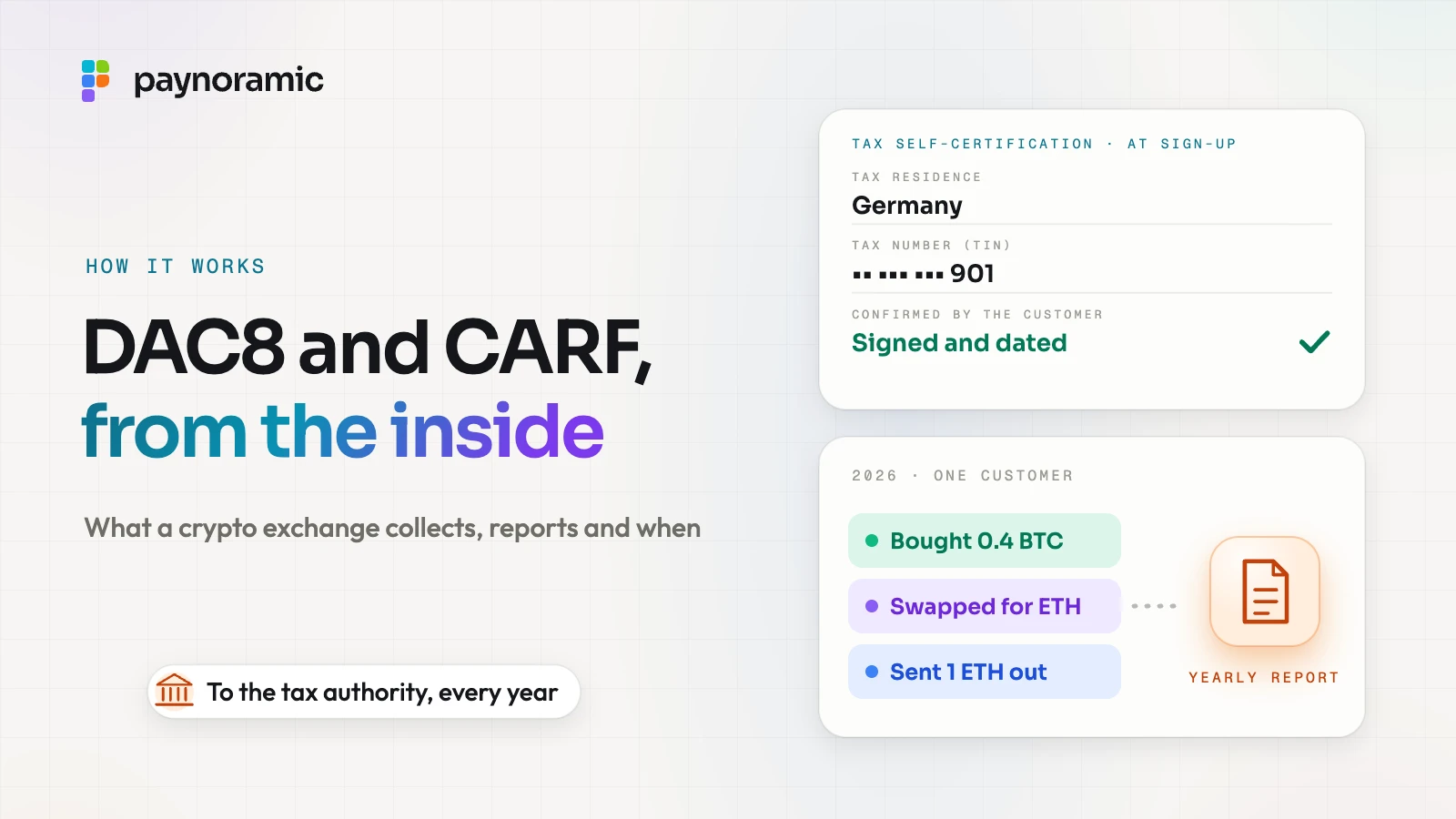
DAC8 and the OECD's CARF make a crypto exchange collect each customer's tax residence and TIN, value every trade and transfer, and report yearly totals to the tax authority from 2026.
Paynoramic's Founder8 min read

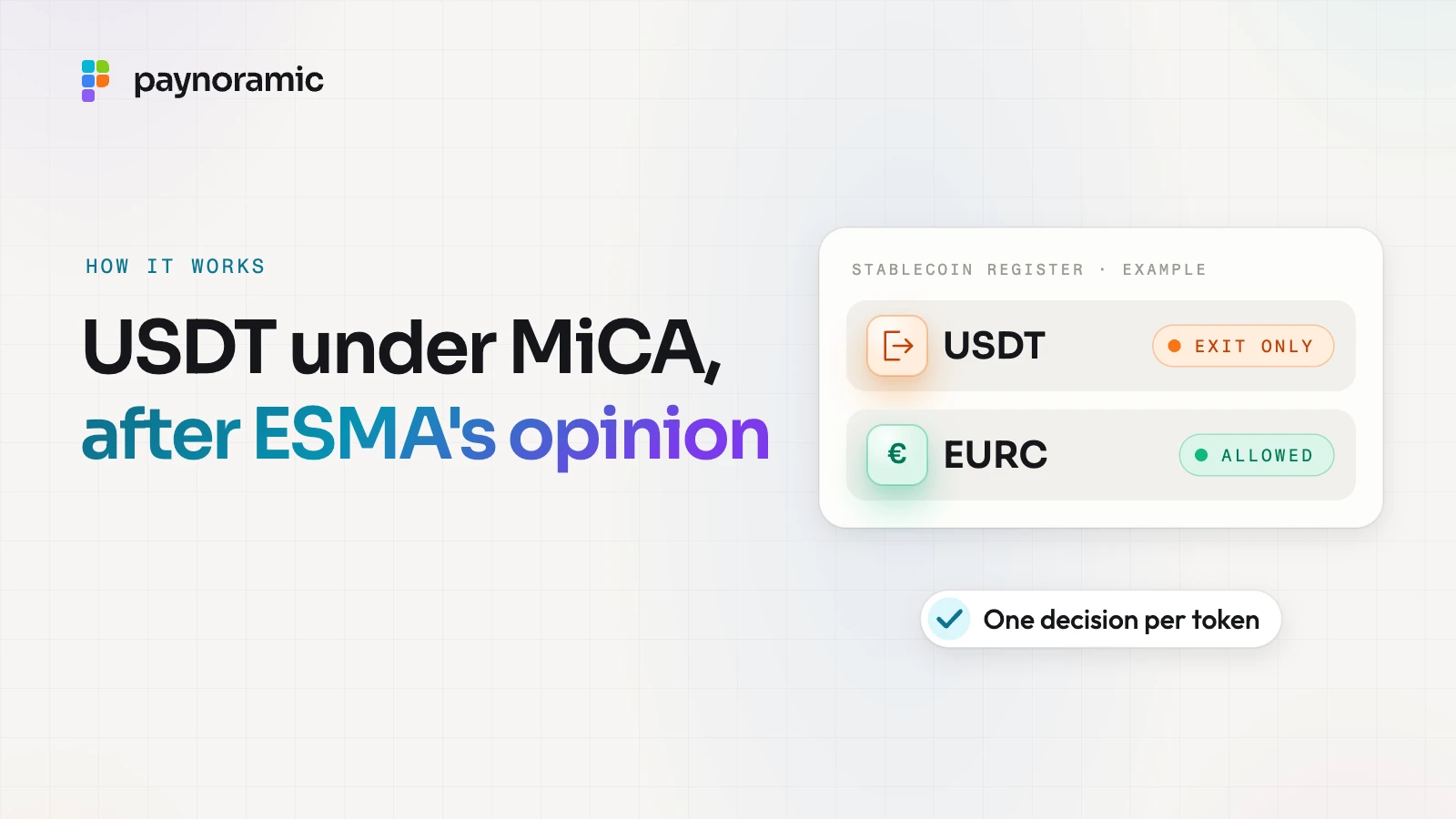
ESMA's opinion of 8 October 2026 says authorised CASPs should not serve non-MiCA-compliant stablecoins. The software needs a register of allowed, exit-only and blocked tokens, enforced on each order.
Paynoramic's Founder8 min read

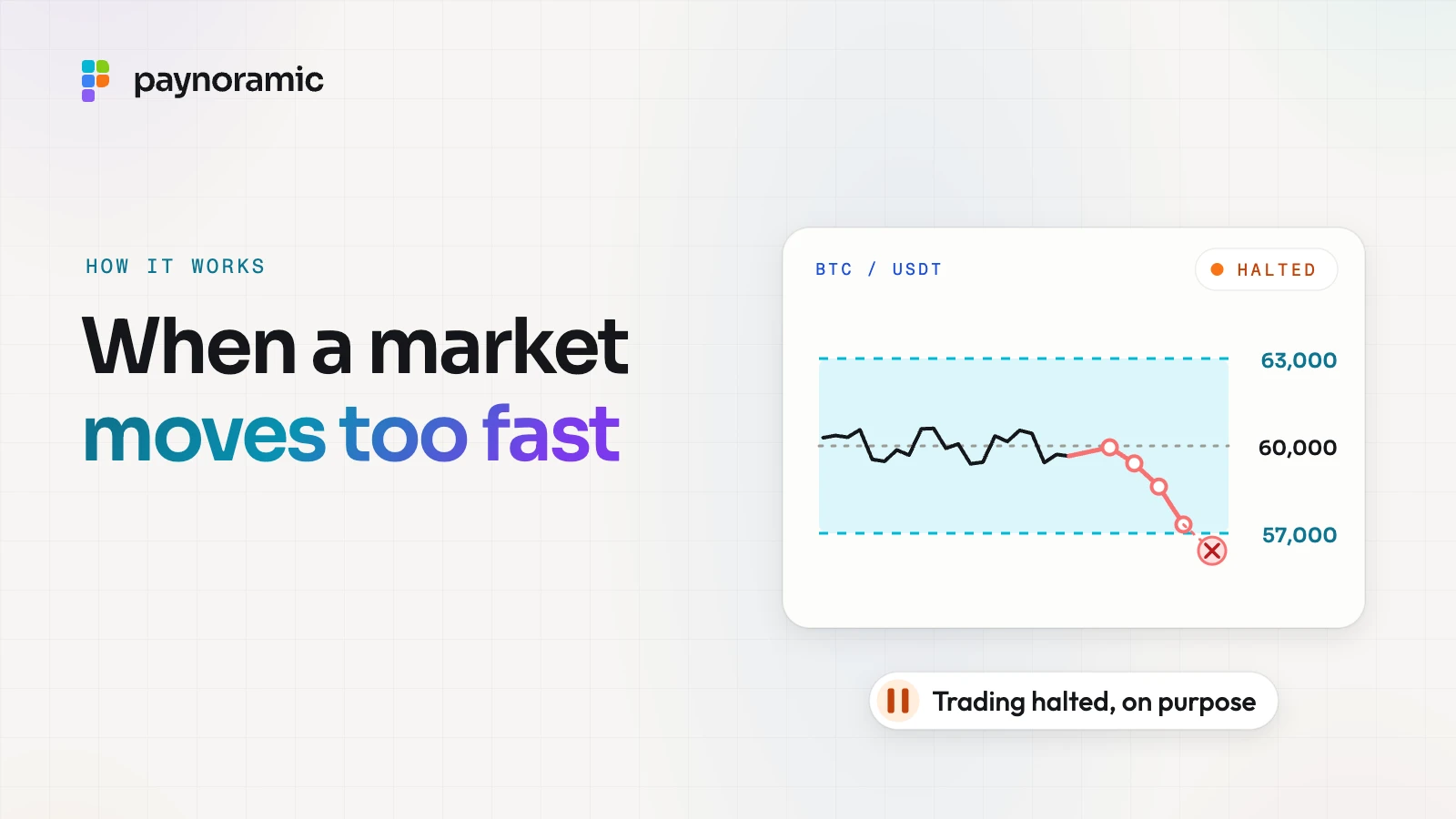
A crypto exchange fences each market's price with a band. An order priced outside it is rejected, a trade that would print outside it halts the market, and an auction reopens it at one price.
Paynoramic's Founder8 min read

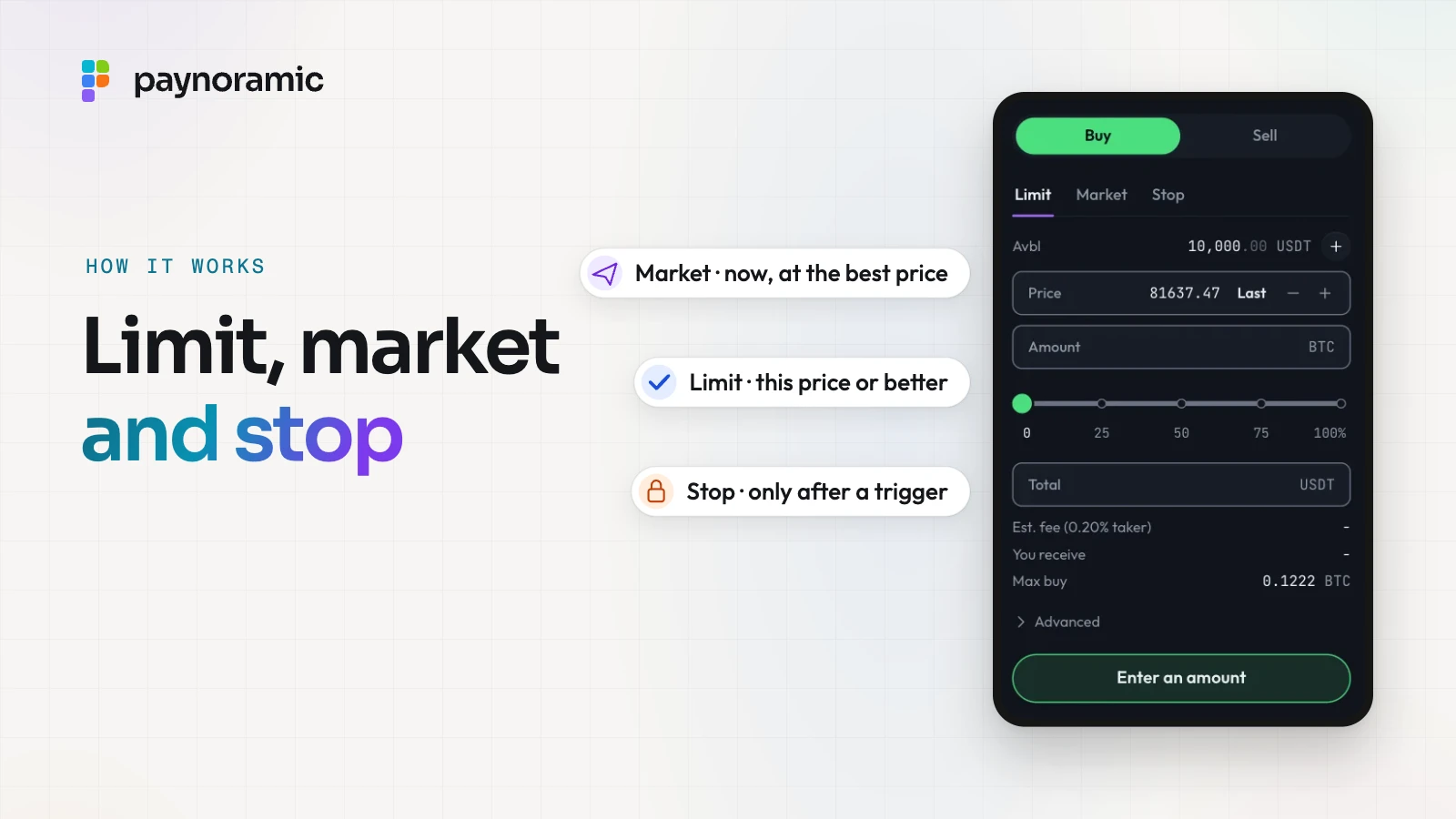
A market order fills now at whatever the book offers, a limit order waits on the book for its price, and a stop order sits off the book until a trigger price turns it into one of the other two.
Paynoramic's Founder8 min read

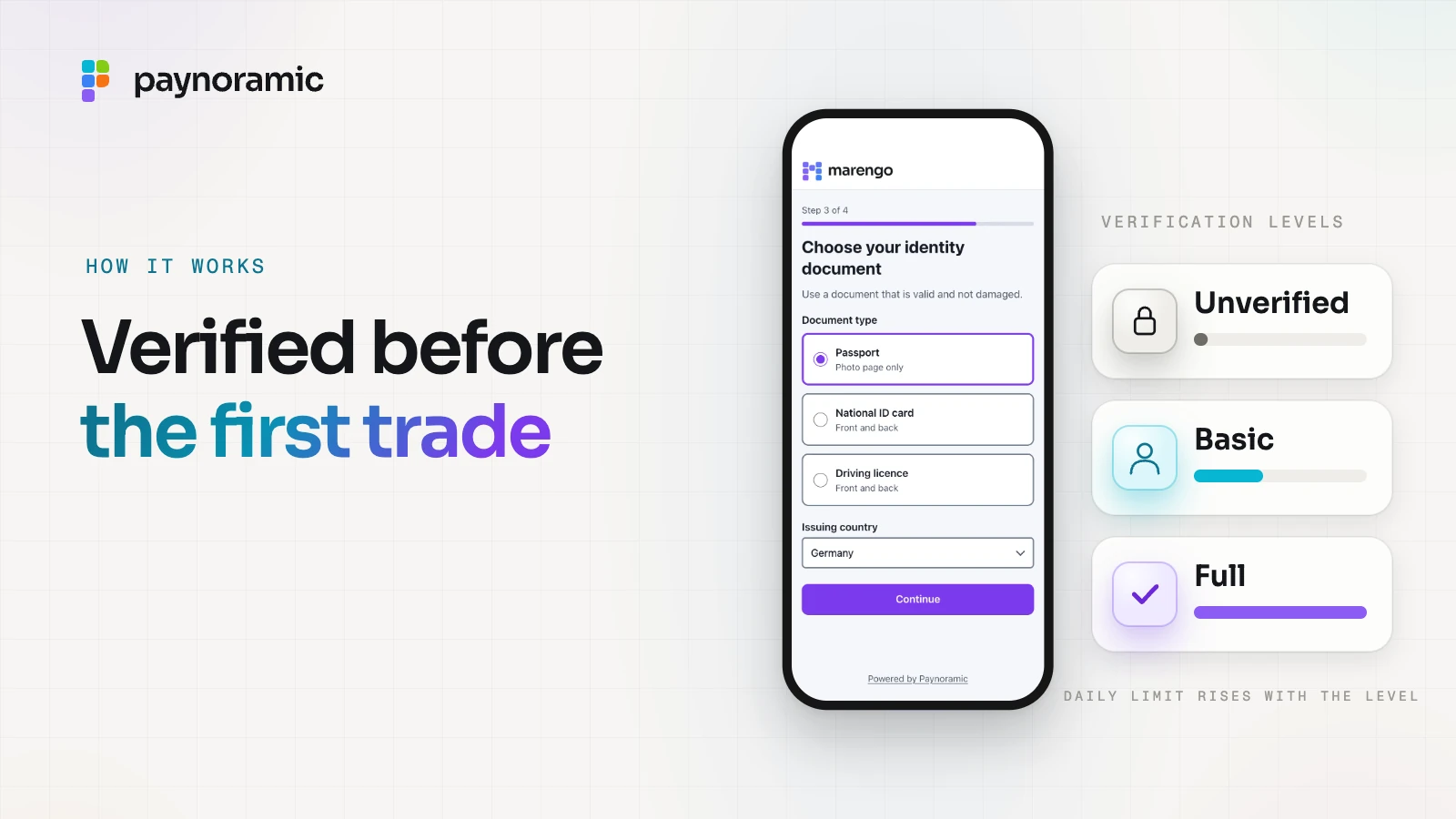
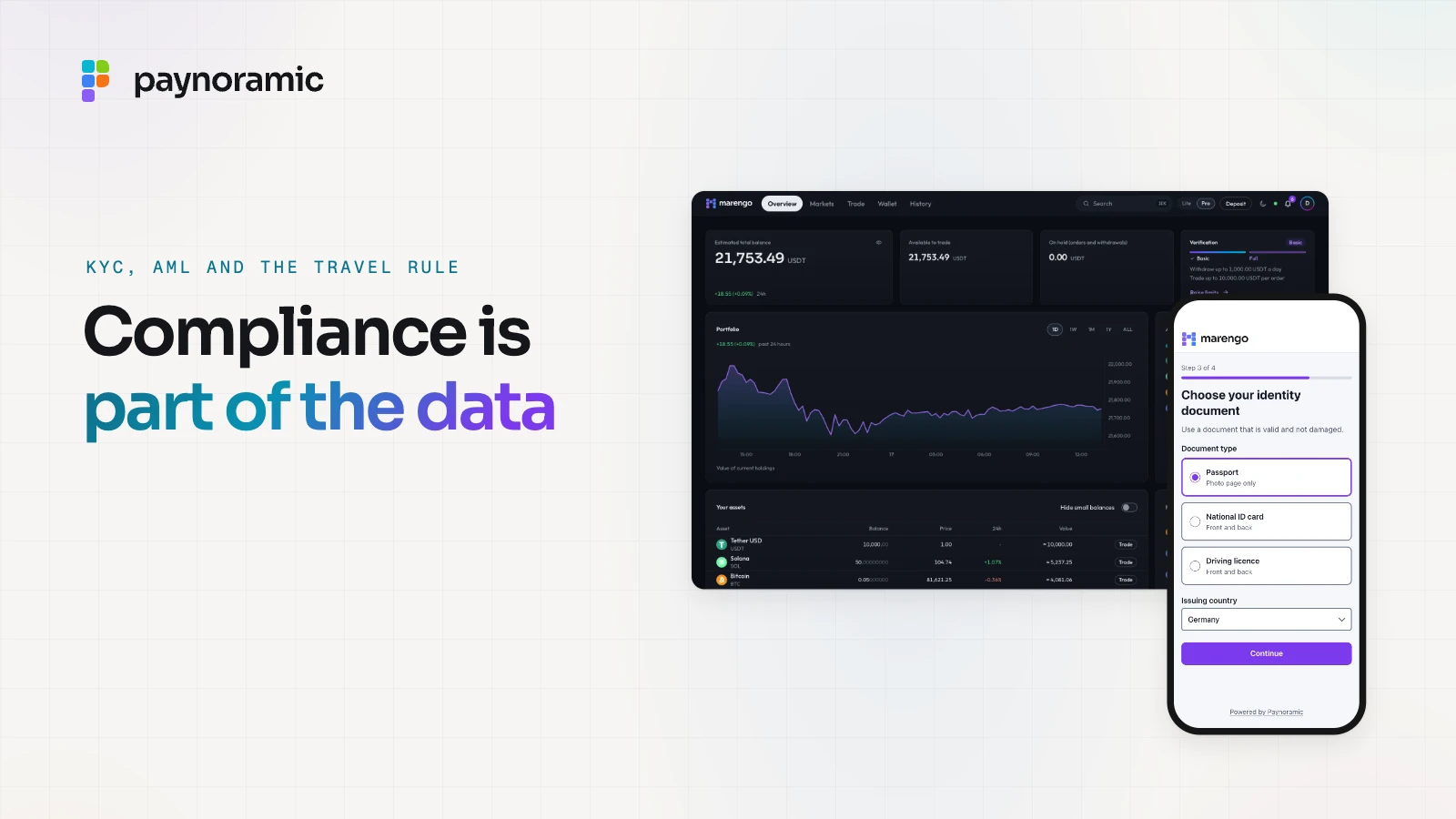
A new exchange account is verified before it trades: personal details, an identity document and a selfie, checked by software and staff, then a verification level that sets daily limits.
Paynoramic's Founder6 min read

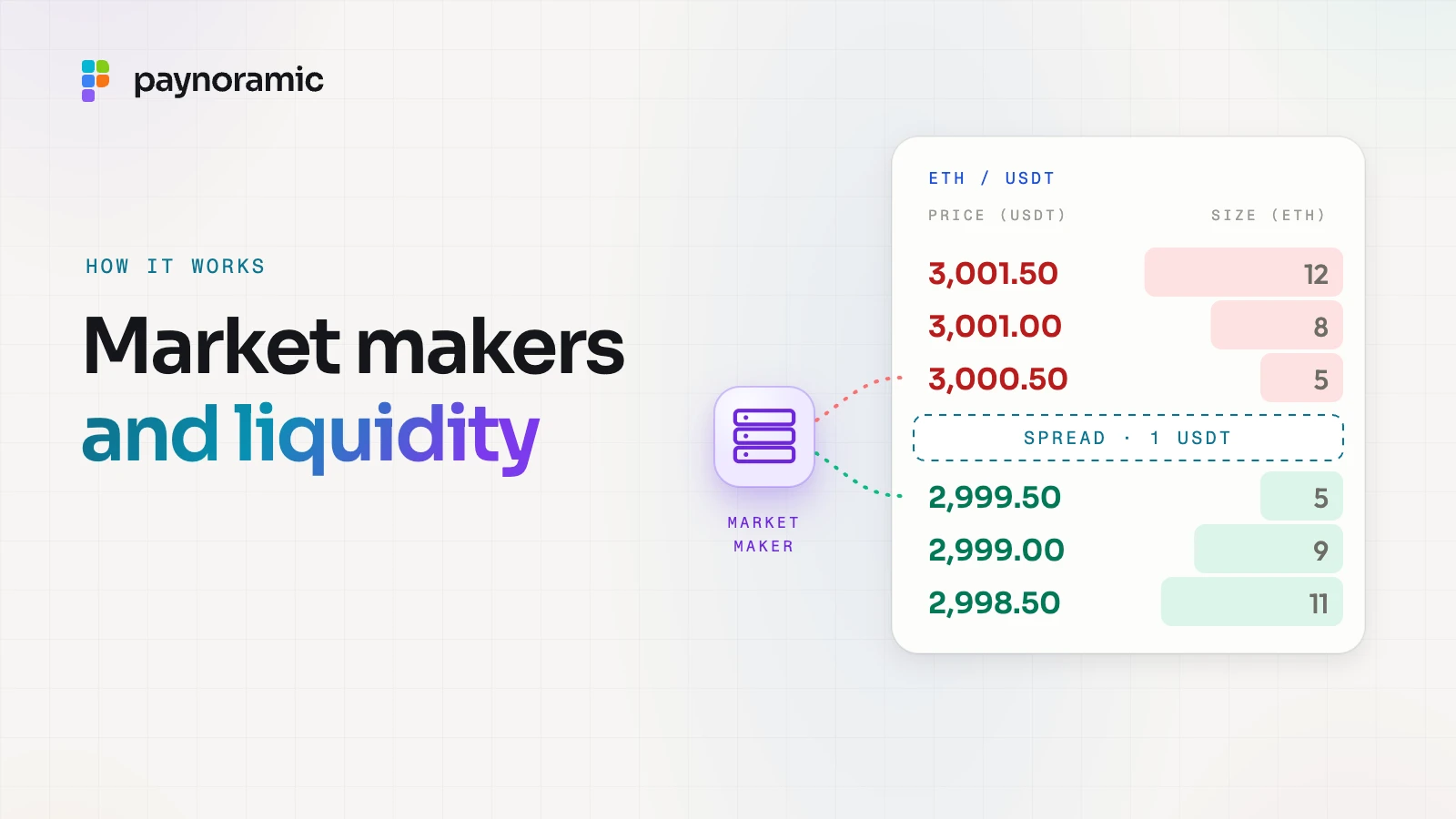
A tight spread comes from market makers, separate firms whose software quotes both sides of the order book over the exchange's API, re-quotes as prices move and works under its own agreement.
Paynoramic's Founder8 min read

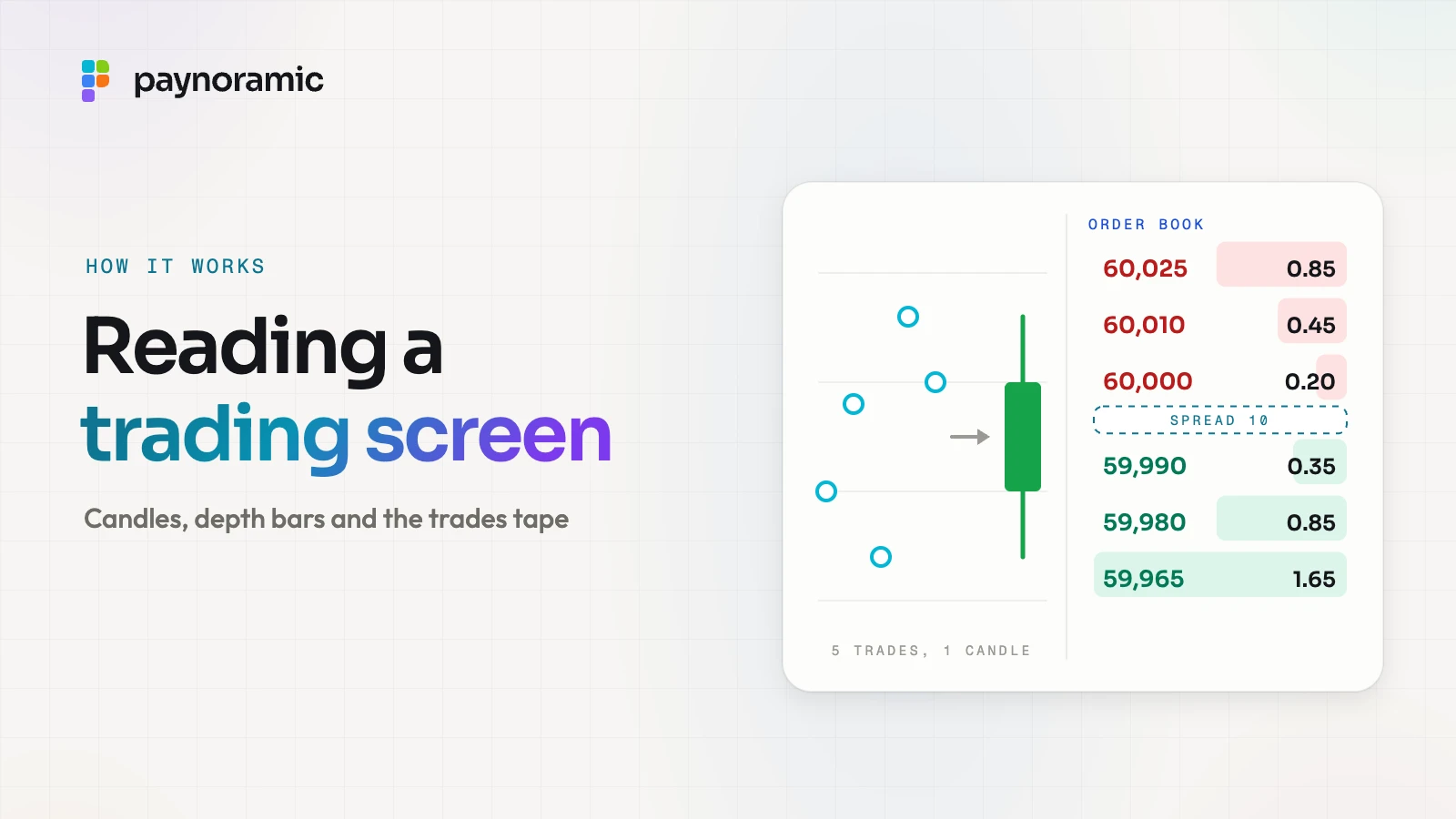
A trading screen shows two things. Trades that have happened become the tape and the candles; orders still waiting become the order book and its depth bars, all streamed live from the exchange.
Paynoramic's Founder8 min read

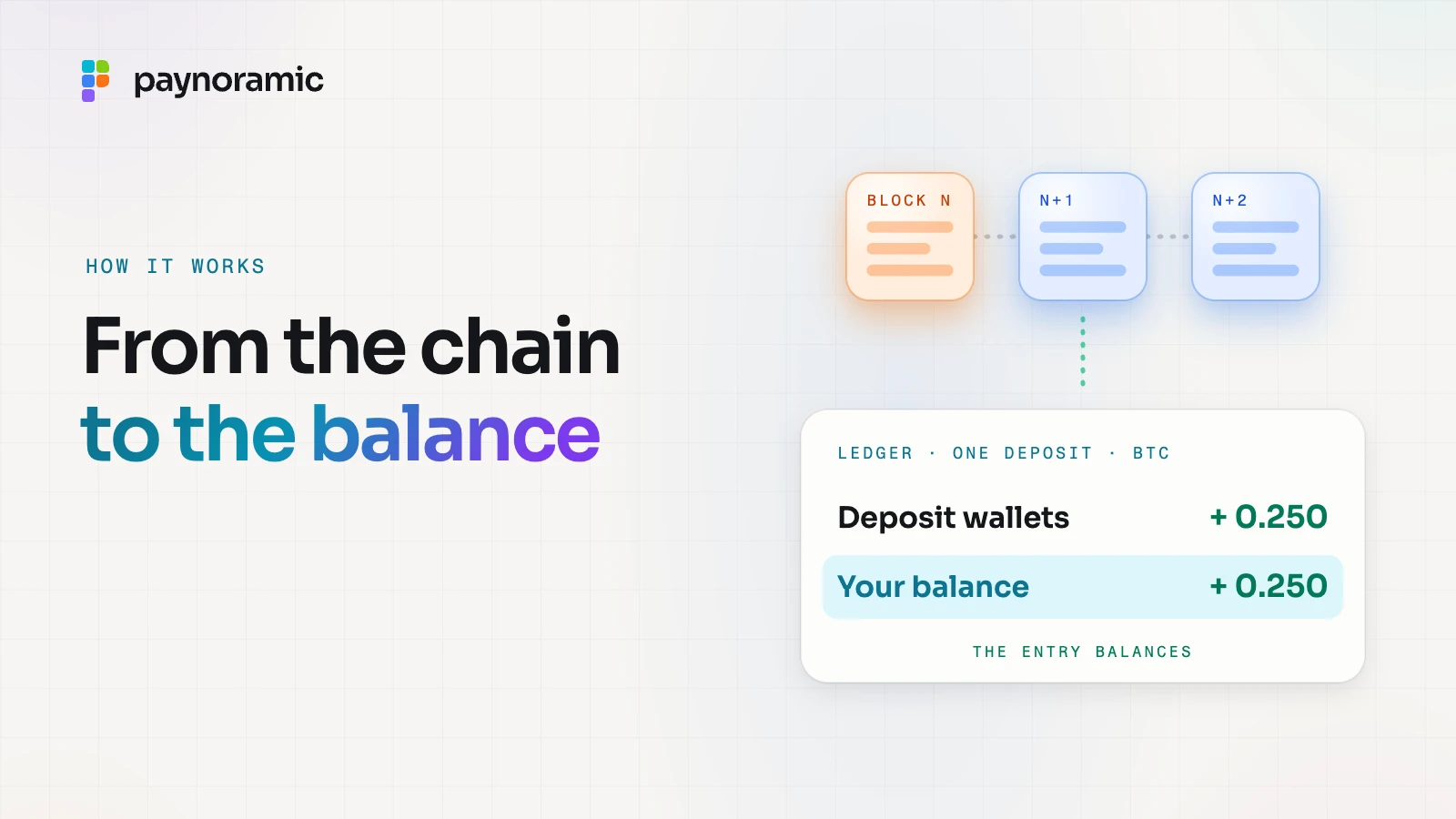
An exchange credits a crypto deposit when a payment reaches an address it gave that user, on a network it watches, and has enough confirmations. Then one ledger entry turns it into a balance.
Paynoramic's Founder8 min read

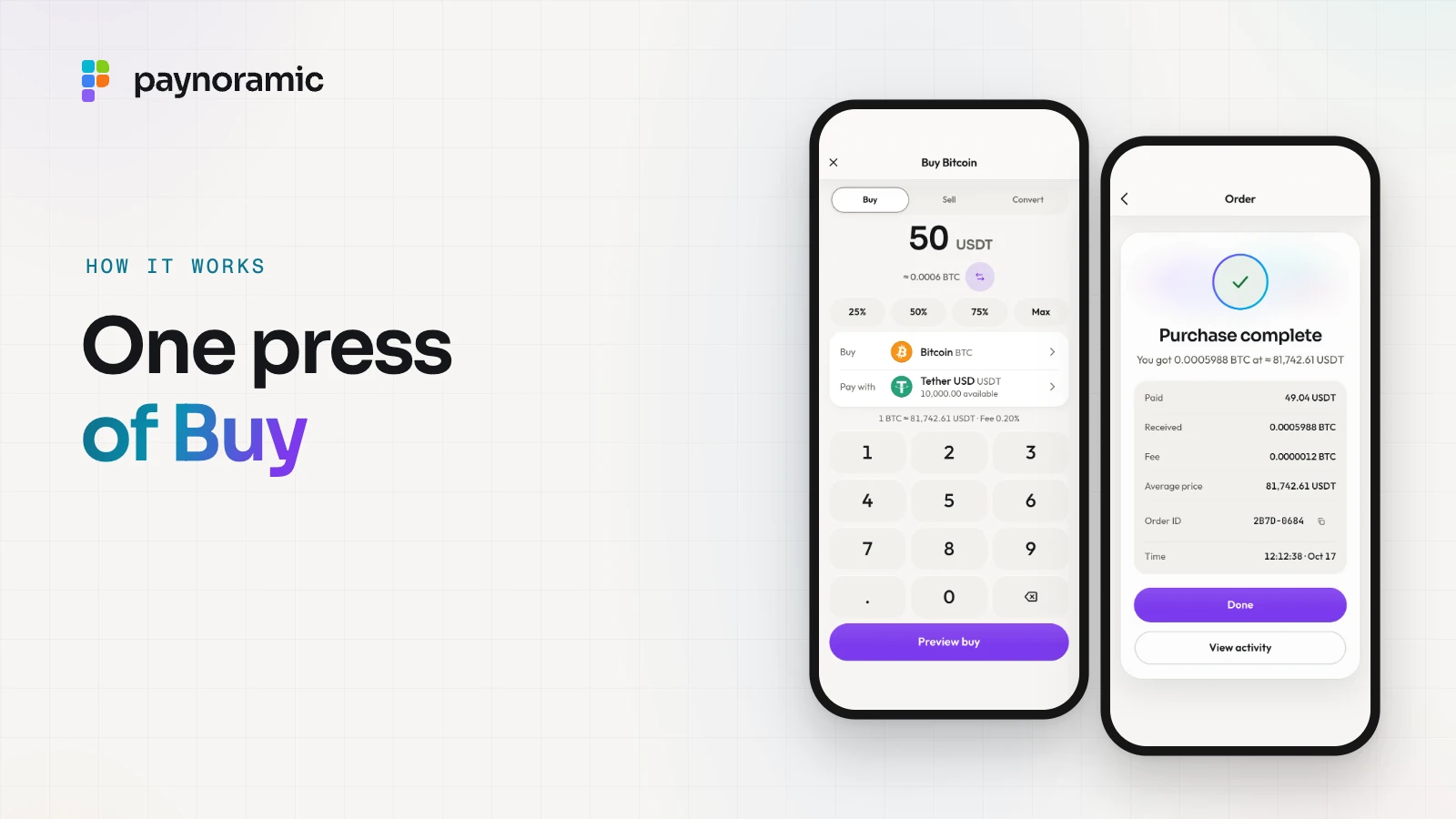
In the second after Buy, an exchange holds the user's money, places the order in the book, matches it against the best sellers, records both legs and the fee in a ledger, and issues a receipt.
Paynoramic's Founder8 min read

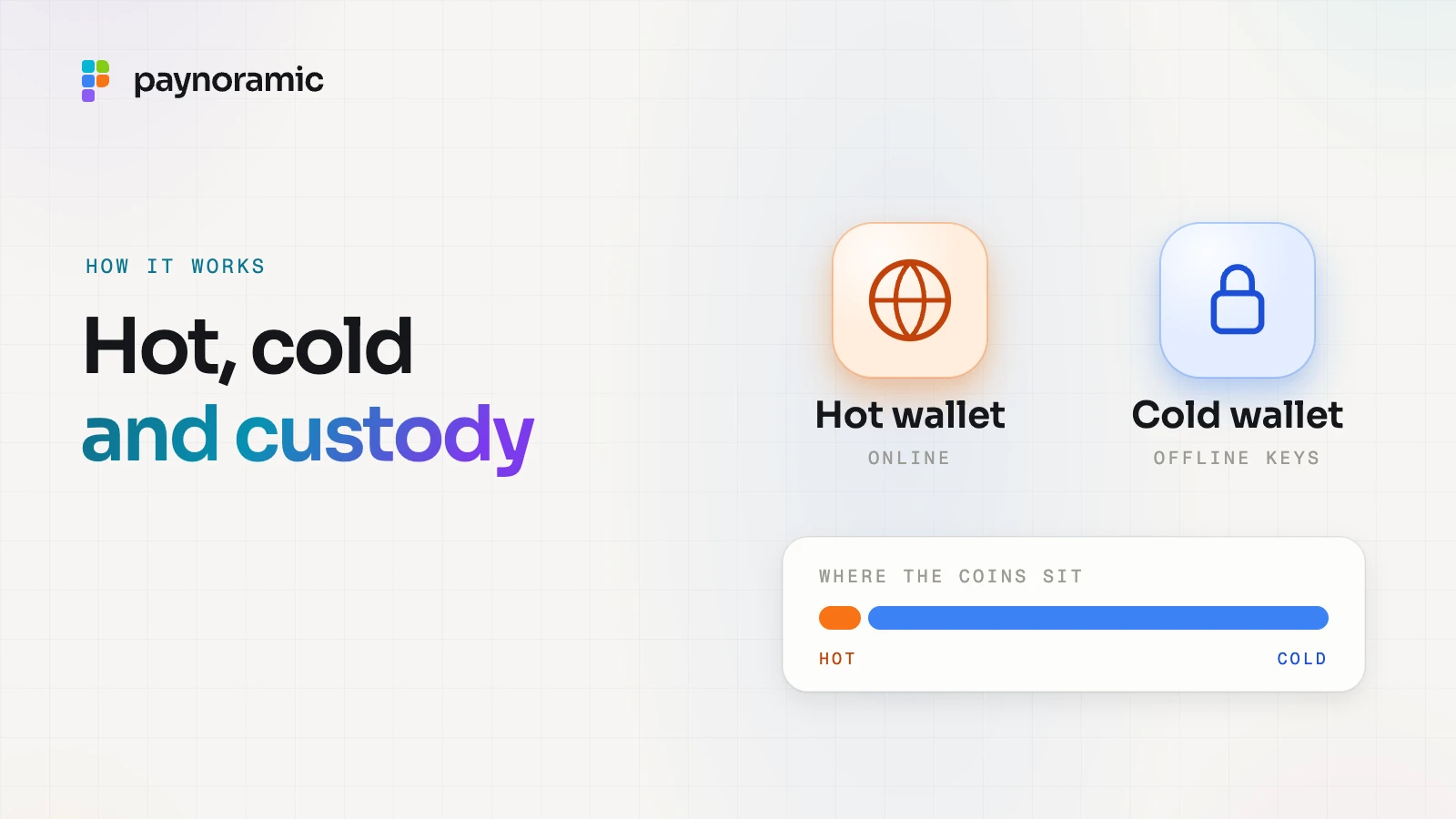
An exchange records who owns what in its ledger and keeps the coins in wallets: a small float in online hot wallets for withdrawals, most in offline cold wallets, checked against the ledger daily.
Paynoramic's Founder8 min read

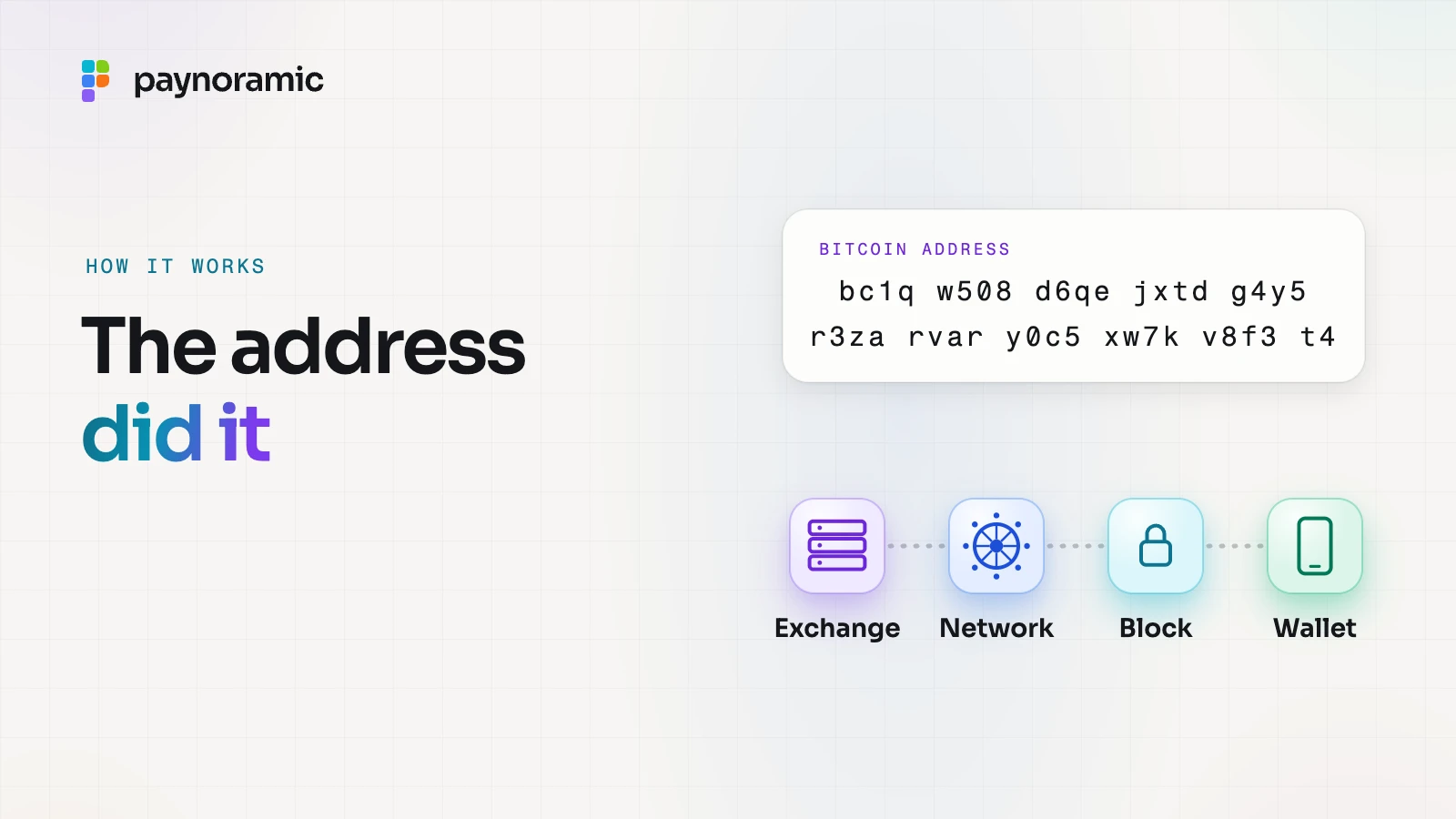
A crypto withdrawal finds its wallet by the address, which names the network, holds a hash of the owner's key and ends in a checksum. The exchange checks its rules and signs; blocks confirm it.
Paynoramic's Founder8 min read

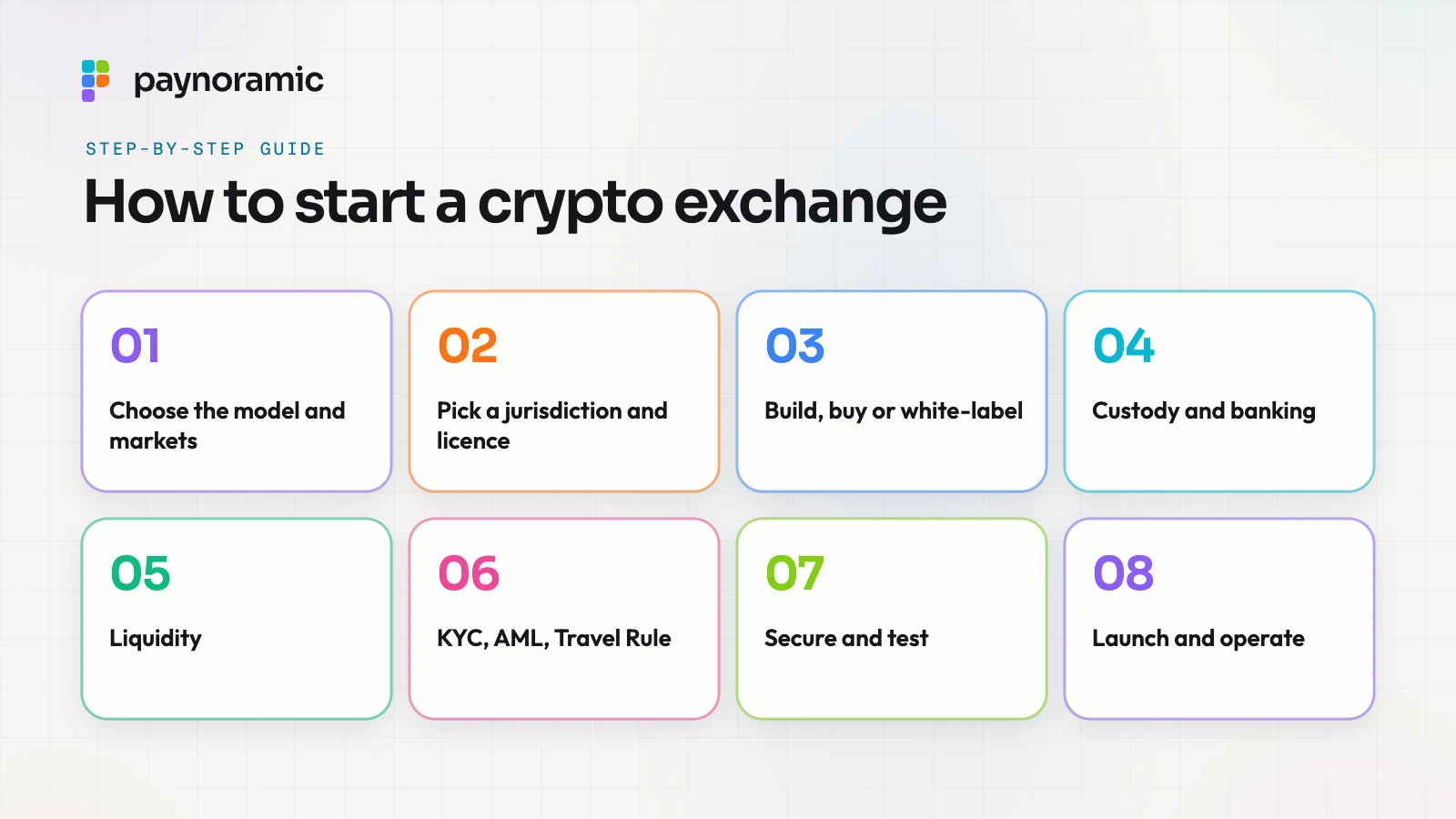
Choose the model and the markets, get the licence, then assemble software, custody, banking, liquidity and compliance. The licence sets the pace, so everything else runs alongside it.
Paynoramic's Founder9 min read

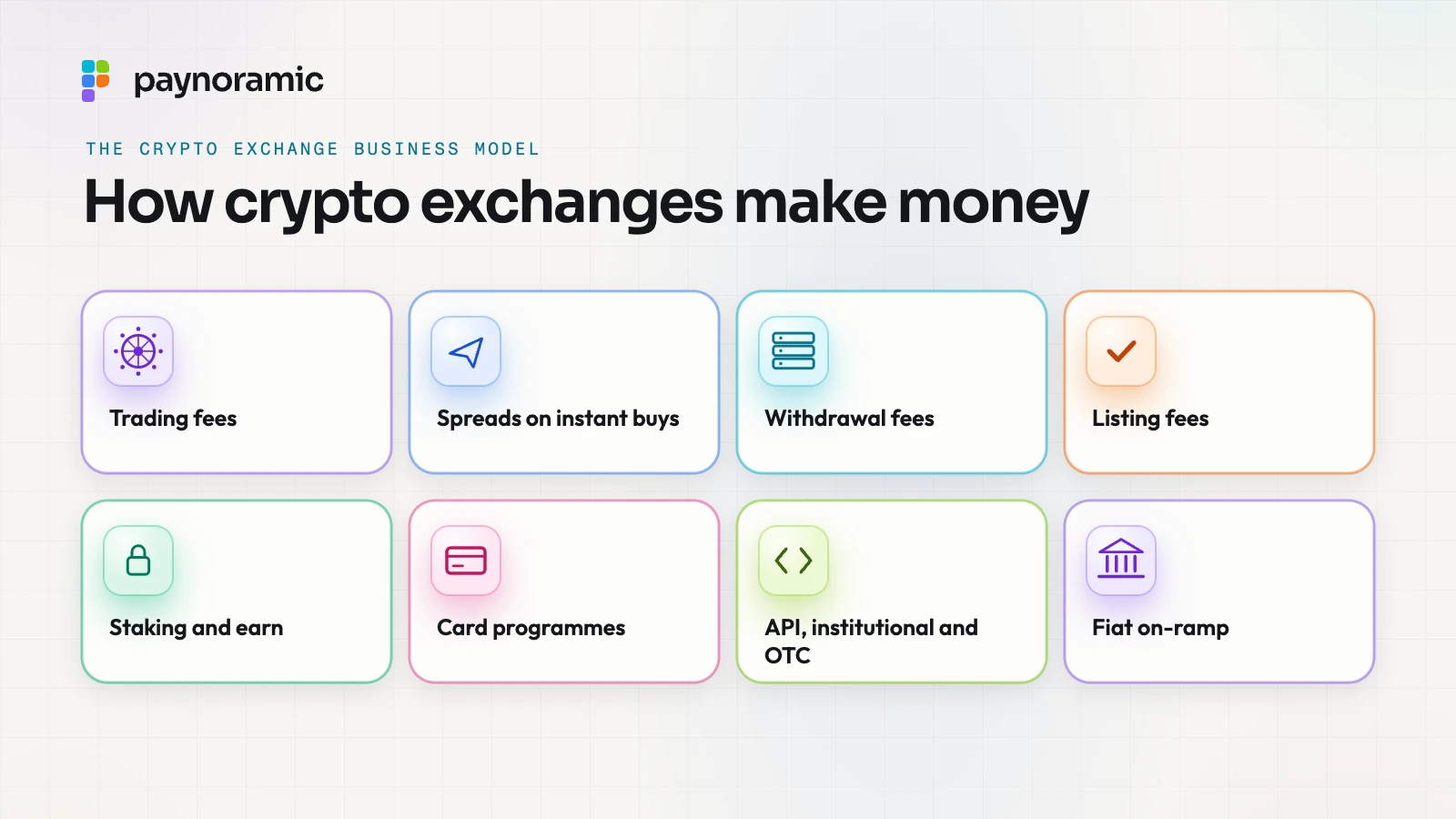
Mostly from trading fees and the spread on instant buys, then withdrawal fees, staking commissions, interest on cash, cards, OTC and data. Volume decides whether that beats the fixed costs.
Paynoramic's Founder9 min read

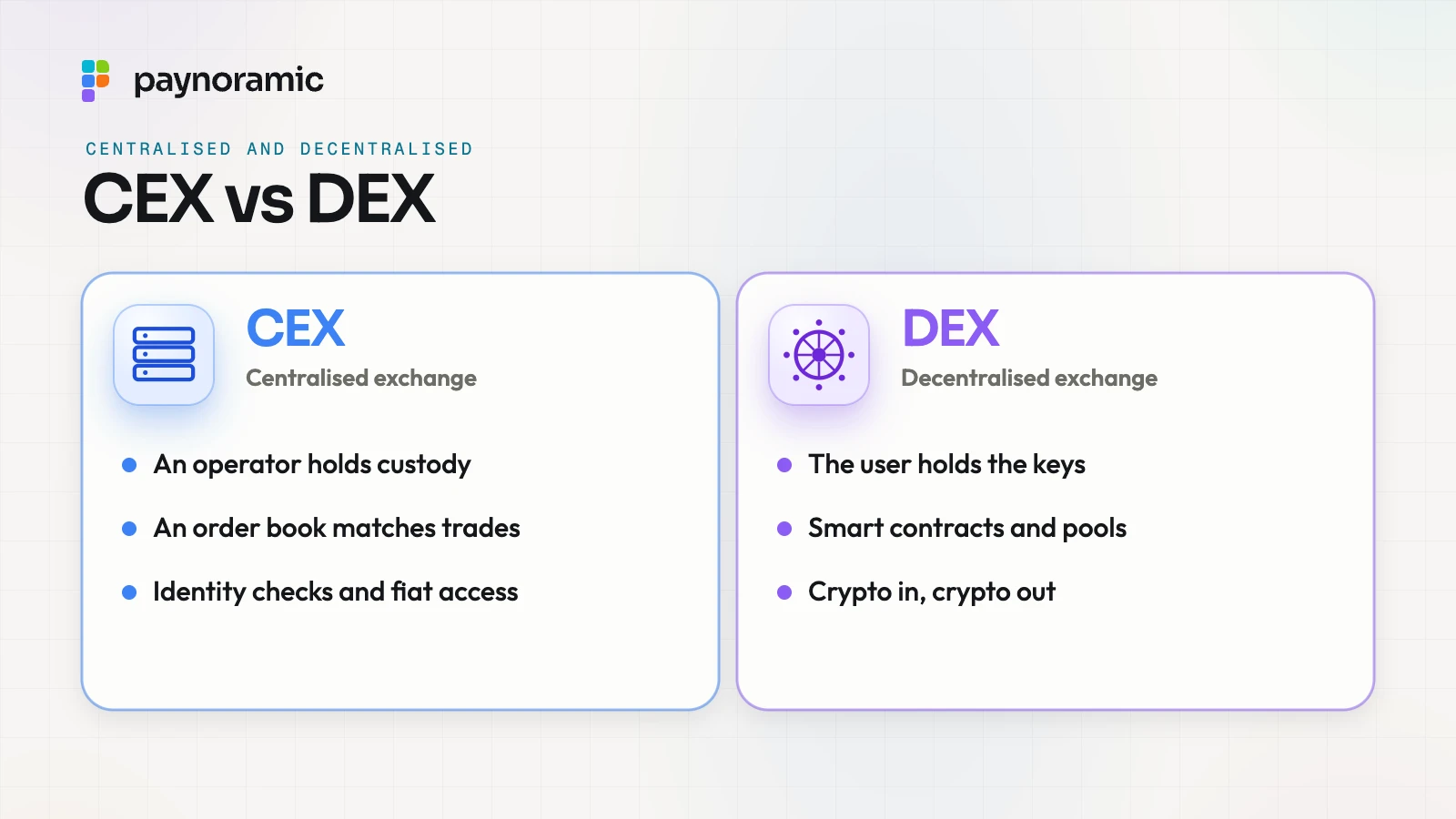
A CEX is a firm that runs an order book and holds customers' assets; a DEX is smart contracts that users trade with from their own wallets. Fiat and retail customers usually point to a CEX.
Paynoramic's Founder9 min read

Twelve questions that separate white-label crypto exchange vendors: who owns the code, what it costs over time, whether the ledger reconciles, who holds the keys and what the licence still needs.
Paynoramic's Founder8 min read

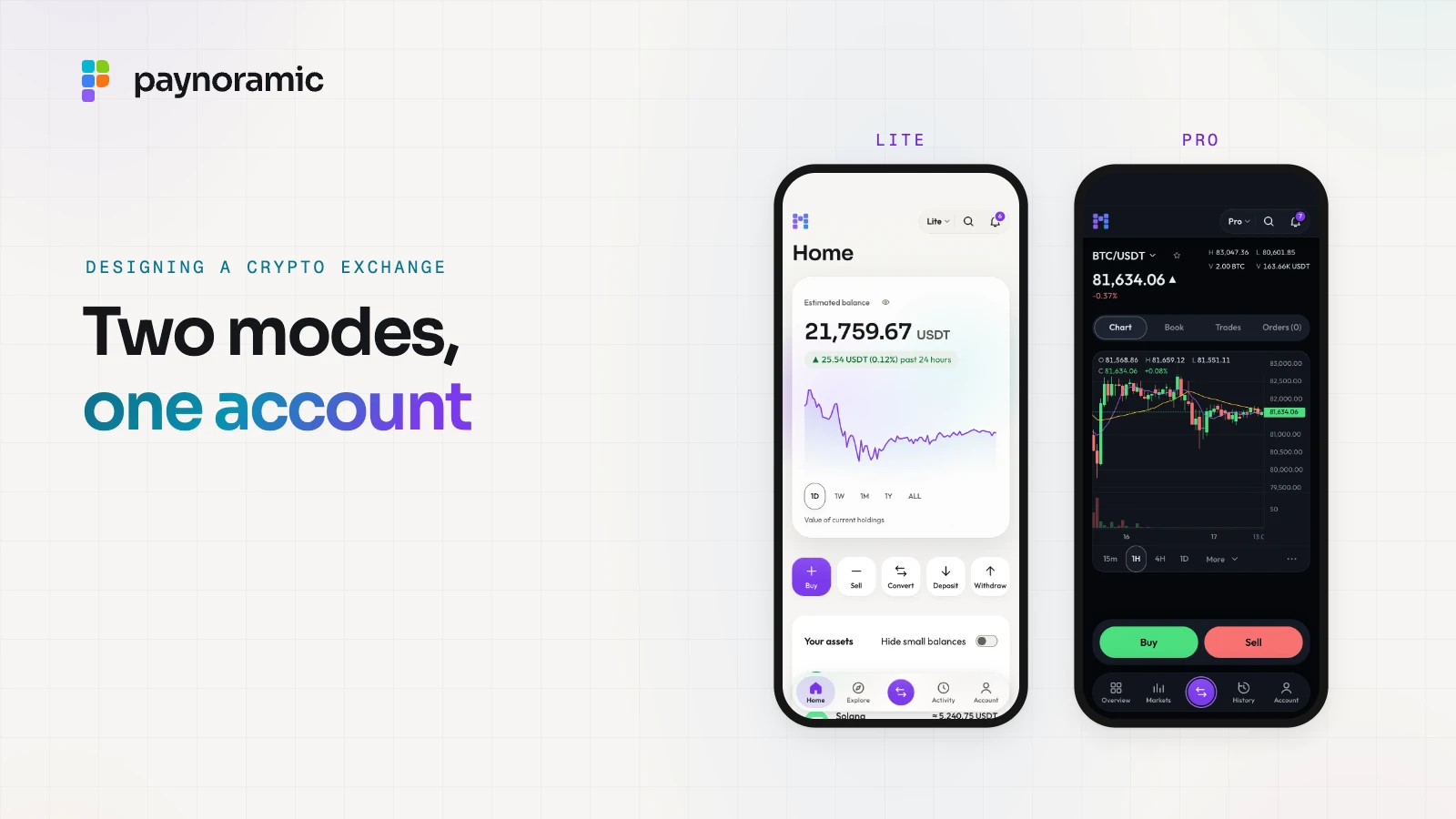
Most exchanges serve beginners and traders with two modes of one app: a simple buy, sell and convert flow with a preview and receipt, and a pro terminal on the same order book and balance.
Paynoramic's Founder8 min read

Exchange compliance is software: identity checks that unlock limits, sanctions and wallet screening, monitoring with cases and reports, Travel Rule data on every transfer and an audit log.
Paynoramic's Founder8 min read

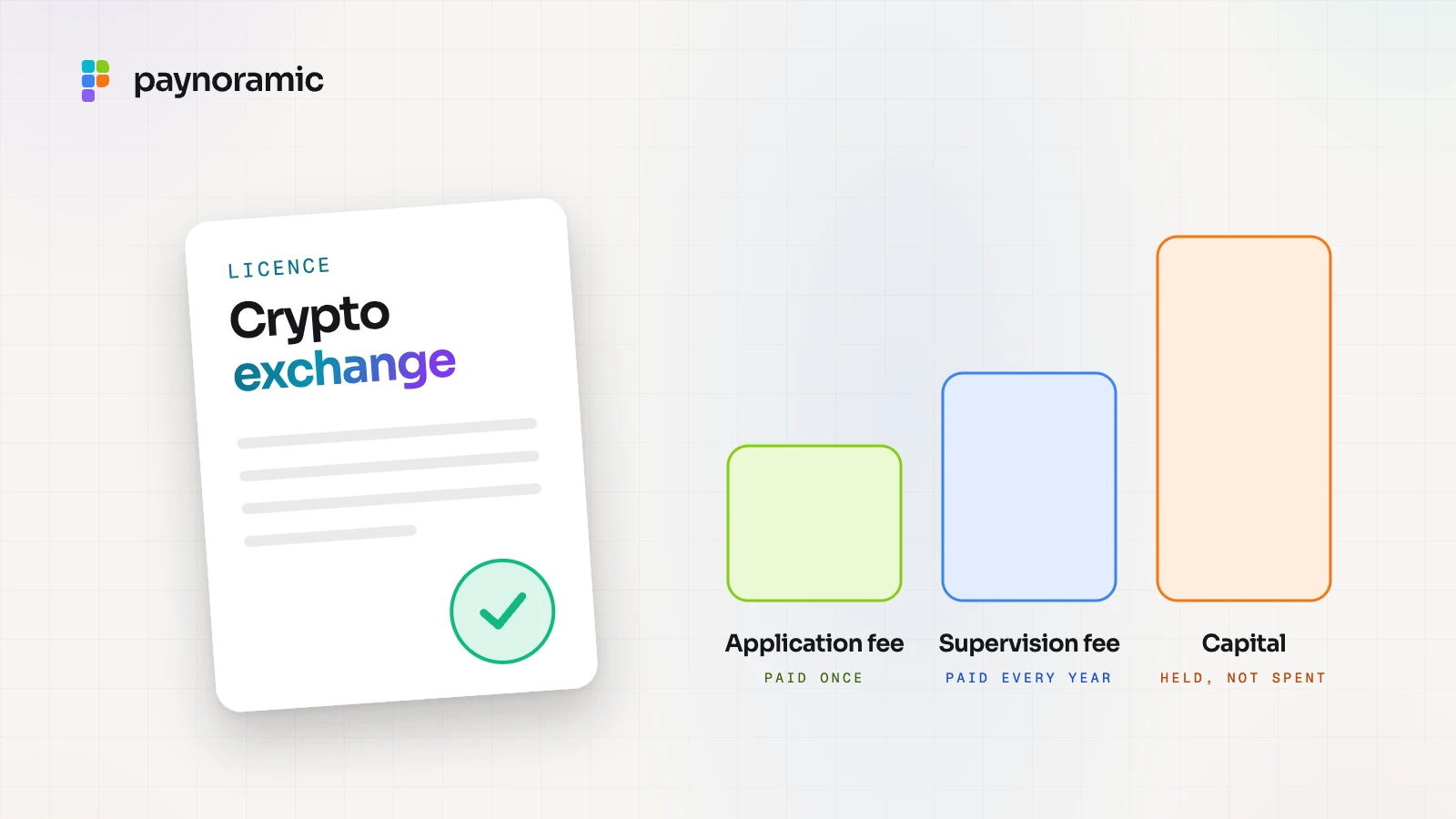
The application fee, the yearly fee and the capital a crypto exchange needs under MiCA, the FCA, VARA, ADGM and the DFSA, as each regulator publishes them, and when each falls due.
Paynoramic's Founder9 min read

Custom build, SaaS licence or white-label with the source code: how the three routes compare on time, cost, ownership and lock-in, and the outsourcing rules regulators apply to each.
Paynoramic's Founder7 min read

How a stablecoin payment to a supplier abroad moves, from euros in to local currency out, what changes against correspondent banking, and the rules in the EU, the UK and the UAE.
Paynoramic's Founder8 min read

How a crypto OTC desk works from request for quote to settlement, principal or agency, liquidity and pre-funding, and the licence it needs: MiCA in the EU, VARA in Dubai, the FCA in the UK.
Paynoramic's Founder8 min read

How a fiat-to-crypto buy widget works inside another company's app, who the regulated party is, and the rules on UK promotions, card fraud, the Travel Rule, MiCA and VARA.
Paynoramic's Founder9 min read

What a stablecoin checkout for EU merchants needs: MiCA and payment licences, why USDC and not USDT, Travel Rule checks on self-hosted wallets, euro settlement and refunds.
Paynoramic's Founder8 min read

What Dubai's virtual assets regulator asks of a crypto exchange: the two-stage licence, the rulebooks, capital and fees as VARA publishes them, local staff and the Travel Rule.
Paynoramic's Founder7 min read

Who licenses crypto in the UAE: VARA in Dubai, the DFSA in DIFC, the FSRA in ADGM, the Capital Market Authority elsewhere, and the Central Bank when tokens are used to pay.
Paynoramic's Founder6 min read

What FCA registration under the Money Laundering Regulations asks of a UK crypto business, how crypto promotions are controlled, and what changes on 25 October 2027.
Paynoramic's Founder7 min read

What the EU's Markets in Crypto-Assets Regulation asks of an exchange: authorisation, capital, governance, client assets, the trading platform rules, and the laws that sit beside it.
Paynoramic's Founder4 min read
Tell us the idea and we will show you the platform it maps to.