Which coins and networks can customers pay with?
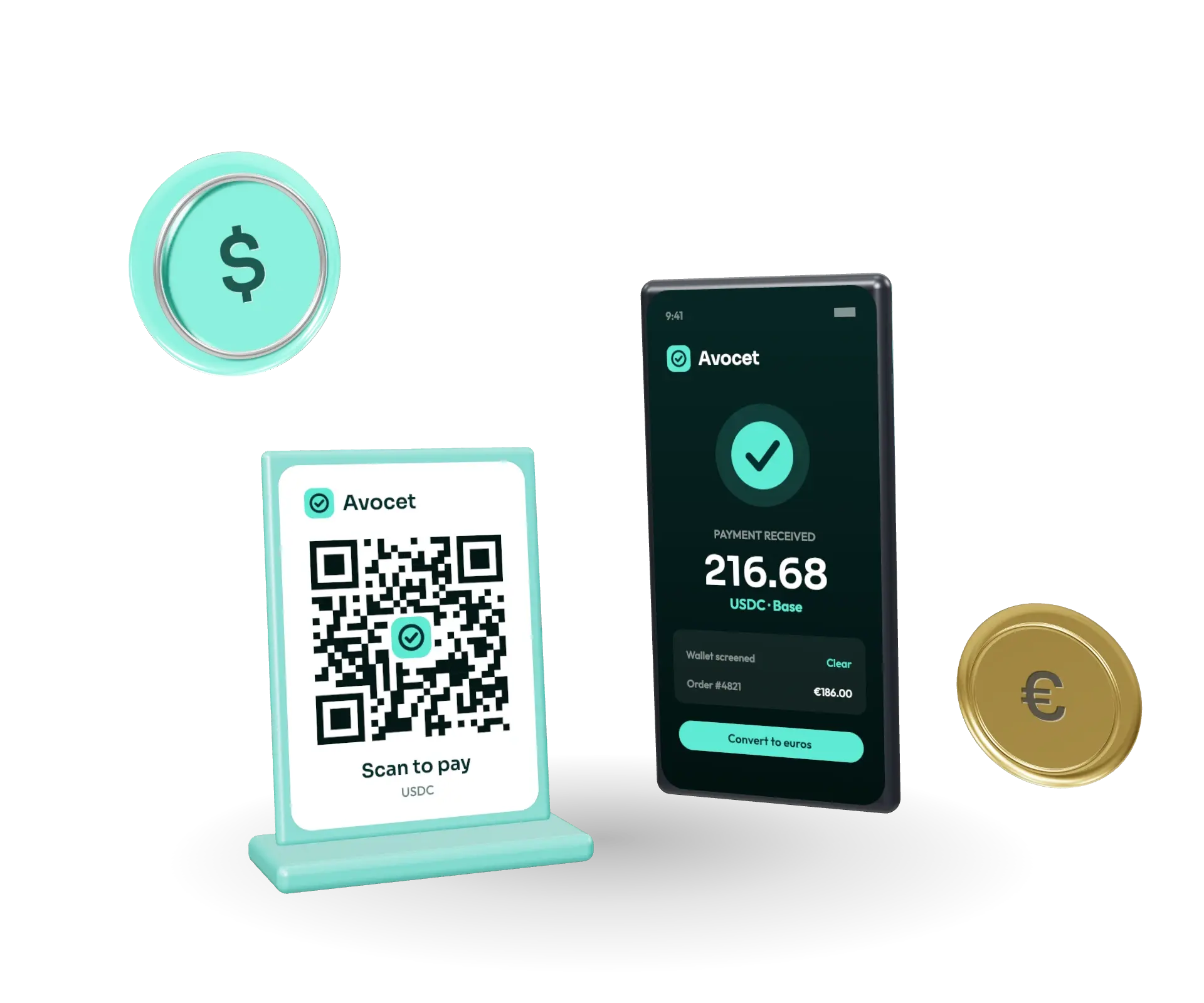
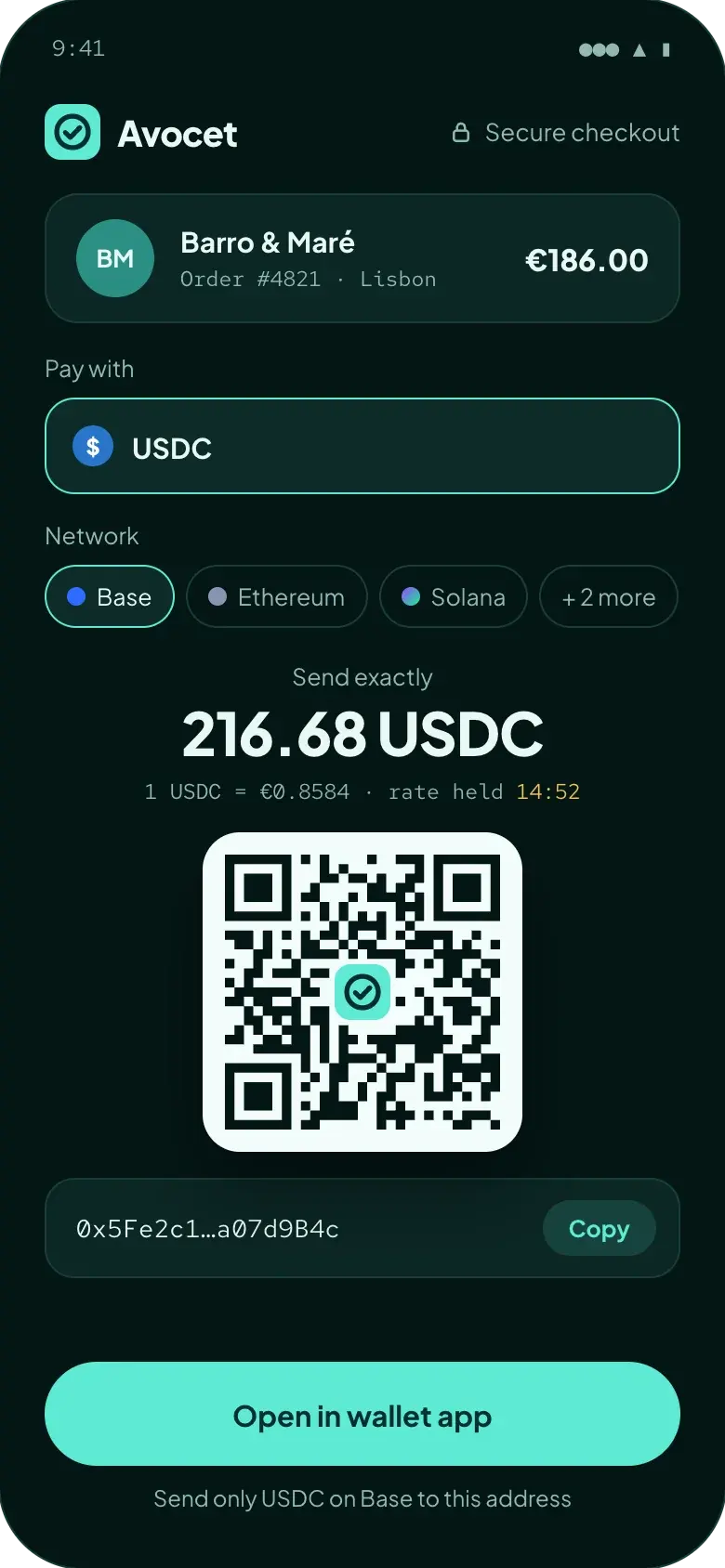
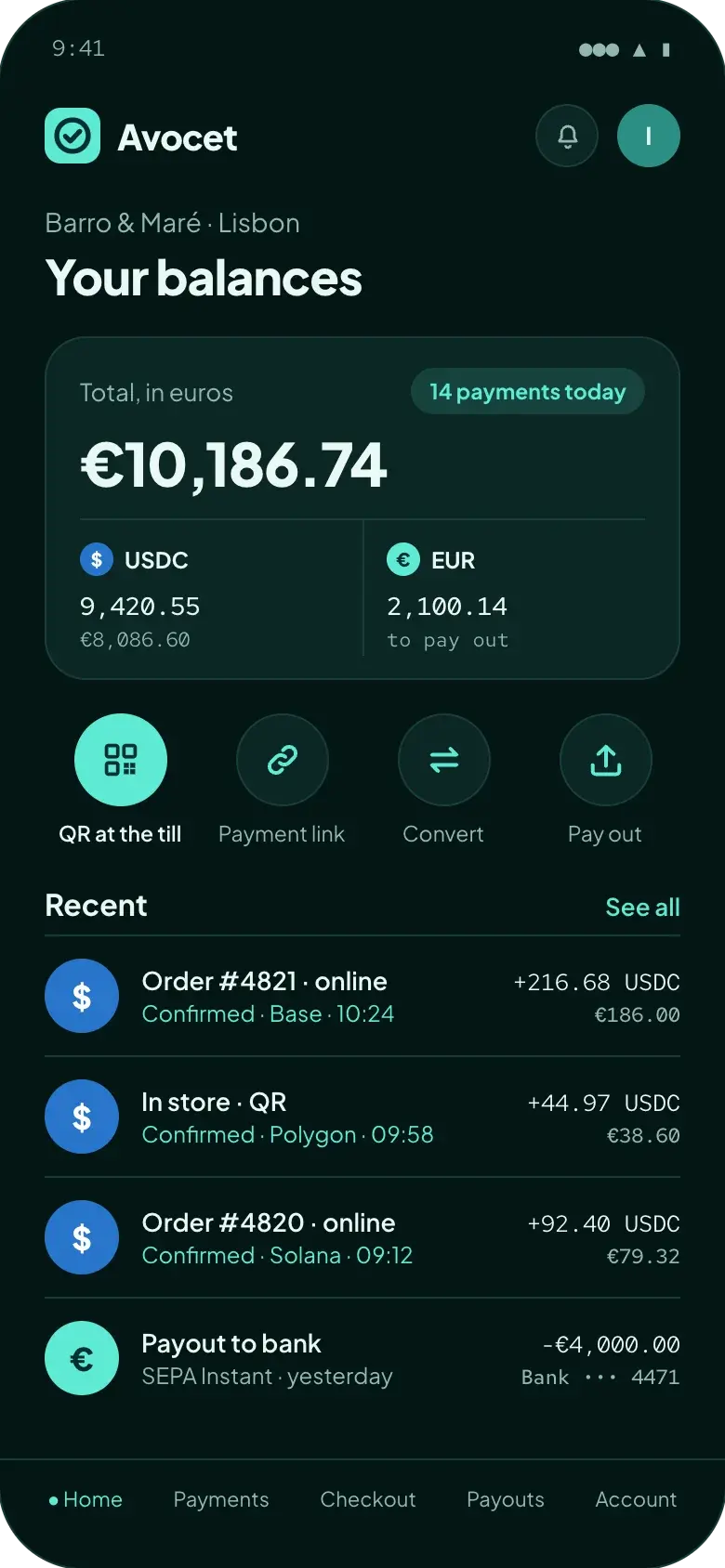
USDT and USDC, on the networks you choose: Ethereum, Tron, Solana, Base, Polygon, BNB Chain and Arbitrum among them. Adding another EVM network is mostly configuration; other chains need a new connector. Which coins you offer can differ by market: in the EU, for example, MiCA restricts some services in stablecoins whose issuer is not authorised there.
How do merchants get their money?
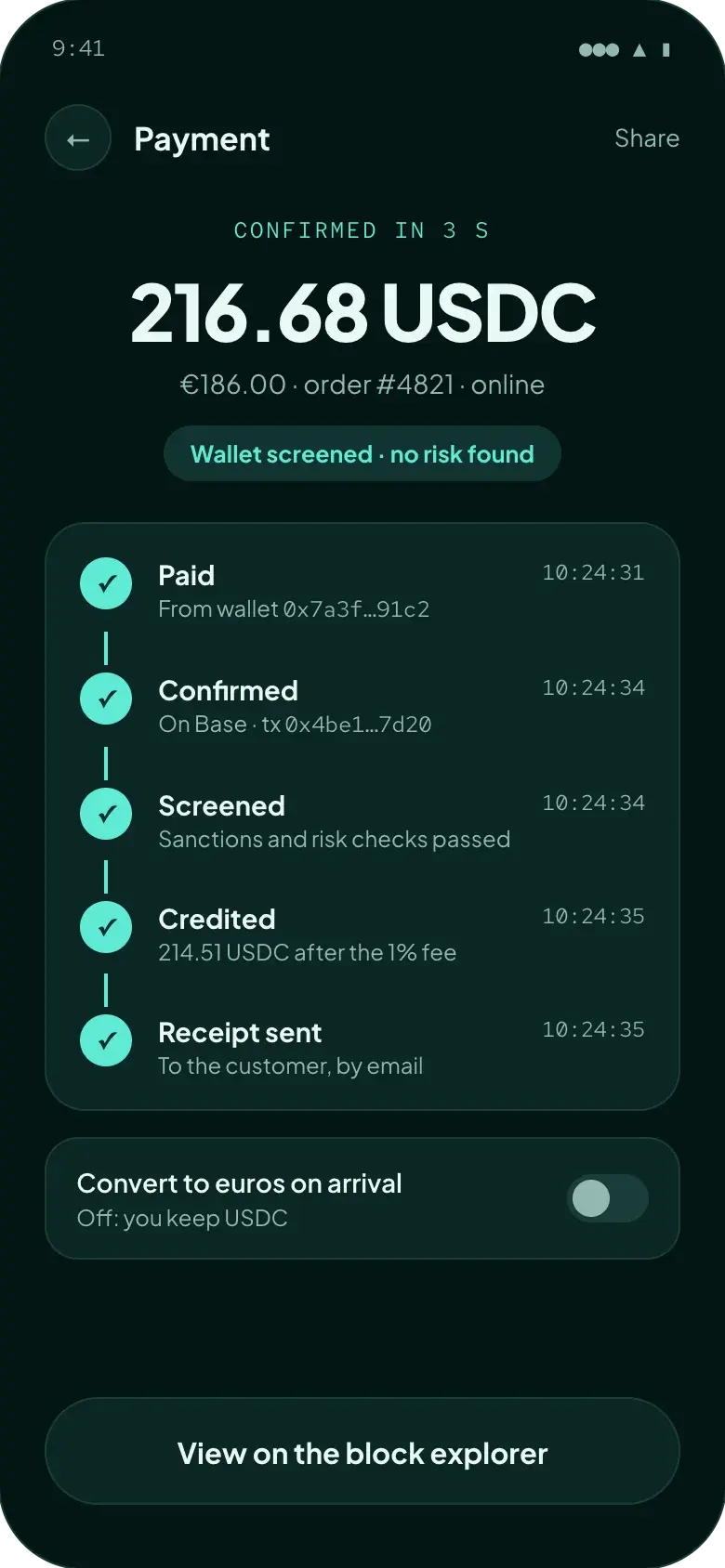
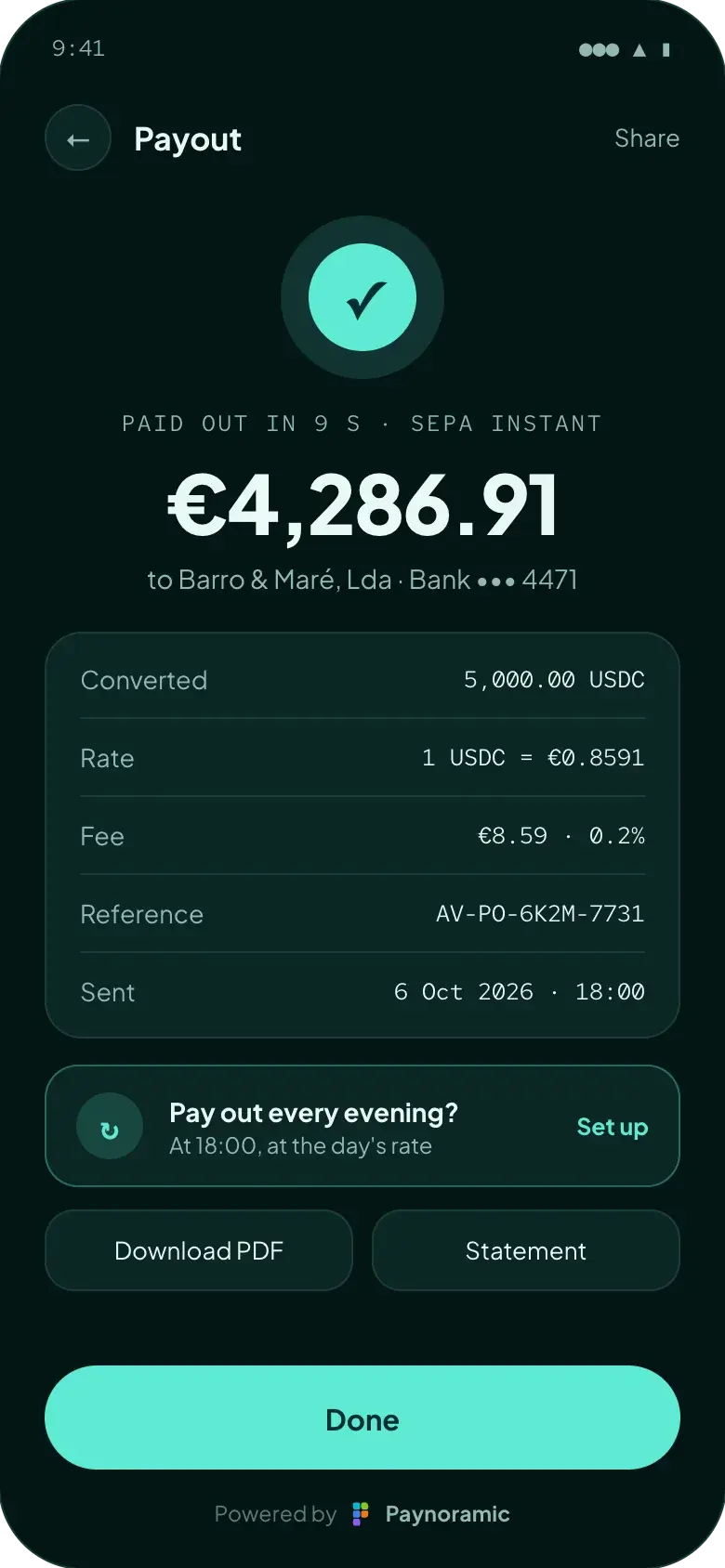
As they choose. They keep USDT and USDC, send them to their own wallet, or convert them at a quoted rate and receive euros or another currency in their bank account, by SEPA Instant, SWIFT or a local rail. Payouts run on demand or on a schedule, and you set the fees per merchant and the conversion margins per currency pair.
How is each payment checked?
Every payment is picked up on chain, and the paying wallet is screened with Chainalysis, Elliptic or TRM Labs before the merchant is credited. Transaction monitoring watches every merchant for suspicious patterns, Travel Rule data goes with the transfers that need it, and each merchant has its own limits.
What about licensing and compliance?
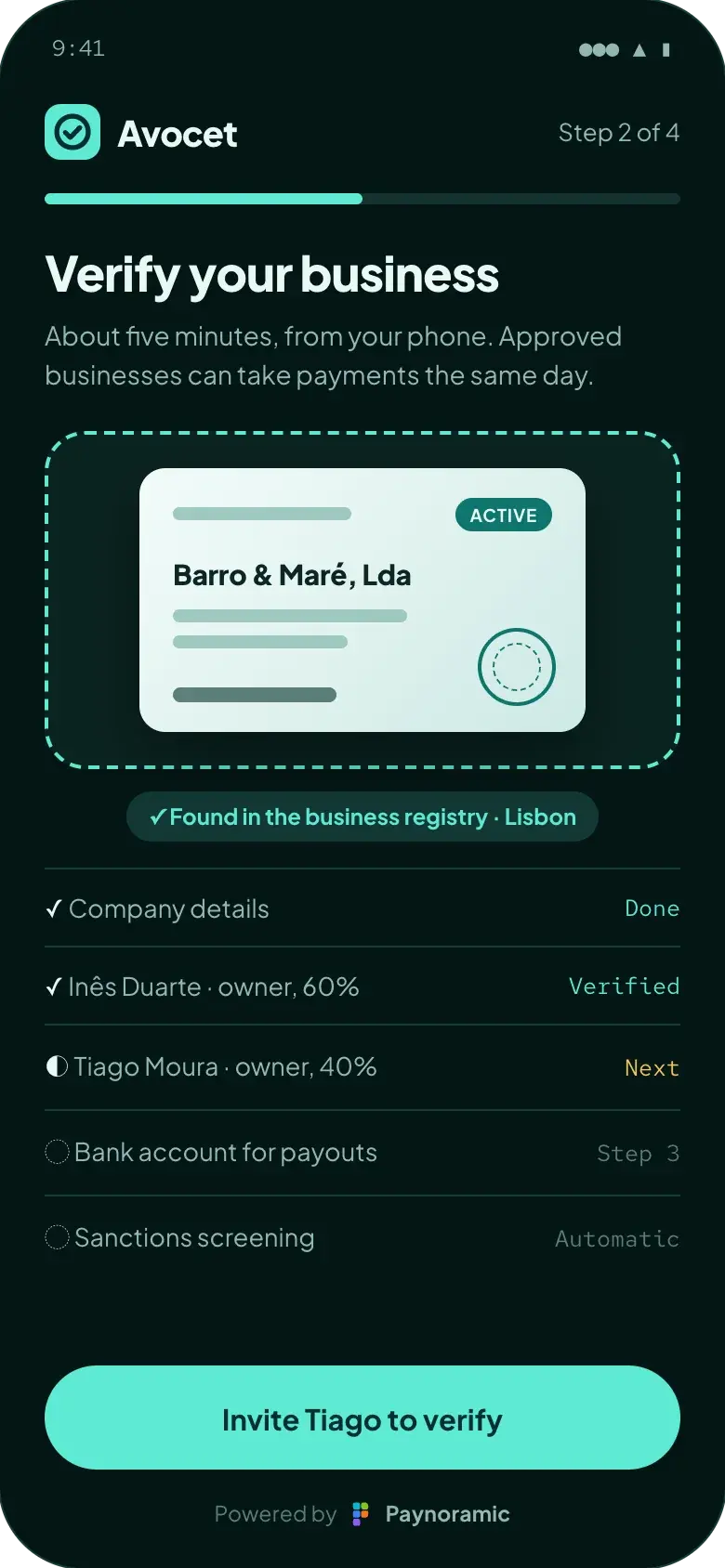
Accepting, holding and converting stablecoins for merchants is regulated. In the EU it takes authorisation as a crypto-asset service provider under MiCA, and since March 2026, holding and transferring e-money tokens such as USDC for clients can also require a payment licence under PSD2. In the UAE, the Central Bank's payment token rules limit which tokens merchants outside the financial free zones may accept, VARA licenses virtual asset services in Dubai outside the DIFC, and ADGM's FSRA regulates them in Abu Dhabi Global Market. Many companies launch under a licensed partner first. The platform ships with merchant verification, wallet screening, transaction monitoring, Travel Rule messaging and regulatory reporting, configured for your legal setup.
Do I really own 100% of the platform?
Yes. On launch you receive the full source code of the checkout, the merchant app and dashboard, the custody, FX and payout integrations and the backoffice, with infrastructure configuration and documentation. There is no licensing fee, no revenue share and no lock-in.