How much does a white-label payment gateway cost?
A one-off fee, scoped per module and agreed in writing, with no licence fee, no revenue share and no lock-in. Plan separately for what sits outside the software: a licence and its capital, if your model needs one, a PCI DSS assessment, and hosting. Contracts with the acquirers and providers you choose come alongside, and we help you get them.
Can I run a payment gateway in the EU without my own licence?
Yes, while it stays technical. PSD2 excludes providers that support payments without ever holding the funds (Article 3(j)), and the EBA calls payment gateways technical in nature. Contracting with merchants to accept payments is acquiring, and holding their money on the way is a payment service too. Those need your own authorisation, a licensed partner taking those roles, or registration as its agent. Your regulator has the last word.
Who holds the merchants' money, and how are they paid?
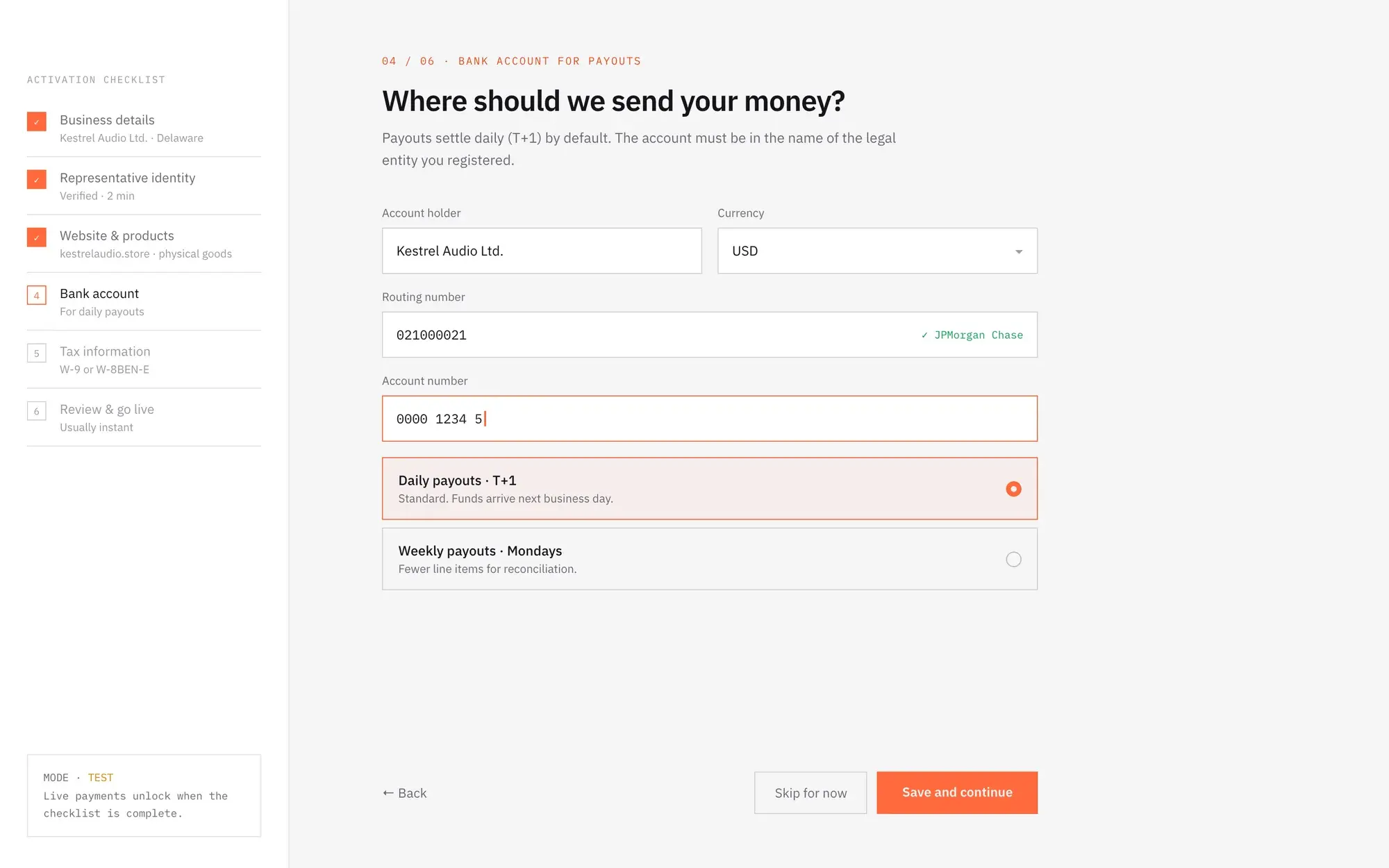
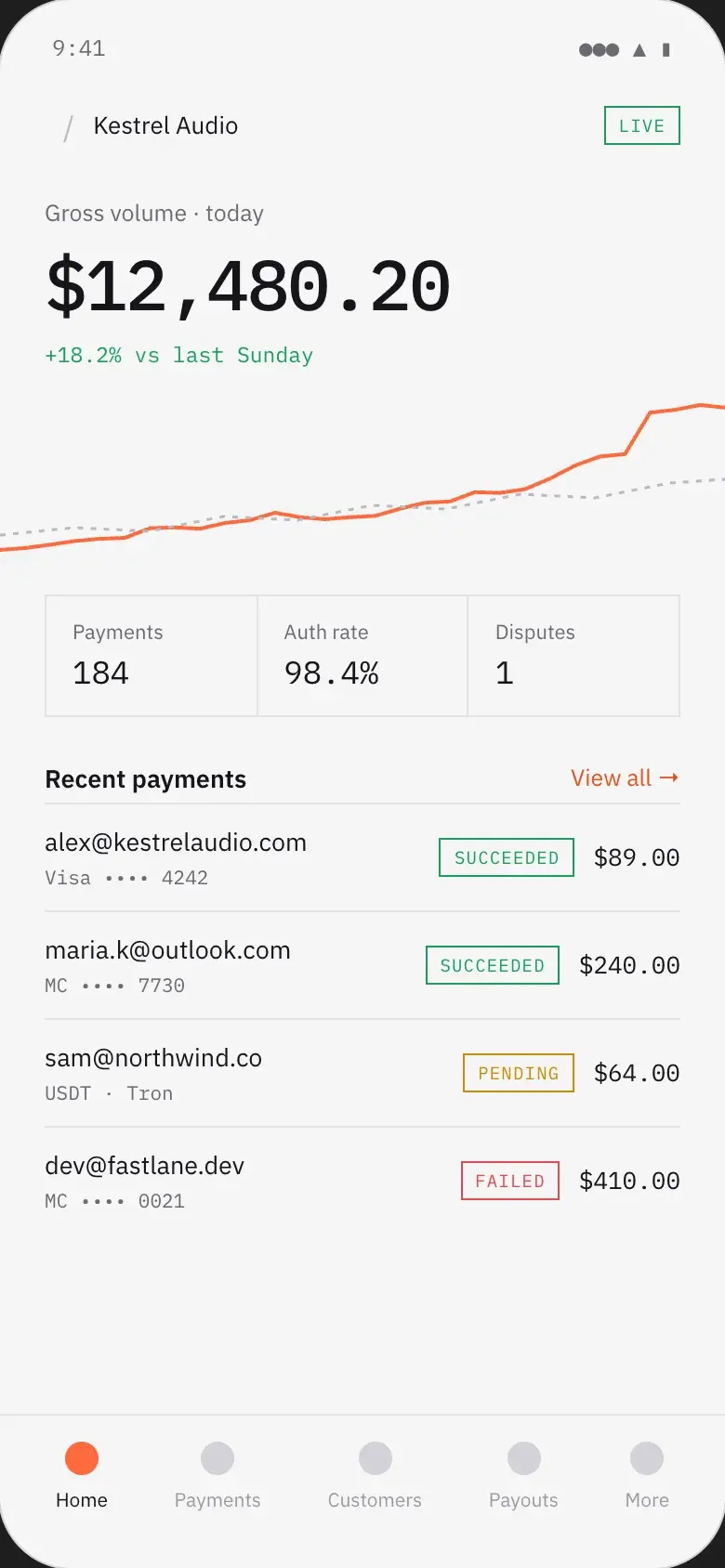
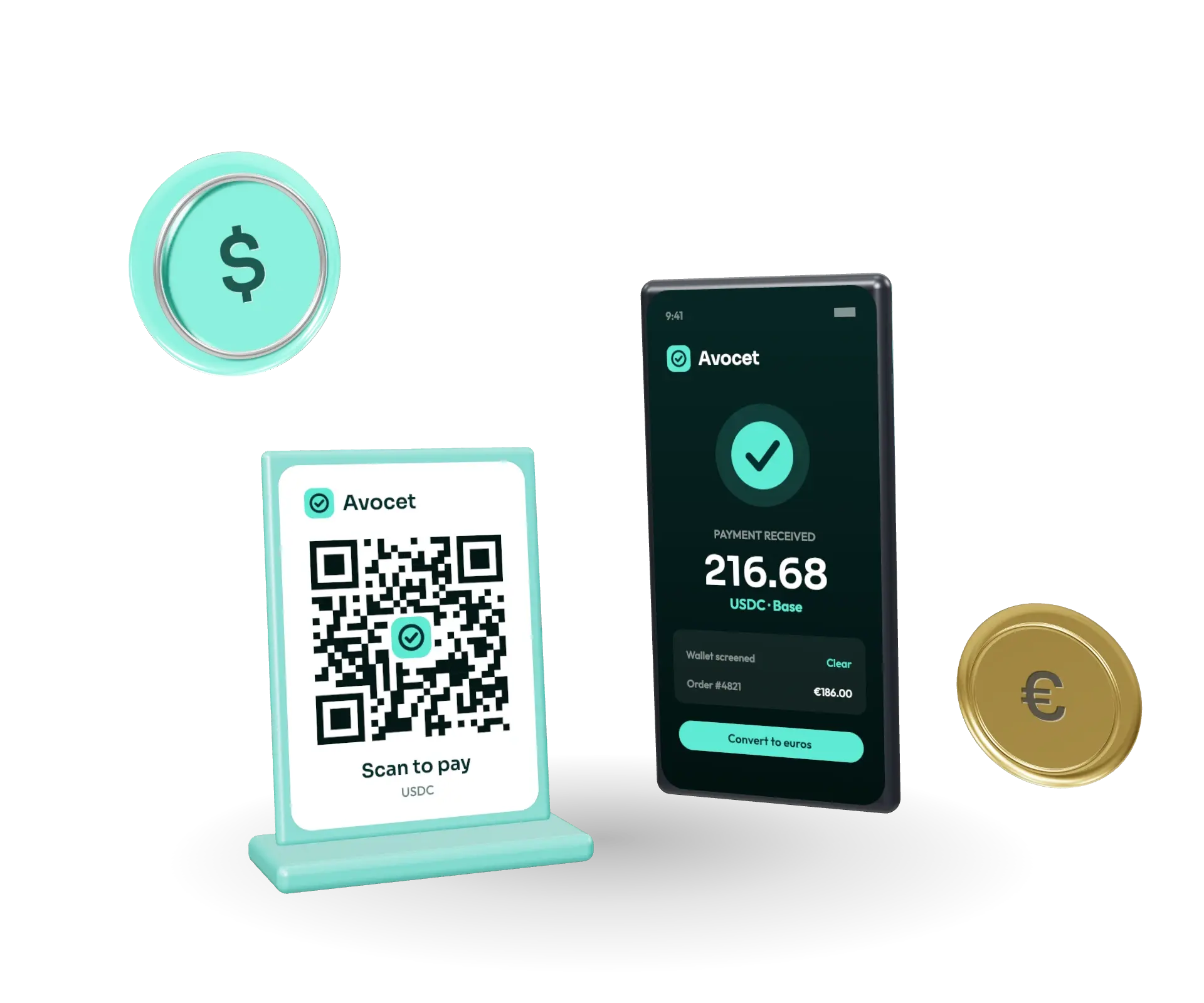
You choose, and the choice sets your licence. Either each merchant contracts with the acquirer, which pays it directly and your gateway never touches the funds, or you or your licensed partner receive settlement and pay merchants daily or weekly, after your fees, from safeguarded funds. The ledger books every payment, fee, refund and payout in double entry, and Payouts sends money on SEPA, Faster Payments, ACH and other rails.
How much PCI DSS scope comes with running a gateway?
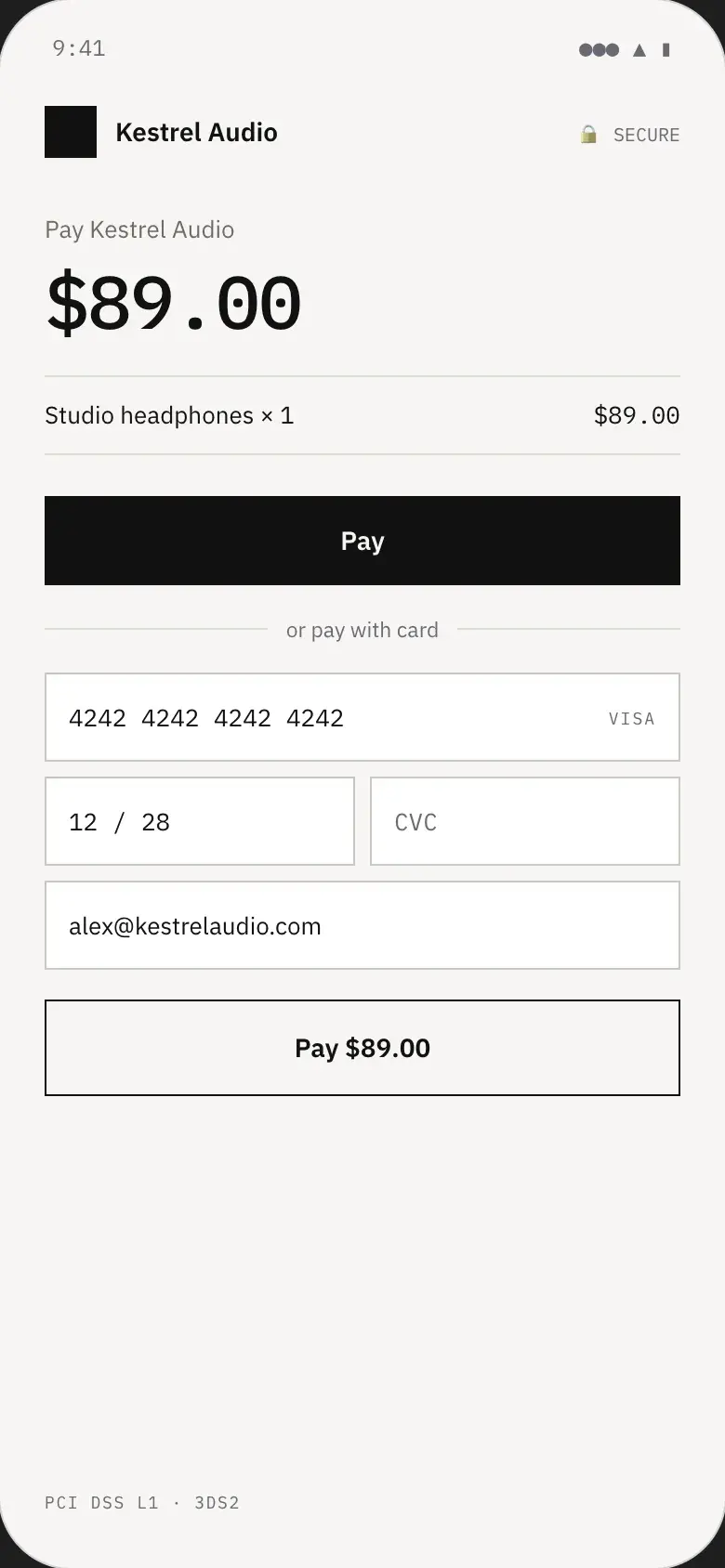
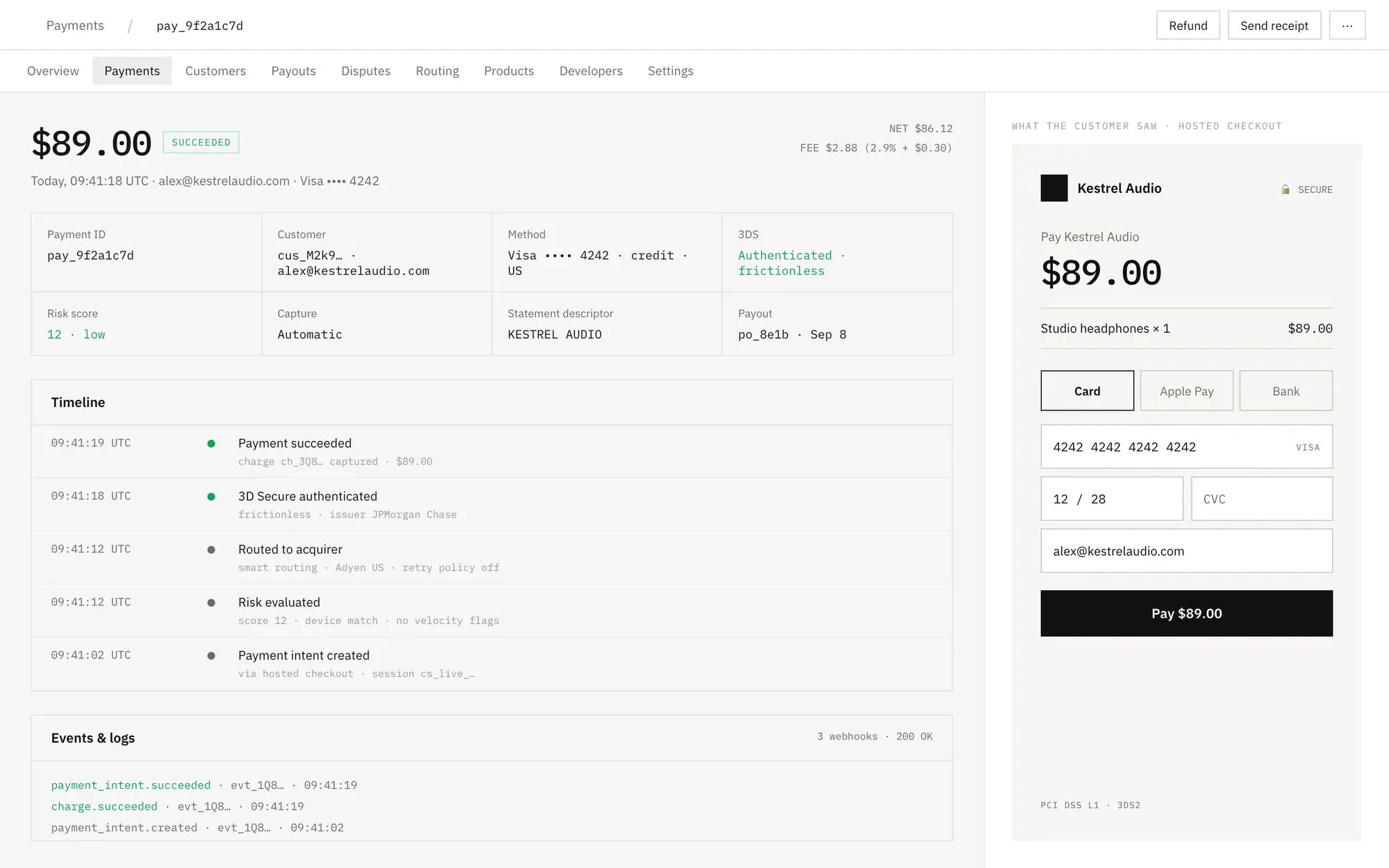
PCI DSS covers anyone who stores, processes or transmits card data, or could affect its security, so as the operator you are a service provider in scope. Card brands and acquirers, not the PCI Security Standards Council, decide whether you validate by self-assessment or a Qualified Security Assessor's report. Systems that see only tokens from your processor's fields can fall outside scope; your own card vault cannot. Merchants on your hosted checkout never touch card data, which usually lets them use SAQ A.
Which acquirers does it connect to, and how does routing work?
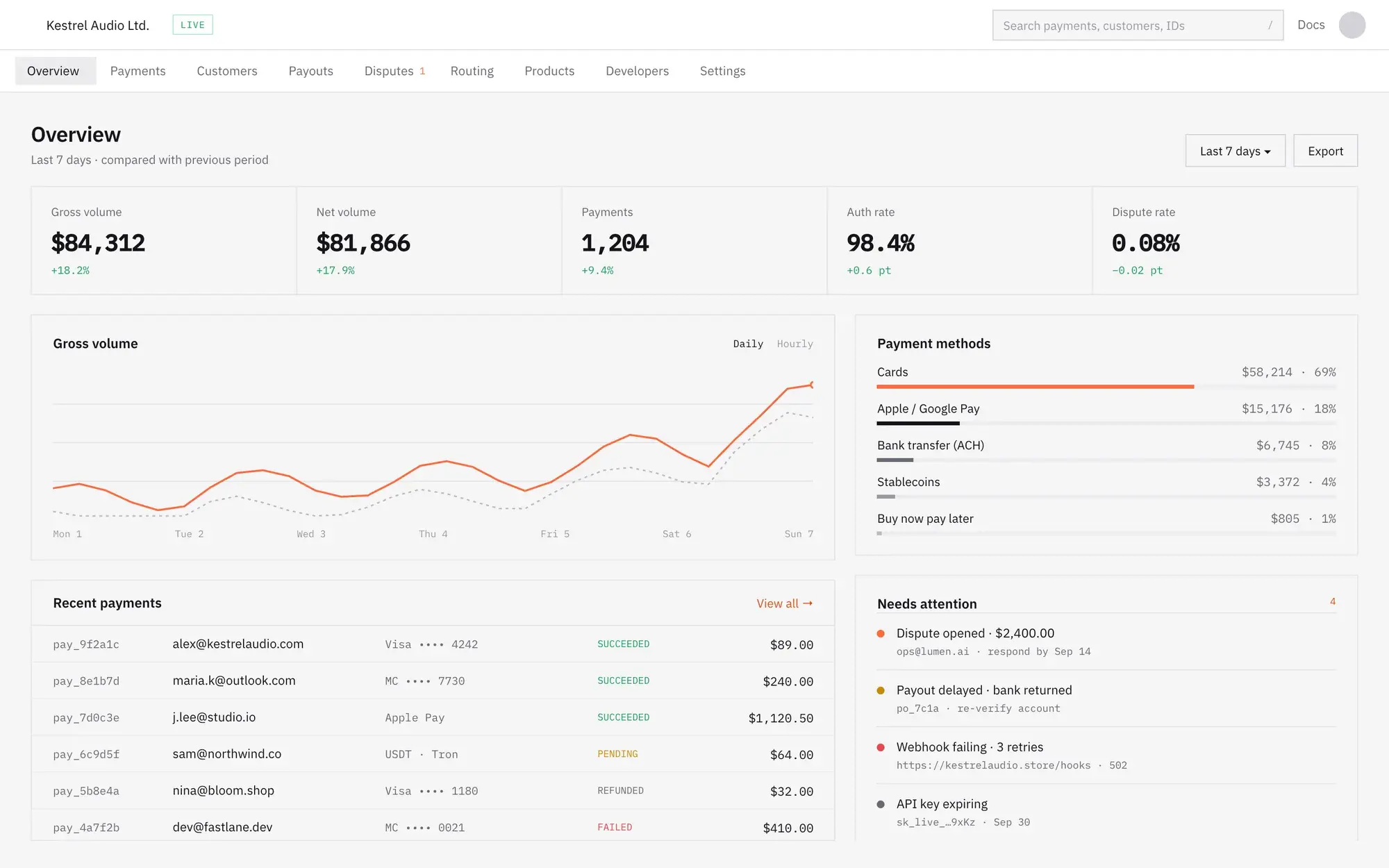
Cards run through Adyen, Checkout.com, Stripe, Worldpay or Braintree, and merchants can keep their own contracts. Wallets include Apple Pay, Google Pay and PayPal; bank payments run through TrueLayer, Tink, Yapily, iDEAL, Bancontact and BLIK; Klarna adds pay later. Routing sends each payment to the processor with the best results for its card type and country, and retries declines elsewhere when the reason allows. USDT and USDC work too, but merchants in the UAE may accept only dirham payment tokens from licensed issuers, unless they sell virtual assets.
How are merchants onboarded and verified (KYB)?
Through a guided checklist: business details, identity, website and payout bank account. The KYC / AML module runs business verification (KYB), checks owners' identity through providers such as Sumsub, Onfido or Veriff, and screens business and owners against sanctions and PEP lists with ComplyAdvantage or LSEG World-Check. Unclear cases go to a review queue, and every decision is logged. The Merchant onboarding module can add underwriting rules, registry and credit checks and e-signed agreements; an acquirer contracting with your merchants also runs its own checks.
How long until the first live payment?
Two clocks run side by side. The software takes two to three months for a custom flow, our usual advice for a gateway, or about 30 days if the ready core fits. Live payments also wait on the acquirer's onboarding, PCI DSS validation and, if you hold funds, the licence or partner; an EU or UK regulator's three months start only with a complete application. Meanwhile, merchants integrate in test mode.
What do we receive at handover, and can we extend it?
You receive the full source code of the gateway: checkout, routing, merchant dashboard and app, ledger, payouts and backoffice, with infrastructure configuration, documentation and the keys. There is no licence fee, no revenue share and no lock-in. Your team or ours can extend it later: subscriptions or marketplace splits around the same core, or library modules such as Merchant onboarding, or Card acquiring for tap to pay on phones.