How much does a white-label neobank cost?
The platform is a one-off fee, scoped per module and agreed in writing, with no licence fee, no revenue share and no lock-in. Plan separately for what sits around the software: your own licence and its capital, if you apply for one; the card programme's set-up; hosting on your own infrastructure; and contracts with the partner bank and the providers you choose, which we help you get.
Can I launch a neobank without my own banking or EMI licence?
Yes, and many do: you launch on a partner bank's or EMI's licence and run the app, often as its agent or distributor, registered where the rules require it. The partner vets your company first and answers for what you do on its behalf. You need a banking licence only to take deposits yourself. Once you hold your own licence, the accounts module connects to your sponsor bank, IBAN ranges and safeguarding accounts, with the same screens and ledger.
Who holds my customers' money, and is it protected?
Never Paynoramic: the software runs on your infrastructure. On the partner route the bank or EMI holds it; with your own EMI licence, you do. E-money must be safeguarded, kept apart from the firm's own money and out of its creditors' reach, or insured or guaranteed. It is not a bank deposit, may not earn interest and is not covered by deposit guarantee schemes such as the UK's FSCS if the e-money firm fails.
Do customers get their own IBAN and a debit card?
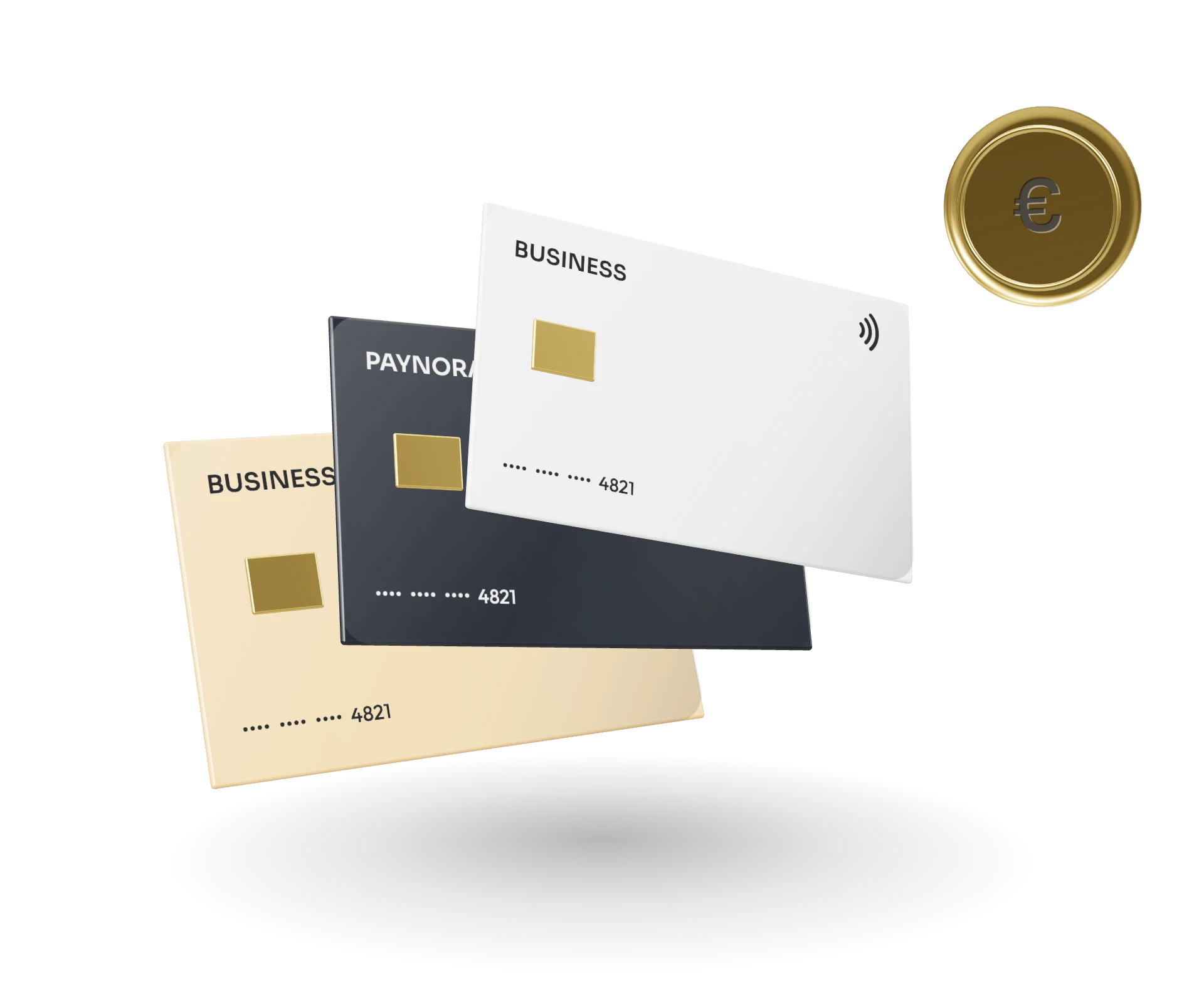
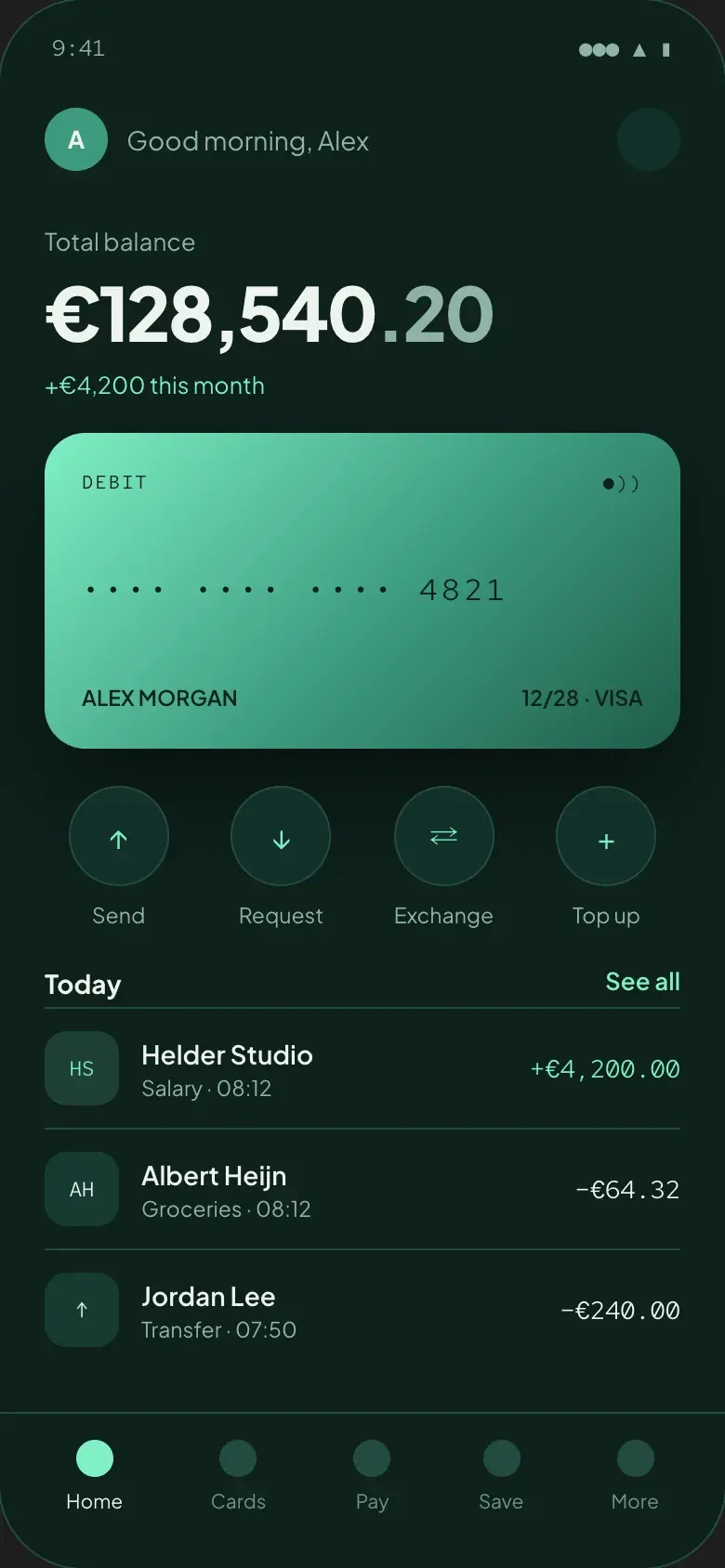
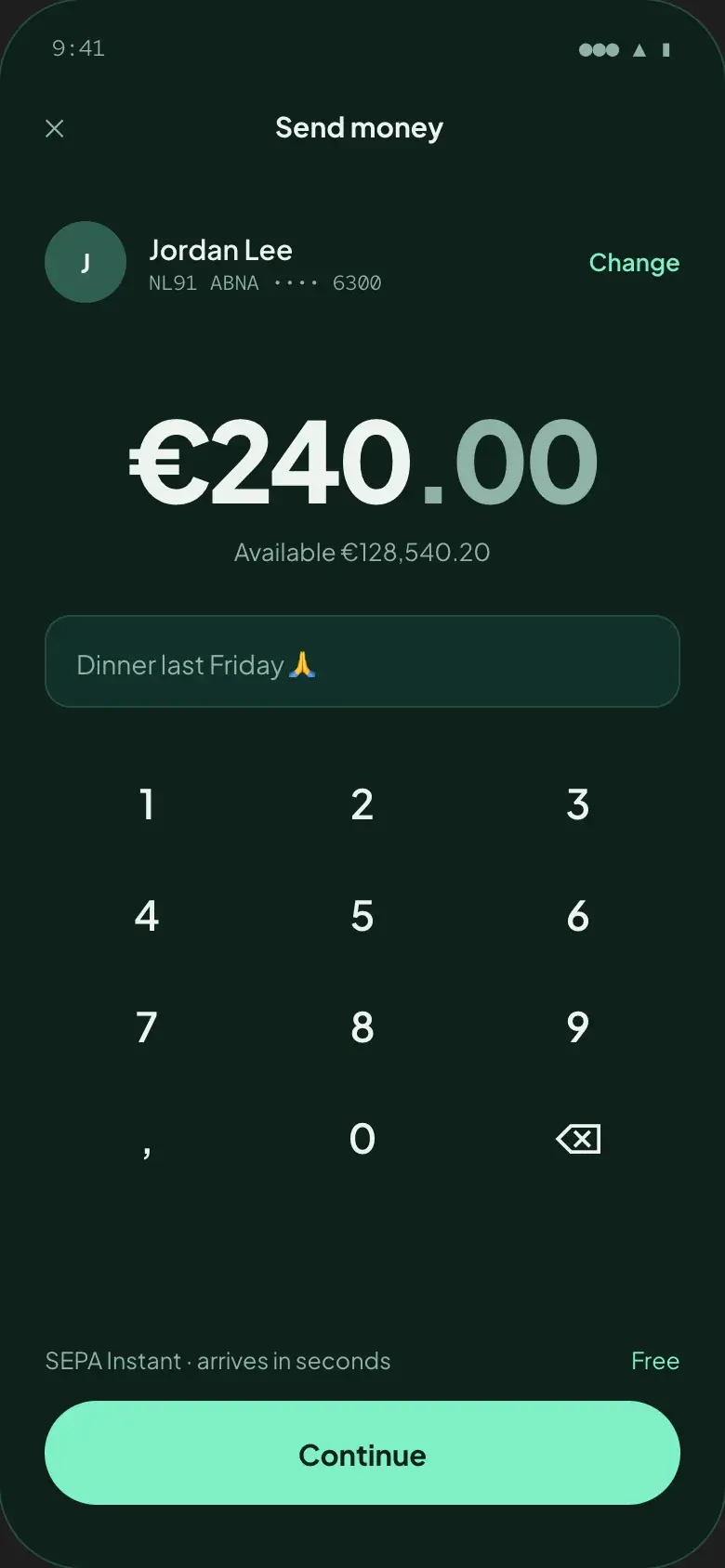
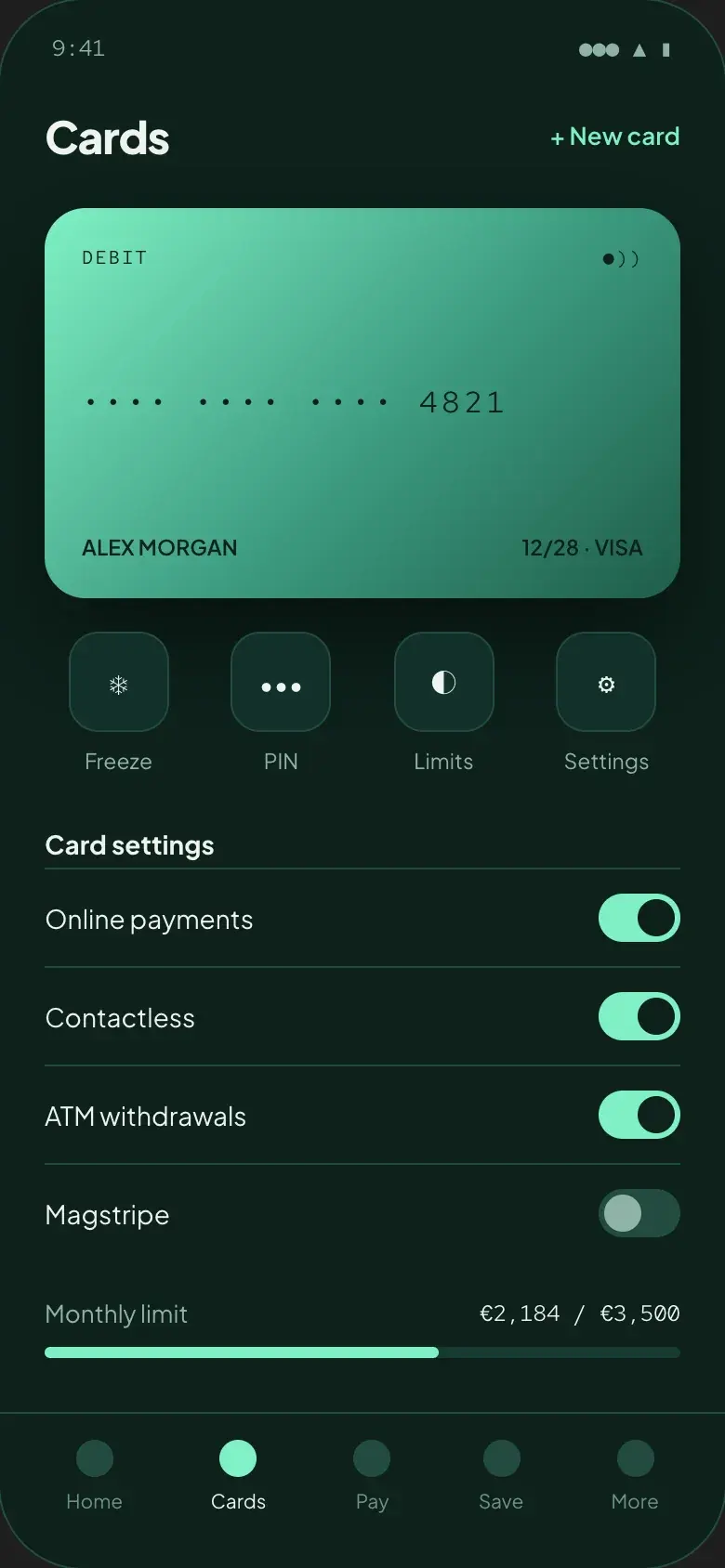
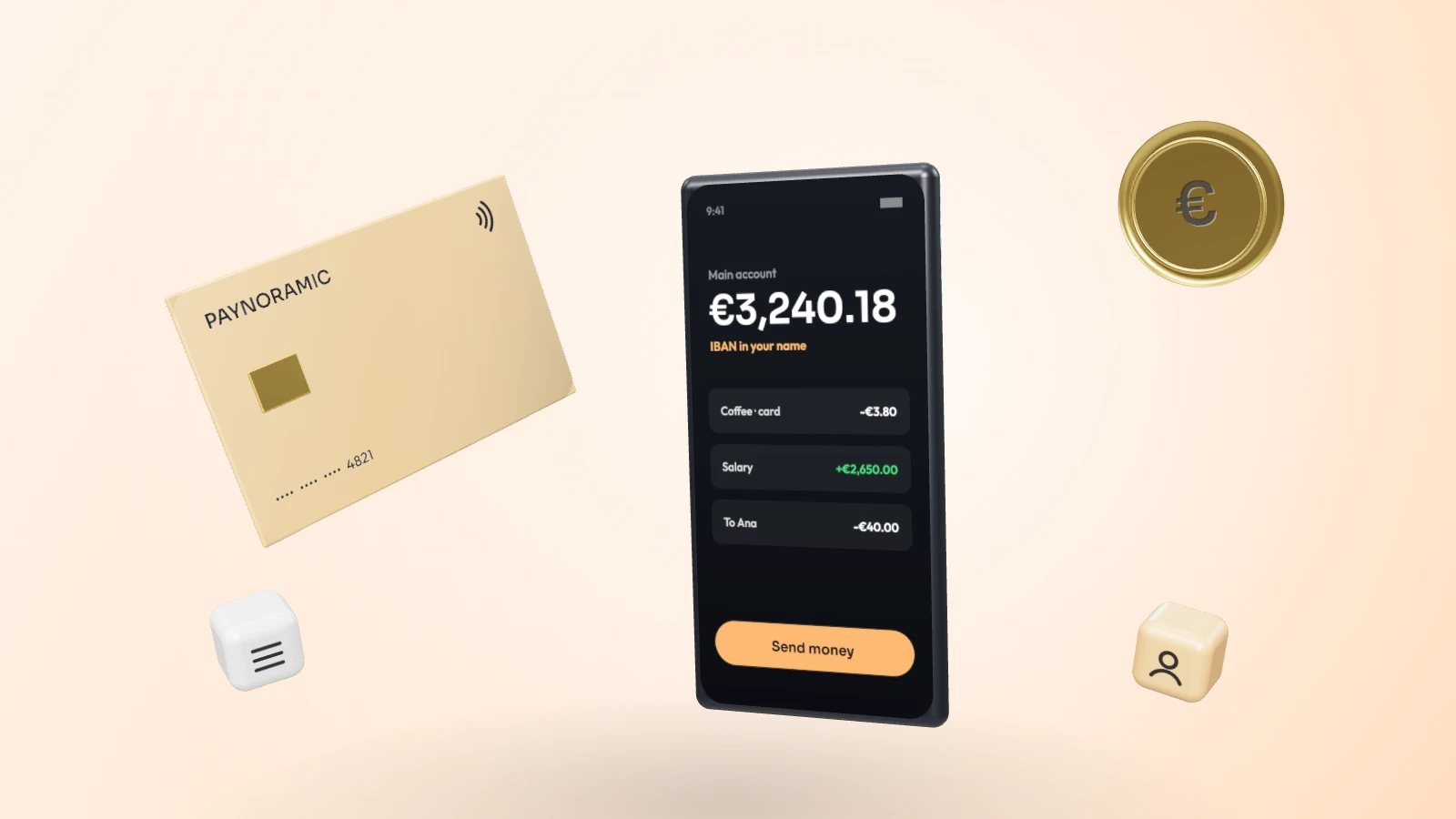
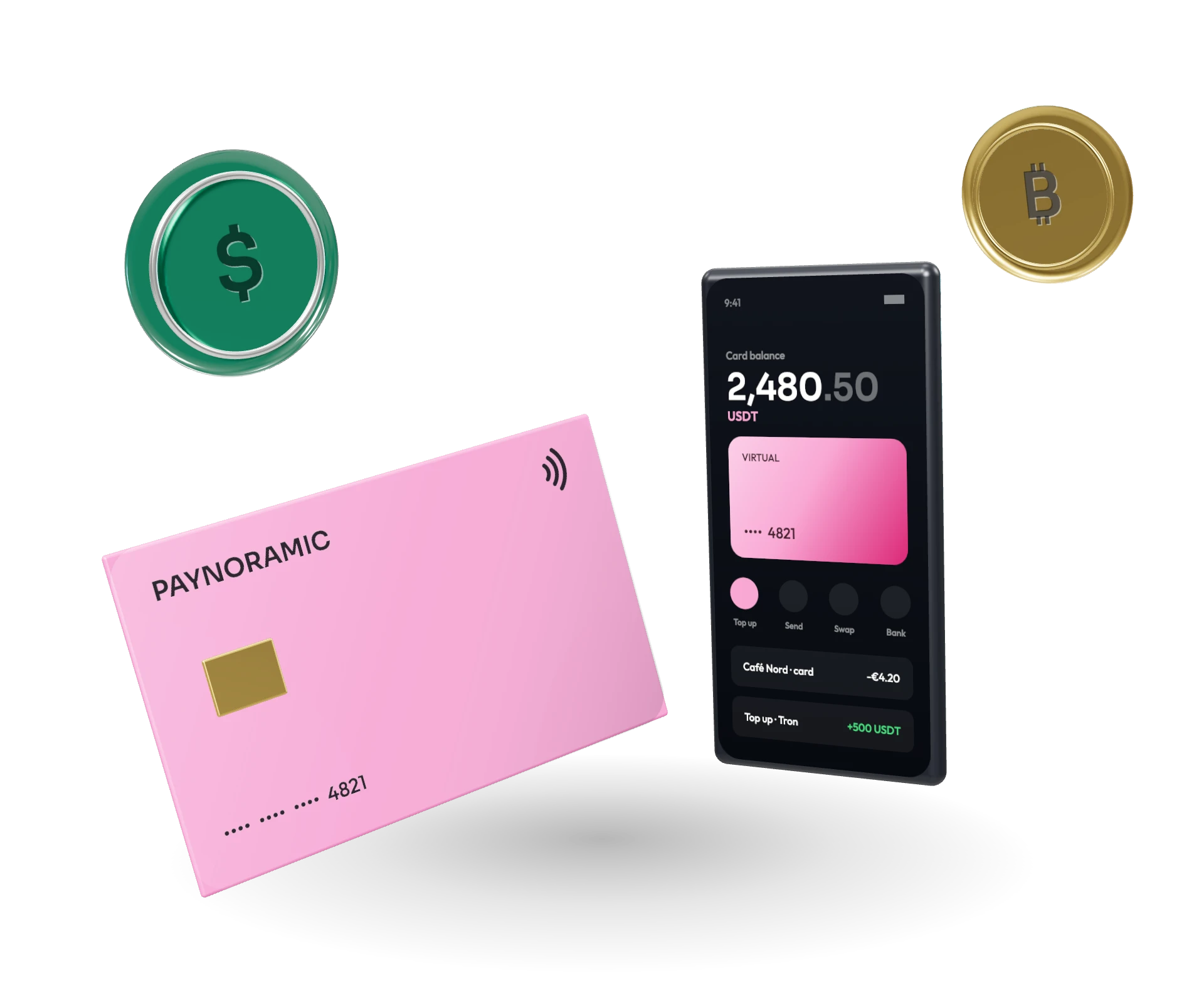
Yes, both through your partners. Each customer gets a named or virtual IBAN from your partner bank or EMI, for salaries, direct debits and SEPA Instant transfers; most partners issue IBANs from one EU country that work across the SEPA area. Cards come from your issuer processor on Visa or Mastercard: a virtual card once KYC passes, ready for Apple Pay and Google Pay, then a physical card by post.
How long until real customers can open accounts?
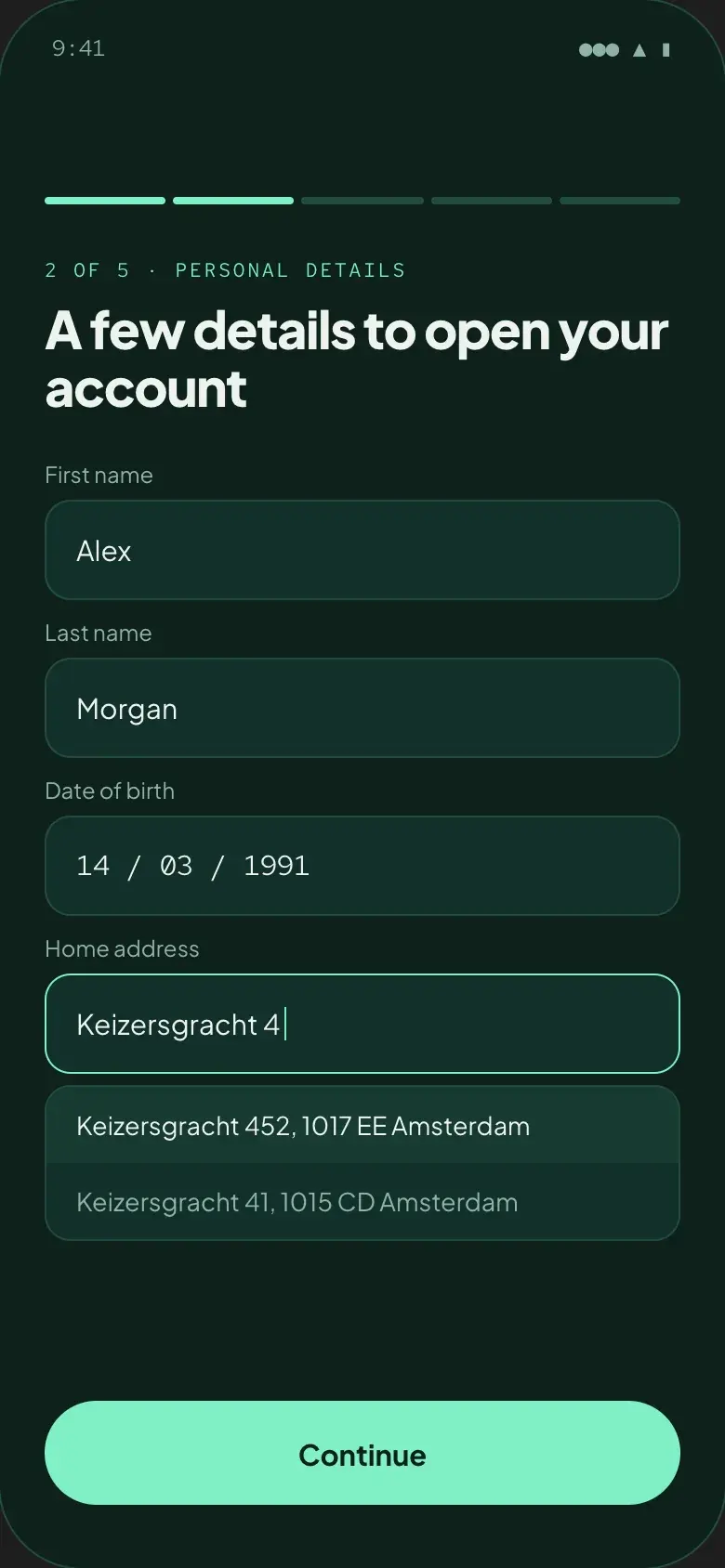
The software takes about 30 days on the ready path. Customers can open accounts once your partner bank or EMI has onboarded you, or your licence is granted, and the card programme is approved. Those dates are set by others, so we cannot promise them. Two deadlines are set by law: EU and UK regulators decide a complete EMI application within three months, and an EU regulator decides on an agent within two months.
Which banks, card issuers and KYC providers does it connect to?
Accounts and IBANs: ClearBank, Banking Circle, Modulr, Solaris, Swan, Treezor or Griffin, on SEPA, SEPA Instant, Faster Payments and SWIFT. Cards: Marqeta, Thredd, Nium, Paymentology, Enfuce, Galileo, Adyen Issuing or Stripe Issuing. Identity checks: Sumsub, Onfido, Veriff, Jumio and others. A provider you already have a contract with becomes one more connector, and switching provider later keeps the same app and ledger.
What do I get at handover, and do I own it?
You own all of it. At launch you receive the full source code of the banking core, the ledger, the iOS and Android apps and the backoffice, with infrastructure configuration, documentation and the keys. There is no licence fee, no revenue share and no lock-in: the platform is a deliverable, not a subscription. Changing partner bank or issuer processor later means a new connector, not a new app.
Can we add savings, lending or more currencies later?
Yes, from the module library rather than a rebuild: multi-currency balances and conversion through the FX module, payouts abroad, and open banking to show accounts held at other banks. Lending and savings vaults are custom builds, scoped per module in writing. Check the licence first: e-money may not earn interest and only banks may take deposits, so savings that pay interest need a partner bank.