How much does a white-label SoftPOS cost?
A one-off fee, scoped per module and agreed in writing, with no licence fee, no revenue share and no lock-in. Plan separately for the licence, or for working under a licensed acquirer, the contracts with the acquirer and the providers you choose (we help you get them), hosting on your own infrastructure, and a lab evaluation if your acquirer or the card schemes want your own MPoC listing.
Can I launch a SoftPOS in the EU without my own payment licence?
Yes, if a licensed acquirer signs each merchant and pays them while you supply the app and the merchant tools: PSD2 excludes technical service providers that never hold the funds, terminal providers included (Article 3(j)). Signing merchants yourself is acquiring, and receiving their money ends the exclusion. Then you need payment institution authorisation, or registration as a licensed institution's agent.
Which phones work, and can customers enter a PIN?
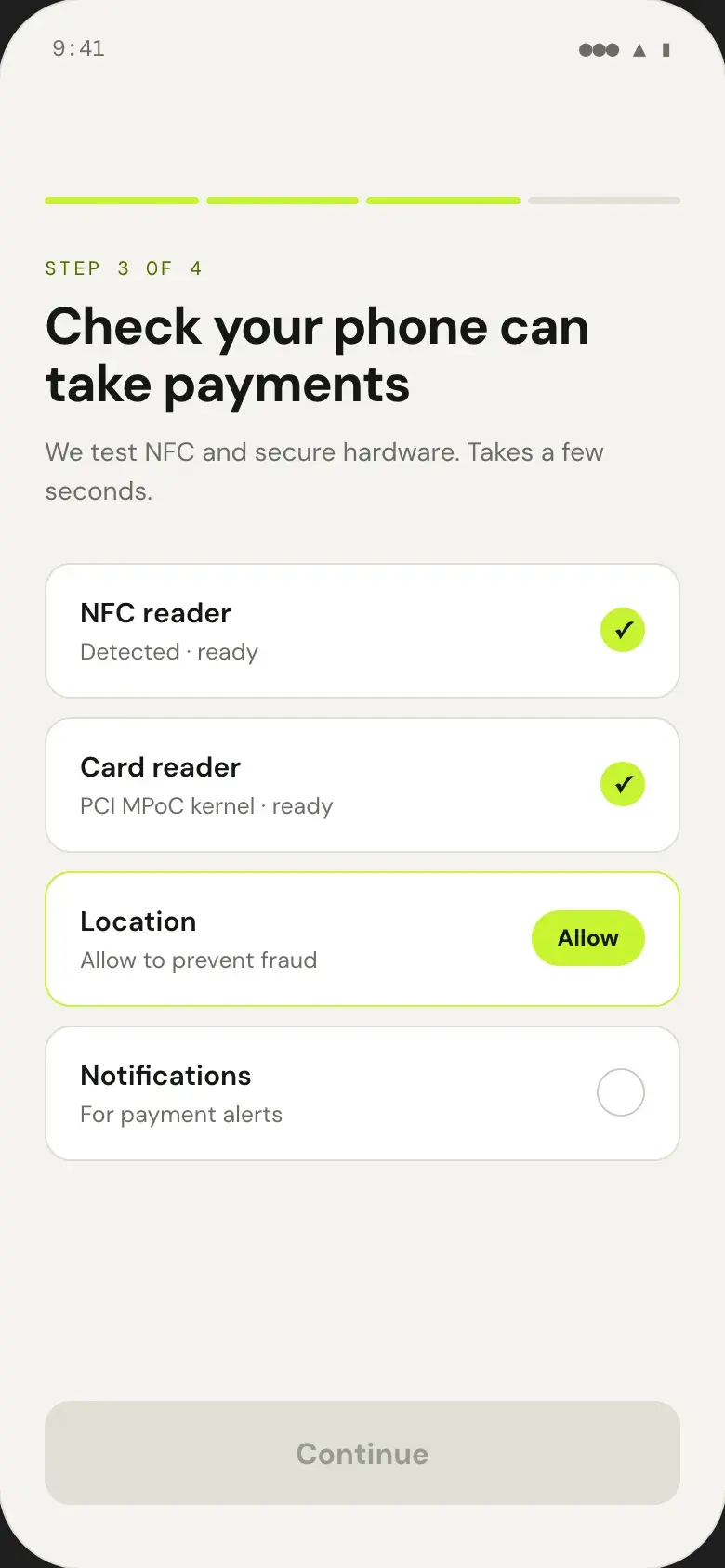
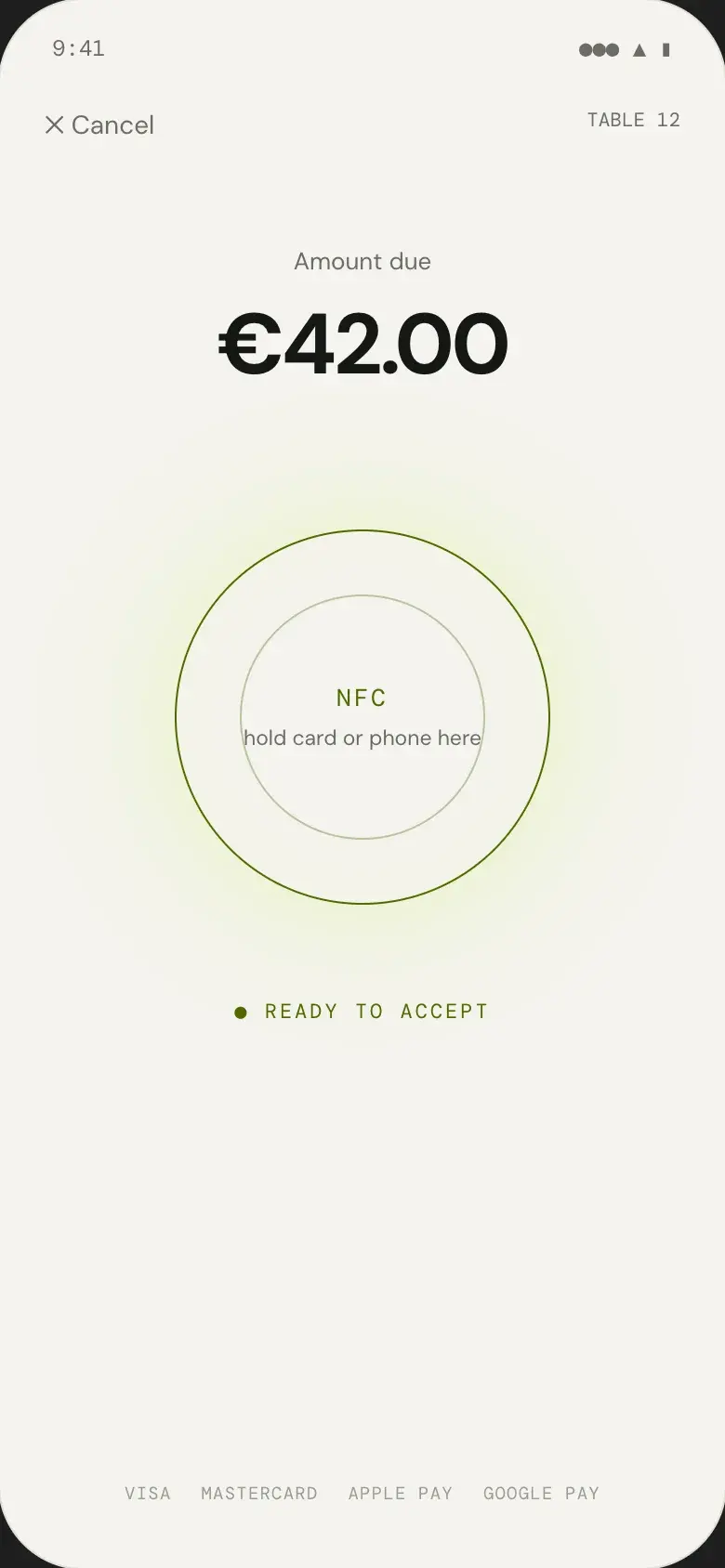
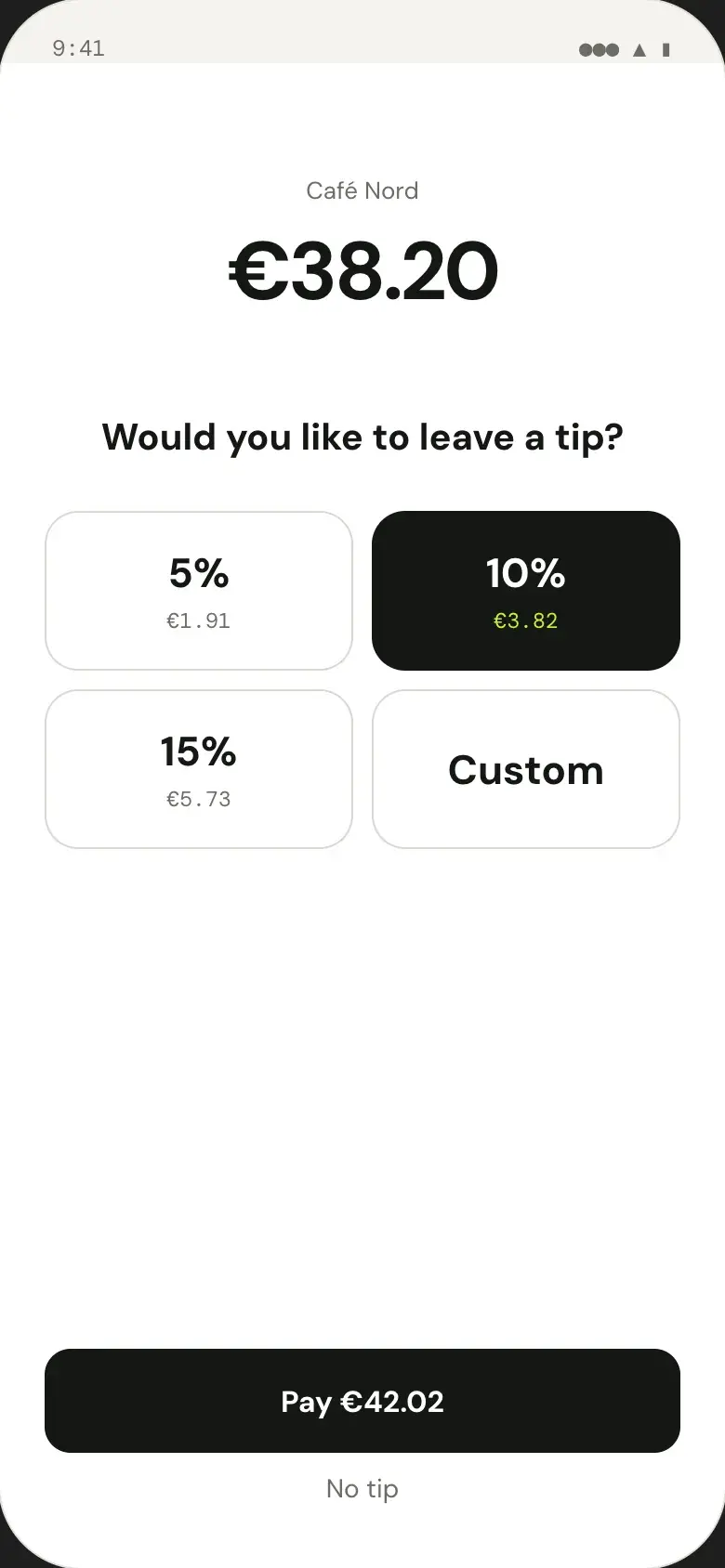
Merchants use their own phone, with no card reader. On Android, a phone with NFC that passes the app's checks of its NFC reader, secure element and location; on iPhone, an iPhone XS or later with Tap to Pay on iPhone, where your acquirer supports it. When an issuer asks for a PIN, for example above the EU's limits for contactless payments without strong customer authentication, the customer enters it on the merchant's screen.
Who holds the merchants' money, and when are they paid?
Whoever signs the merchants. A partner acquirer settles straight to each merchant's bank account, so the money never passes through you. If the money passes through you under your own licence, you must safeguard it: under PSD2 Article 10 in the EU, under FCA rules strengthened from 7 May 2026 in the UK, and in the UAE with an escrow account or guarantee when settlement takes over 24 hours. Payouts follow the acquirer's schedule, daily if it settles daily.
How long until merchants take real payments?
The software takes about 30 days. Real payments also wait on the acquirer's onboarding and tests, Apple's Tap to Pay entitlement, app store review, and your licence or agent registration. Only the last has a statutory clock: in the EU and the UK, the regulator decides a complete payment institution application within three months, and an agent's registration within two. In practice, the licence or the acquirer sets the launch date.
Is the SoftPOS certified to PCI MPoC?
The card reading is: on Android in a certified PCI MPoC kernel, on iPhone in Tap to Pay on iPhone, which PCI SSC lists as an MPoC solution. PCI-recognised labs evaluate MPoC software such as kernels, attestation and monitoring services, and whole solutions. The card schemes decide, through your acquirer, whether you need your own listing and how you validate PCI DSS. New SPoC and CPoC submissions close on 31 October 2026.
Which acquirers and providers does the SoftPOS connect to?
Card payments go to Adyen, Checkout.com, Worldpay, Nuvei, Global Payments or Stripe, split between several if you like; an acquirer with its own licence connects its processing directly. Cards are read through Tap to Pay on iPhone and a PCI MPoC kernel on Android. Merchant onboarding uses Sumsub, Persona, Kyckr, OpenCorporates, Creditsafe, Dun & Bradstreet, Experian, DocuSign and Dropbox Sign; payouts use Wise Platform, Currencycloud, Nium, Adyen for Platforms or Stripe Connect.
What do I own at handover, and can I extend it later?
You receive the full source code of the terminal app for Android and iPhone, the backoffice and the modules behind them, with infrastructure configuration and documentation. No licence fee, no revenue share, no lock-in. Connected providers, such as the certified kernel and Tap to Pay on iPhone, remain their own products. Loyalty, multi-merchant fleets or a second acquirer can be added later from the library, or by your own developers.